
If you’re a parent exploring ways to support your child’s development, you’ve likely come across the term Applied Behavior Analysis, or ABA. In Dubai, ABA therapy for children in dubai is a well-established and trusted approach, particularly for early intervention, that focuses on building essential life skills with a compassionate, one-on-one approach.
What Is ABA Therapy in the Dubai Context?
It helps to think of Applied Behavior Analysis (ABA) as a personal learning framework for your child, rather than a rigid, one-size-fits-all treatment. At its heart, ABA is the science of understanding behavior—how it works, how the environment influences it, and how people learn new skills.
This approach has proven incredibly effective for children with Autism Spectrum Disorder (ASD), speech delays, and other developmental hurdles. The core idea is simple: increase behaviors that help a child thrive (like communicating needs or playing with peers) and reduce behaviors that interfere with their learning or safety.
Essentially, ABA therapy is all about empowering your child. We break down big, complex skills—like holding a conversation or tying a shoe—into small, manageable steps. It’s a positive and encouraging process designed to build confidence and nurture independence, one success at a time.
A Play-Based and Personalized Approach
Let’s clear up a common misconception. Modern ABA therapy, especially in quality centers across Dubai, is a world away from the robotic, drill-based methods of the past. Today’s approach is dynamic, fun, and deeply personal.
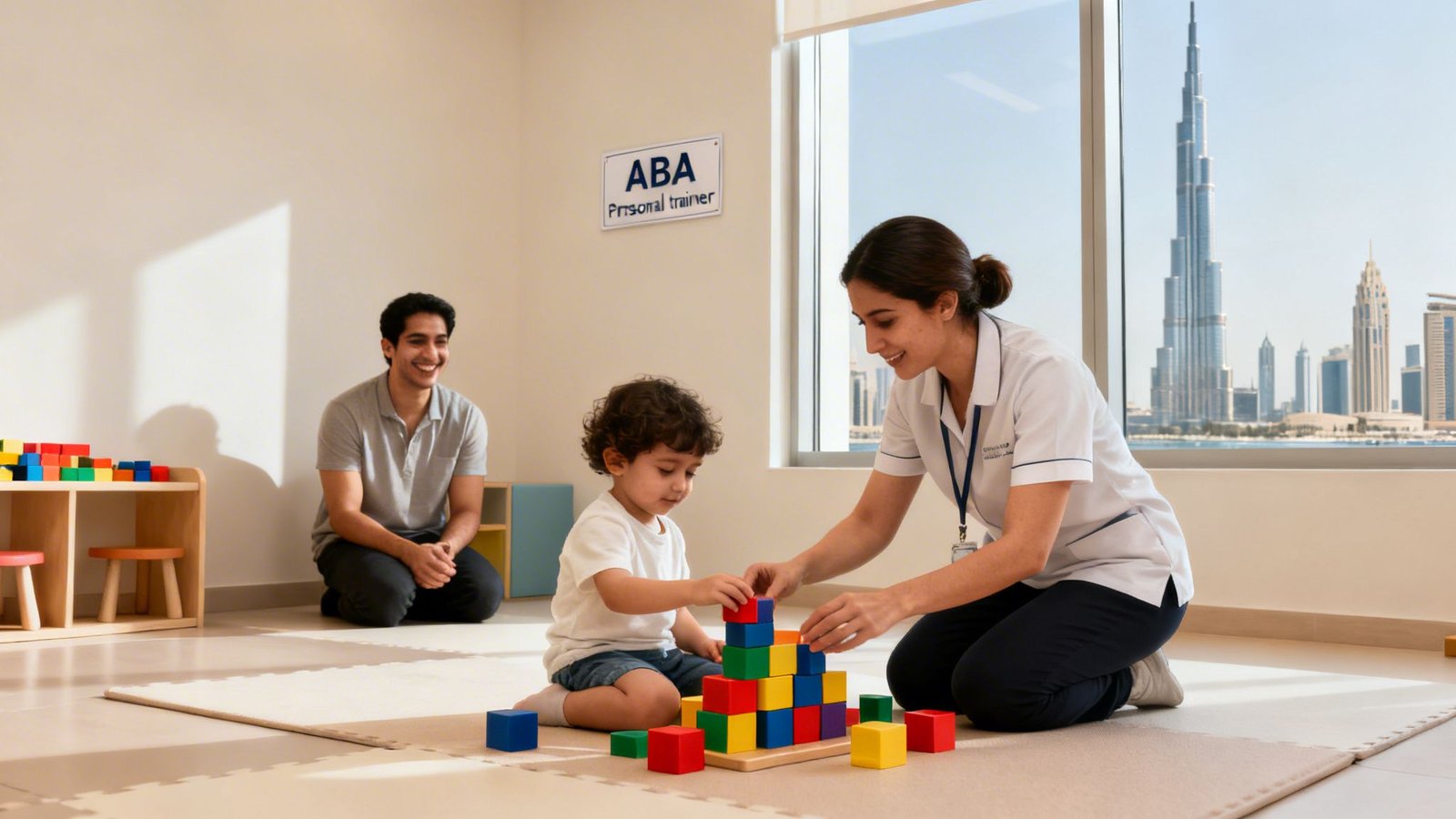
Therapists focus on building a genuine, trusting relationship with your child. They tap into their natural interests—whether that’s a love for dinosaurs, a fascination with building blocks, or a passion for drawing—and use that enthusiasm to teach new skills. This makes therapy feel less like work and more like guided play, something your child will actually look forward to. A session might happen on the floor with toys, at a playground, or even during snack time, weaving learning into the fabric of everyday life.
Creating a Truly Individualized Program
Because no two children are alike, no two ABA programs should be, either. The journey always begins with a comprehensive assessment to create a completely customized plan that honors your child’s unique personality and needs.
A highly qualified therapist, usually a Board Certified Behavior Analyst (BCBA), will carefully evaluate your child’s strengths and identify areas where they could use more support. This deep dive typically covers crucial developmental domains:
- Communication Skills: From asking for what they want to labeling objects and engaging in back-and-forth conversation.
- Social and Play Skills: Learning to share, take turns, understand social cues, and interact with friends.
- Daily Living Skills: Building independence in tasks like self-feeding, getting dressed, and toilet training.
- School Readiness: Developing the foundational abilities needed to succeed in a classroom, like sitting, listening, and participating in group activities.
To give parents a clearer picture, here’s a breakdown of the key elements that form the foundation of any strong ABA program.
Core Components of Modern ABA Therapy
| Core Component | What It Means for Your Child |
|---|---|
| Individualized Assessment | A program designed specifically around your child’s unique strengths, interests, and needs—not a generic template. |
| Positive Reinforcement | Using rewards and praise to motivate learning and celebrate small victories, making therapy a positive experience. |
| Data-Driven Decisions | Therapists meticulously track progress to see what’s working and make adjustments, ensuring the plan remains effective. |
| Family Involvement | Parents and caregivers are seen as vital partners, equipped with strategies to support learning and growth at home. |
| Generalization of Skills | Ensuring skills learned in therapy are practiced and used in different settings—at home, at school, and in the community. |
This detailed evaluation becomes the blueprint for your child’s therapeutic journey. But it’s not a static document. The plan is a living thing, constantly monitored and fine-tuned based on real-time data. As your child grows and masters new skills, the strategies evolve with them. By understanding the key principles of ABA for autism, parents can feel more confident in how this tailored approach helps create meaningful and lasting progress.
The Real-World Benefits of ABA for Child Development

When you’re exploring therapy options, it’s easy to get lost in clinical terms and methodologies. But what truly matters to a parent are the real, tangible changes you see in your child day-to-day. The real magic of ABA isn’t in a textbook; it’s in how it helps your child translate therapy goals into skills that make life better for them and for your whole family.
This progress can feel small at first, but each tiny step is a huge win. Imagine your child, who once had intense meltdowns out of frustration, now able to calmly point to or say the word for a glass of water. That is the kind of profound, meaningful change that ABA therapy for children in Dubai is all about.
These moments are about so much more than just managing difficult behaviors. They’re about unlocking your child’s ability to connect with others and their environment. It’s the breakthrough when they learn to share a toy, wait their turn in a game, or make eye contact and smile at another child on the playground.
From Data Points to Daily Triumphs
One of the things that makes quality ABA therapy so effective is its commitment to data. Now, that might sound cold or impersonal, but it’s actually the complete opposite. Think of a master tailor taking precise measurements for a custom-fit suit. Therapists use data in the same way, ensuring every strategy is perfectly fitted to your child’s unique needs.
Every session, every interaction, and every learning moment is carefully observed and noted. This detailed tracking lets the therapy team, led by a Board Certified Behavior Analyst (BCBA), see with crystal clarity what’s working and what isn’t. If a certain teaching approach isn’t getting results, they don’t just keep trying it—they adjust it immediately.
This data-backed approach takes the guesswork out of therapy. It gives you clear, objective proof of progress, so you can feel confident that your time and investment are making a genuine difference. You can literally see, week by week, how skills are developing and stacking on top of one another, creating a solid base for all future learning.
Building a Foundation for Long-Term Success
The skills your child gains in ABA aren’t just for getting through the day. They are the essential building blocks for a more independent, connected, and fulfilling future. Every new skill they master opens up a whole new world of social and academic opportunities.
The ultimate aim of ABA is to equip a child with the tools they need to learn from their natural environment. It’s about empowering them to handle social situations, thrive in school, and live as independently as possible. Every small step forward is a step toward greater self-reliance.
Good ABA therapy creates its own momentum. Once a child masters those core foundational skills, their ability to learn more complex things can grow exponentially. You start to see a positive ripple effect across every area of their life:
- Improved Communication: Learning to express their wants and needs directly reduces frustration and opens the door for real back-and-forth conversations.
- Enhanced Social Skills: Knowing how to play, share, and read social cues helps children build friendships and feel like they belong.
- Greater Independence: Mastering daily routines like getting dressed, eating with utensils, or brushing their teeth builds self-esteem and lightens the load for caregivers.
- School Readiness: Developing skills like sitting still, following directions, and joining group activities sets them up for success in a classroom.
Ultimately, ABA is a powerful investment in your child’s potential. By systematically building these crucial skills in a supportive, structured way, you help pave a path toward a future where they can confidently connect with the world and thrive.
A Look Inside a Dubai ABA Therapy Session
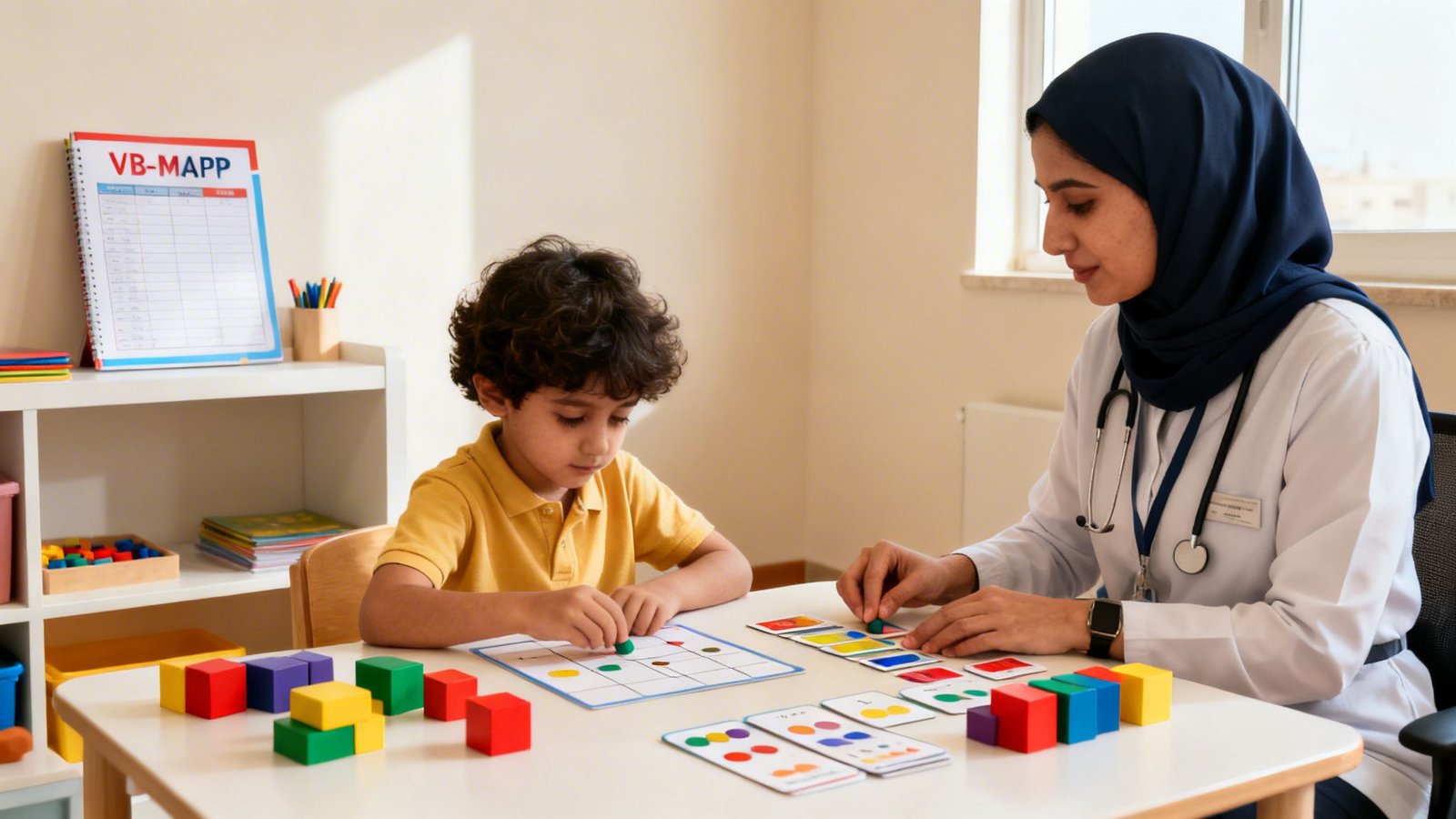
To a parent watching for the first time, an ABA session can look a lot like structured playtime. You might see a therapist and a child laughing while they sort colorful blocks or high-fiving after completing a puzzle. But behind that play is a precise, evidence-based strategy at work.
Understanding what’s happening in that room helps demystify the process and shows you why ABA therapy for children in Dubai is such a powerful tool for building real-world skills. It all starts long before the first “game” is even played.
Crafting a Personalised Skill-Building Roadmap
Everything kicks off with a thorough and compassionate assessment. This is much more than a simple checklist; it’s a deep dive into your child’s unique world, led by a Board Certified Behavior Analyst (BCBA). Using specialized tools, the BCBA carefully maps out your child’s current abilities—what they’ve mastered, what they’re ready to learn next, and what might be getting in the way.
This initial roadmap is what makes ABA so effective. It ensures therapy targets the exact skills your child needs to grow, without wasting time on goals that are either too simple or frustratingly out of reach.
In Dubai, top-tier centers rely on globally recognized tools to get this comprehensive picture. You’ll likely hear about two in particular:
- VB-MAPP (Verbal Behavior Milestones Assessment and Placement Program): This assessment is a go-to for younger children or those with more significant speech and language delays. It excels at pinpointing specific barriers to communication and laying out a clear path for building verbal skills from the ground up.
- ABLLS-R (Assessment of Basic Language and Learning Skills – Revised): A broader tool, the ABLLS-R looks at a huge range of functional skills across 25 different domains. It covers everything from social interaction and language to self-help skills (like dressing) and early academic abilities.
The final report gives your therapy team a detailed profile of your child’s strengths and the specific, measurable goals they’ll be working towards.
The initial assessment is like a tailor taking precise measurements. It ensures the therapeutic “suit” is a perfect fit, designed to help your child move, grow, and interact with the world more comfortably and confidently.
Key Techniques Used in a Session
Once that detailed plan is in place, the therapist begins teaching. They use a handful of proven techniques, always adapting to your child’s personality and what motivates them. The best sessions seamlessly blend structured instruction with natural, spontaneous play.
One of the cornerstones of ABA is Discrete Trial Training (DTT). Think of it as breaking a big goal down into small, bite-sized teaching moments. To teach colors, for instance, a therapist might present a red and a blue card, ask, “Touch red,” and then offer immediate praise for the right choice. This repetition builds mastery and confidence in a very clear, structured way.
But skills learned at a table need to be used in the real world. That’s where Natural Environment Teaching (NET) comes in. The therapist uses the child’s natural curiosity and motivation to practice skills. If they just learned the color “red” with DTT, the therapist might later say, “Let’s find your red car!” during free play. This is how a child learns to generalize their knowledge, moving it from a specific task to a functional part of their everyday life.
Determining the Right Therapy Intensity
One of the first questions every parent has is, “How many hours of therapy does my child actually need?” There’s no one-size-fits-all answer—it depends entirely on the goals outlined in your child’s assessment.
The therapy hours aren’t just an arbitrary number. Here in Dubai, the official 2026 guidelines released by the Dubai Health Authority (DOH) emphasize that the intensity of therapy must be determined by a child’s specific needs and the complexity of their goals. You can explore the DOH’s comprehensive framework to understand how these recommendations are made.
For a child with significant developmental delays or challenging behaviors, a comprehensive program with an intensive schedule exceeding 25 hours per week might be necessary. For another child who needs to focus on specific social or communication skills, a targeted program of 10-15 hours per week could be perfect.
This isn’t set in stone. As your child progresses and hits their targets, the BCBA will continuously reassess and adjust the hours, making sure the level of support always matches your child’s evolving needs.
How ABA Integrates with Speech and Occupational Therapy

When it comes to supporting a child’s development, no single therapy holds all the answers. While ABA provides an incredible framework for learning and behavior, its real power shines when it’s part of a coordinated team effort with services like Speech Therapy and Occupational Therapy (OT).
Think of it as a specialist team, all focused on one person: your child. Each therapist brings their unique expertise, but they all work from the same game plan. This collaborative approach ensures every aspect of your child’s development gets the attention it needs.
The best ABA therapy for children in Dubai is built on this very principle. When therapies are siloed, you get frustrating gaps. A child might learn to say a new word in speech therapy, but then never actually use it during playtime. A unified team closes those gaps, making sure skills are not just learned, but used in the real world.
The Power of a Unified Team
Imagine building a house. The BCBA is like the architect, designing the overall plan and structure. The Speech Therapist is the expert electrician, wiring all the communication systems. The Occupational Therapist acts as the master plumber, ensuring all the essential sensory and motor functions are running smoothly.
If they don’t talk to each other, you might end up with wires in the wrong places or pipes with no water. The same is true for therapy.
A cohesive team works from a single blueprint—your child’s Individualized Education Plan (IEP). This ensures everyone is aligned and working toward complementary goals, not contradictory ones.
A collaborative approach means your child’s entire therapy team speaks the same language. The strategies used by the Speech Therapist to encourage vocal sounds can be seamlessly woven into the ABA session’s reward system, creating a consistent and powerful learning environment.
This synergy makes every therapy hour count for more. When a child makes a breakthrough in one area, it often creates a ripple effect, speeding up progress in others.
ABA and Speech Therapy: A Practical Partnership
The link between ABA and speech therapy is especially strong. After all, communication is at the core of what they both do. A Speech-Language Pathologist (SLP) might pinpoint the specific sounds or words a child is ready to learn, and the ABA therapist can then use behavioral strategies to create dozens of opportunities for the child to practice them.
Here’s a simple, real-world example:
- Shared Goal: The SLP identifies that the child is ready to learn the word “open” to make requests.
- ABA Integration: During playtime, the ABA therapist puts a highly desired toy inside a clear box. They prompt the child to say “open,” and the moment they make an attempt—even just the “oh” sound at first—they are immediately rewarded by getting the box opened.
This teamwork turns a speech exercise into a powerful, functional tool the child can use every day. If you want to explore this further, you can learn more about how dedicated speech therapy in Dubai works alongside ABA.
ABA and Occupational Therapy: Sensory Synergy
Occupational Therapy (OT) helps children master the “occupations” of daily life, which for a kid means playing, learning, and self-care. A huge piece of this puzzle for many children is sensory processing—how their brain takes in and responds to sensory information.
An OT might develop a “sensory diet” for a child. This isn’t about food; it’s a personalized schedule of activities designed to help them feel calm, focused, and regulated throughout the day.
An ABA therapist can then weave this sensory plan directly into their sessions.
| OT Recommendation | How It’s Used in an ABA Session |
|---|---|
| Heavy Work: The child needs deep pressure to feel calm. | The ABA therapist might start a session with an activity like carrying a stack of books or pushing a weighted toy car before sitting down to learn. |
| Movement Breaks: The child needs to move every 15 minutes to stay focused. | The ABA therapist will structure the session with short learning tasks followed by a 2-minute jump on a mini-trampoline as a fun break and reward. |
By building the OT’s sensory strategies into the ABA session, the therapist helps the child get their body regulated and ready to learn. It’s a perfect example of how teamwork addresses the child’s whole needs, leading to much better outcomes.
How to Choose a Quality ABA Provider in Dubai
Finding the right therapy center for your child is a huge decision. When you’re looking for ABA therapy for children in Dubai, the number of options can feel staggering, and it’s easy to get overwhelmed. But knowing what to look for will help you cut through the noise and find a team you can truly trust.
Think of this as choosing a partner for your family’s journey. You need someone with proven expertise who also understands and respects your family’s goals. So, where do you begin? My advice is always to look past the fancy websites and marketing materials and get straight to the heart of the matter: the team’s qualifications.
Verifying Credentials and Supervision
A quality center is built on the expertise of its staff—it’s that simple. When you tour a facility or make that first call, don’t be shy about asking who, exactly, will be working with your child. A professional team will be transparent about their credentials.
You’re looking for a clear, structured team:
- Board Certified Behavior Analyst (BCBA): This is the clinical leader. A BCBA holds a master’s degree or higher and has passed a rigorous board certification. They are the ones who conduct the assessments, design your child’s entire therapy plan, and oversee everyone else. Think of them as the architect of the program.
- Board Certified Assistant Behavior Analyst (BCaBA): A BCaBA has a bachelor’s-level certification and works under the close supervision of a BCBA. They help put the plan into action and often provide guidance to the therapy team.
- Registered Behavior Technician (RBT): The RBT is the therapist who will spend the most direct time with your child, implementing the plan created by the BCBA. They should be well-trained and, crucially, consistently supervised.
The level of supervision is what separates good programs from great ones. Ask the center director: How often does the supervising BCBA actually watch sessions? How do they give feedback to the RBTs? This ongoing oversight is critical to ensure the therapy is effective and adapts as your child grows and learns.
Qualified professionals are in high demand here in Dubai. The competitive salaries for certified therapists, especially those with the advanced BCBA credential, reflect their value. You can see this for yourself by looking at local salary data for ABA therapists in Dubai_Therapist/Salary/386ea7ad/Dubai-Applied-Behavioral-Analysis-ABA). When a center invests in highly qualified BCBAs, it’s a clear signal they are committed to quality.
The Importance of Individualized Plans and Parent Collaboration
Here’s a major red flag: any center that offers a generic, one-size-fits-all program. Your child is an individual, with their own unique strengths, challenges, and personality. A quality provider knows this and will insist on creating a 100% individualized plan based on a thorough, initial assessment.
Just as important is how they treat you. The best therapy teams see parents as vital members of the team, not as bystanders. They should bring you into the process, provide you with training, and empower you to continue the progress at home.
When you’re evaluating a center, ask yourself these questions:
- Do they offer parent training? A good program won’t just work with your child; it will equip you with the strategies to manage behaviors and teach new skills at home.
- How will they track and share progress? You should expect regular updates backed by real data, not just vague feelings. What are the new goals? What has been mastered?
- Do you feel like they’re listening? The relationship should feel like a partnership. You are the expert on your child, and a good team will respect your insights and concerns.
Ultimately, finding the right fit is about finding that collaborative spirit. For more insight into how different specialists contribute, our guide on choosing a child behavioral therapist can offer some great perspective. You’re building a relationship with this team, so make sure it’s a good one from the start.
Understanding the Cost and Insurance for ABA in Dubai
Let’s talk about the financial side of things. For any family, this is a major part of the decision-making process. It helps to think of quality ABA therapy as an investment in your child’s future, but you also need a realistic picture of the costs and the support available here in Dubai.
For 2026, you can generally expect hourly rates for ABA therapy to fall somewhere between AED 200 and AED 600. This is quite a wide range, and it’s shaped by a few key things: the center’s reputation, the credentials of the therapists, and what kind of insurance you have. Top-tier providers, for example, will often be at the higher end of that scale for their comprehensive, 1-to-1 therapy led by a BCBA. Local data shows that this intensive support pays off; families who commit to 20 or more hours a week often see 35-50% improvements in their child’s adaptive behaviors within the first year alone. You can find more details on this in this guide to ABA pricing and value on alghadedu.ae.
What Influences the Cost
So, what exactly are you paying for when you see that hourly rate? It’s more than just the time your child spends with a technician.
- Therapist Credentials: A program designed and closely supervised by a Board Certified Behavior Analyst (BCBA) will cost more. This reflects their master’s or doctoral-level education and deep expertise in creating plans that actually work.
- Program Intensity: This is the biggest factor. The number of therapy hours your child is recommended per week directly impacts the total cost. A comprehensive plan of 20+ hours is a different financial commitment than a focused, 10-hour plan.
- Level of Support: The cost covers a whole team’s effort. It includes the Registered Behavior Technician (RBT) working directly with your child, but also the BCBA’s crucial behind-the-scenes work, regular progress reports, and the parent training sessions that empower you to continue the progress at home.
Navigating Insurance Coverage in Dubai
The great news for families here is that getting ABA therapy covered by insurance is becoming much more standard, thanks to growing awareness and stronger regulations. Still, you’ll need to get familiar with the fine print of your own policy.
In Dubai, many insurance plans now include coverage for services related to Autism Spectrum Disorder (ASD), and ABA therapy often falls under this umbrella. How much is covered can really differ from one policy to the next. Some plans might cover a set number of sessions per year, while others may cover a percentage of the total bill.
It is absolutely vital to call your insurance provider before you start therapy. Ask them directly about coverage for “Applied Behavior Analysis” or “Behavioral Therapy” for a diagnosis of ASD or a developmental delay.
Reputable ABA centers in Dubai know this process can be a headache. They’ll almost always have an admin team that’s used to dealing with insurance companies. They can help you figure out your benefits and handle the paperwork for pre-approvals and claims, which can take a huge weight off your shoulders.
A Few Common Questions About ABA Therapy
As a parent considering ABA therapy for your child in Dubai, it’s natural to have questions. It’s a big decision. We’ve put together answers to some of the most common queries we hear from families, hoping to provide a bit of clarity as you explore your options.
What Is the Ideal Age to Start ABA Therapy?
Parents often ask if they’ve missed a crucial window. The straightforward answer is that while starting early is incredibly beneficial, it’s never too late to begin. Research does point to the most significant gains happening during early intervention, typically between ages two and six, when a child’s brain is rapidly forming new connections.
Starting therapy in these early years can have a profound impact on communication, social skills, and learning. But that doesn’t close the door for older kids. ABA principles work just as well for teaching new skills and helping manage challenging behaviors in older children, teenagers, and even adults. The most important thing is to start as soon as you recognize a need.
Is ABA Therapy Only for Children with Autism?
That’s a very common myth. While ABA is widely recognized as a gold standard for supporting children with Autism Spectrum Disorder (ASD), its principles are much broader and can be applied to a whole host of developmental and behavioral challenges.
At its core, ABA is about understanding behavior and teaching functional skills. That’s why it’s so effective for children dealing with:
- Speech and Language Delays: We can use ABA techniques to reinforce every sound and word, encouraging functional communication.
- Attention-Deficit/Hyperactivity Disorder (ADHD): The structure of ABA helps improve focus, task completion, and organizational skills.
- Global Developmental Delay: We can break down essential life skills, like dressing or following instructions, into small, achievable steps.
- Oppositional Defiant Disorder (ODD): The focus is on reducing difficult behaviors by teaching more positive and appropriate ways to interact.
Because ABA is so goal-oriented, it can be adapted for any child who needs a structured approach to learning. If you’re looking for more articles on child development and different types of support, the gleetime blog is a great resource.
How Should I Prepare for Our First Consultation?
The first meeting is really a two-way conversation. It’s your chance to see if the center is a good fit, and it’s our chance to start understanding your child. To get the most out of it, come ready to talk about your child’s amazing strengths, the challenges that worry you most, and what your goals are as a family.
Think about the ‘why’ behind seeking therapy. What specific changes would make the biggest difference in your child’s life and your family’s daily routine? Bringing this focus helps the therapy team understand your priorities from day one.
Before you come in, try jotting down a few notes. What have you noticed about how your child communicates or plays with others? Are there specific behaviors that are causing stress? If you have any reports from doctors, teachers, or other therapists, bring those along too. All this information gives us a fantastic head start.
At Georgetown early intervention center, we know that every child is one-of-a-kind and deserves a plan that celebrates their strengths while addressing their unique needs. Our team is here to walk you through the process, answer every question, and become your partner in helping your child make meaningful progress. Contact us today to schedule your initial consultation.