
Some parents notice it in a quiet moment. Your child doesn’t turn when you call their name. They use a few words, then stop using them. Nursery teachers mention group time is hard. Mealtimes become stressful. Getting dressed turns into a daily struggle.
Other parents notice something less obvious. Their child is bright and loving, but play looks different. They seem overwhelmed by noise, avoid eye contact, or melt down when routines change. You might wonder if you’re overthinking it, or if everyone else somehow understands a system you’ve never had to find your way through before.
If that’s where you are, you’re not alone. And you’re not late for asking questions. Therapy in UAE can feel confusing at first, especially when the words are unfamiliar and the choices seem endless. But the path becomes much clearer once you know what each therapy does, how assessments work, what an individual plan should include, and how to ask the right questions before you commit.
Your Child's Journey and Finding Support in the UAE
A parent might first raise concerns during an ordinary day. A two-year-old pulls a parent to the fridge instead of using words. A four-year-old can recite songs but struggles to answer simple questions. A child starting school may know letters and numbers, yet find transitions, sitting time, or peer interaction very hard.
These moments often bring mixed feelings. Relief that you’re finally paying attention. Worry about what it means. Guilt for waiting. Confusion because family members may say, “Give it time.”
When concern becomes a useful signal
Concern isn’t panic. It’s information.
When parents notice a pattern, not just a one-off hard day, that’s worth exploring. Children develop at different rates, but consistent differences in communication, play, attention, sensory regulation, or behaviour deserve a closer look.
A helpful way to think about early intervention is this. It isn’t a label-first process. It’s a support-first process. The question is not, “What is wrong with my child?” The better question is, “What support would help my child communicate, learn, and cope more comfortably?”
Many families wait because they hope a child will simply catch up. Sometimes children do make progress naturally. But when support is needed, starting earlier gives everyone more room to build skills calmly.
Why finding child-focused support can feel hard
The UAE has expanded mental health and therapy services, but parents still feel the gap when looking for child-specific support. Many mental health strategies in the UAE focus on adult conditions, and a significant gap remains for accessible, child-centric services addressing autism, speech delays, and school readiness. The same source notes that 80% of mental health conditions in the GCC go undiagnosed due to limited staffing and stigma, which helps explain why specialised early intervention centres matter so much in practice (Emirates Health Services announcement).
That gap matters to families because children don’t need generic support. They need targeted help for real-life tasks such as asking for help, joining play, tolerating textures, following classroom routines, or using words instead of frustration.
A steadier way forward
The good news is that support in the UAE is more organised than many parents first assume. Once you know where to look, the process becomes manageable.
Start by focusing on three things:
- Your observations matter: Short notes about speech, behaviour, routines, and play are valuable.
- An assessment gives direction: It helps separate guesswork from a clear plan.
- The right centre should involve you: Good therapy doesn’t happen around parents. It happens with them.
If your child needs support with communication, play, behaviour, sensory needs, or school readiness, an early learning centre in the UAE can be one part of that journey, alongside paediatric and educational input where needed.
You don’t need to understand every term today. You only need to take the next sensible step.
Decoding Developmental Therapies A Parent's Glossary
You may hear three or four therapy names in one conversation and leave feeling more confused than before. That is common. The terms sound clinical, but each one usually connects to ordinary parts of childhood such as communicating, playing, coping with noise, following routines, or managing feelings.
A helpful way to sort them is by the daily job each therapy supports. Speech and language therapy focuses on communication. Occupational therapy supports participation in everyday tasks and sensory regulation. ABA focuses on learning and behaviour through structured teaching. Educational psychology looks at how a child learns, copes, and functions in nursery or school.
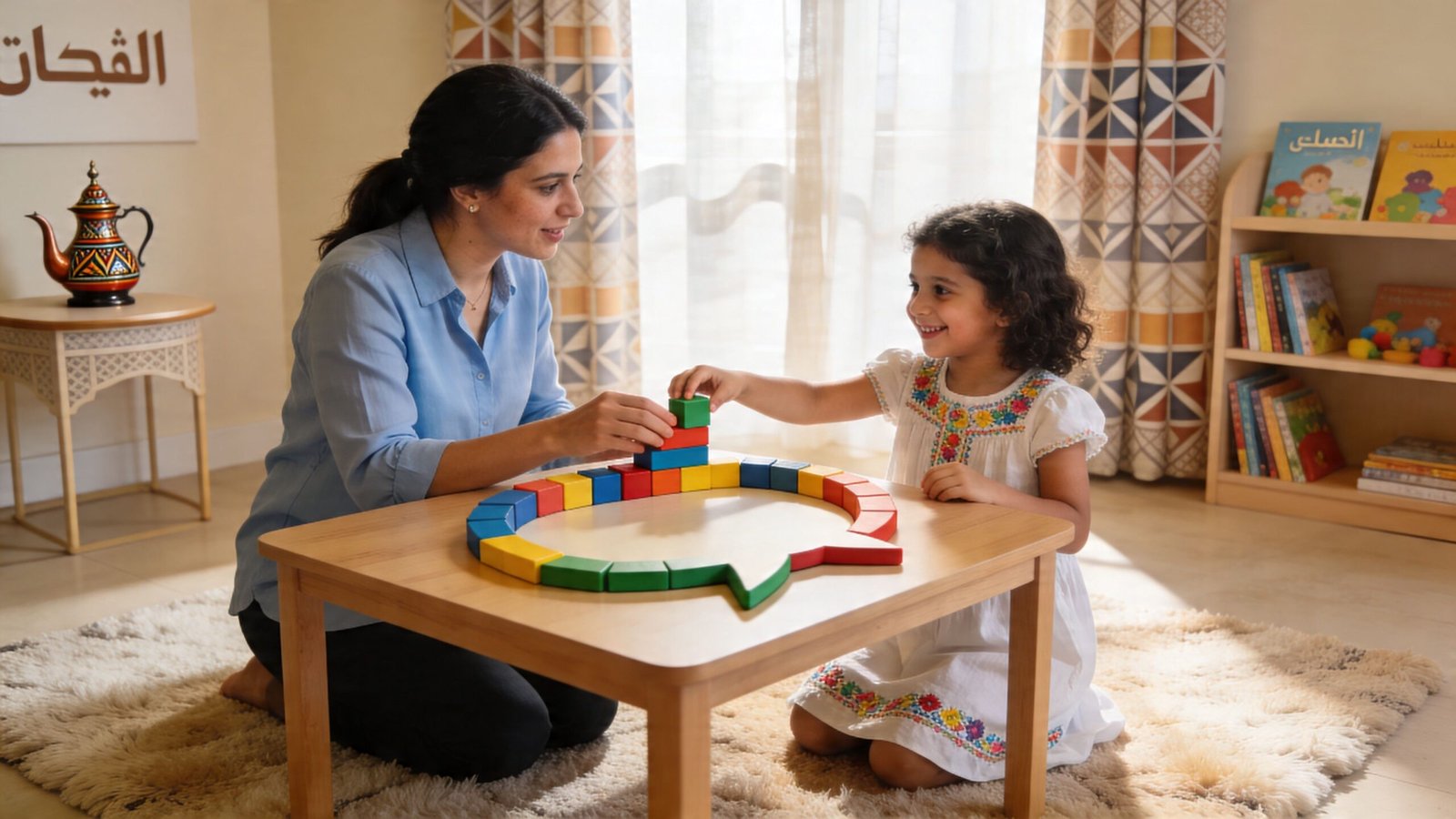
Speech and language therapy
A speech and language therapist works like a communication coach. Their role includes helping a child understand language, express needs, join interactions, and build the back-and-forth skills that support relationships and learning.
Many parents first assume this therapy is only about pronunciation. In practice, it often covers much more:
- Understanding language: Following instructions, answering questions, understanding concepts
- Using language: Asking, commenting, requesting, taking turns in conversation
- Non-verbal communication: Eye contact, gestures, shared attention
- Alternative tools: AAC supports such as picture boards or apps when spoken language is limited
An everyday example makes this clearer. If a child cries whenever they want juice, therapy may begin with a point, a picture choice, a sound, or a gesture used with clear intent. The goal is functional communication first. Clearer speech can build from there.
Occupational therapy
An occupational therapist, or OT, helps children manage the everyday work of childhood.
For children, “occupation” means the repeated tasks that fill their day. Playing with others. Getting dressed. Using a spoon. Holding a pencil. Sitting on the carpet at group time. Tolerating toothbrushing, hair washing, noise, movement, or different textures.
OT often supports children who have difficulties with:
| Therapy Type | Primary Focus | Helps With Conditions Like |
|---|---|---|
| Speech and Language Therapy | Communication and language development | Speech delays, autism-related communication needs, social communication difficulties |
| Occupational Therapy | Daily living skills, sensory regulation, fine and gross motor development | Sensory processing differences, developmental delays, school readiness challenges |
| ABA Therapy | Learning, behaviour, social skills, adaptive routines | Autism, behaviour regulation needs, communication and classroom participation challenges |
| Educational Psychology | Learning profile, cognition, emotional and school functioning | School readiness concerns, learning differences, developmental and behavioural concerns |
A child who refuses socks, covers their ears in the supermarket, or becomes upset during messy play may be reacting to sensory input in a different way. OT helps parents and teachers understand those reactions and build skills that make daily life easier.
ABA therapy
Applied Behavior Analysis, often called ABA, is a structured teaching approach used to build useful skills and reduce barriers that interfere with learning or participation.
Good ABA looks at the reason behind a behaviour. If a child drops to the floor during a difficult task, the issue may be communication, frustration, confusion, sensory overload, or an inability to ask for help. Therapy then teaches a replacement skill that serves the same purpose in a safer and more effective way.
That might include learning to request a break, wait briefly, move between activities, or follow a routine with less distress. If you want to understand how a child behavioral therapist fits into a broader support plan, ask how behaviour goals are coordinated with speech, sensory needs, and daily living skills.
Practical rule: A therapy plan should teach new skills, not just reduce difficult moments. Communication, regulation, and participation all matter.
Educational psychology
An educational psychologist helps explain how a child learns, processes information, and responds to the demands of a classroom.
This role becomes useful when parents or teachers notice a gap between what a child seems to know and what they can show. A child may understand more than they can express, lose focus in group activities, struggle with transitions, or perform well one day and poorly the next. Those patterns can have different causes, and educational psychology helps sort them out.
An educational psychologist may look at attention, learning profile, emotional factors, readiness for school, and the kinds of support that help a child cope and succeed in an educational setting.
How these therapies work together
Children rarely need support in only one area. Communication affects behaviour. Sensory regulation affects attention. Motor skills affect play, dressing, and classroom participation.
That is why therapy in UAE settings often works best as a team effort. A child with limited language may also need help tolerating transitions. A child who seems “behavioural” may be overwhelmed, unable to communicate clearly, or struggling with sensory input. A coordinated plan helps each professional work on the same real-life goals, which is far more useful for families than collecting separate recommendations that do not connect.
The First Step Recognizing Signs and Seeking an Assessment
It is 10 p.m. and you are replaying the day in your head. Your child cried when you could not work out what they wanted. Nursery mentioned group time was hard again. A relative said, “Give it time.” You are left with the same question many parents in the UAE ask. Should I wait, or should I check?
Checking gives you information. An assessment is not a label handed out at the door. It works more like a starting map. It helps you see what your child is finding easy, what is hard, and which kind of support makes sense in the UAE system.
Signs that deserve a closer look
Children develop at different speeds. That part is true. What matters is the pattern you see over time and across settings.
A closer look can help if your child:
- uses fewer words than you would expect, or stops using words they had before
- has trouble understanding language, including simple instructions
- finds social interaction hard, such as limited shared attention, imitation, or joining play
- gets intensely frustrated, especially when they cannot communicate clearly
- reacts strongly to sensory input, including sound, movement, textures, lights, or transitions
- struggles with early classroom demands, such as sitting, listening, taking turns, or separating from caregivers
Some parents worry most about speech. Others notice play, attention, regulation, or social connection first. Those concerns often overlap. If your questions are around autism traits, social communication, or interaction patterns, this guide to autism assessment and support in the UAE can help you understand what professionals may ask in the first stage.
One concern on its own may not mean much. Several concerns showing up again and again usually deserve a proper assessment.
What to do first
Parents often think they need to arrive with the right answer. You do not. You only need a clear picture of what daily life looks like for your child.
A practical first sequence looks like this:
Write down what you notice
Keep short notes for a week or two. Record what happens at home, in nursery, during meals, and on the playground. Real examples help more than general worries.Ask other adults what they see
A teacher, nanny, or grandparent may notice different strengths and difficulties. Children often manage one setting better than another.Choose where to start
Some families begin with a paediatrician. Others contact a therapy or assessment centre directly. Both routes can work in the UAE, depending on your concern and your insurance requirements.Ask what the assessment will include
A good provider should explain who will see your child, how long it will take, and what kind of report or feedback you will receive.
This step matters for another reason. In the UAE, paperwork often affects what happens next. A referral may be needed for insurance. Certain plans only cover care after an approved assessment. Asking these questions early can save time, cost, and frustration later.
What happens during an assessment
Many parents picture a young child sitting at a desk answering questions. Early childhood assessments are usually more natural than that.
Professionals may use play, observation, structured interaction, parent interview, and simple activities matched to your child’s age and attention span. They are looking for patterns. How does your child communicate needs? What do they understand? How do they play, copy, shift attention, manage transitions, and respond to sensory input?
A good assessment works like checking the foundations of a house before deciding what repairs are needed. If speech looks delayed, the clinician also wants to know what sits underneath that delay. Is your child struggling to understand language? To attend? To tolerate interaction? To plan movements for speech? The answer changes the support plan.
By the end, the report should translate professional observations into plain language. You should understand:
- what your child is already doing well
- where support is needed
- which therapies, if any, are recommended
- which goals make sense right now
- what you can start doing at home
A good assessment should leave you feeling informed and steadier, not confused.
Why earlier is often easier
Early support is often easier because small changes in communication, play, and regulation can reduce stress across the whole day. A child who can show what they want more clearly often becomes less frustrated. Parents spend less time guessing. Routines at home and nursery usually feel more manageable too.
That does not mean every concern turns into long-term therapy. Sometimes the assessment shows your child needs monitoring, a few parent strategies, or short-term support. Sometimes it shows a clearer need for regular intervention. Either result is useful, because it replaces uncertainty with a plan.
If a provider gives you labels without explaining what those labels mean in daily life, keep asking. You should leave with practical next steps, not a report that sits in a drawer.
Building Your Child's Individualized Therapy Plan
You have your assessment report in hand. Your child may need speech therapy, occupational therapy, behaviour support, or a mix of services. At that point, many parents expect the next step to be simple: book sessions and begin.
What usually helps more is a plan that connects those sessions into one clear direction.

A good therapy plan works like a map. It should show where your child is starting, which skills matter most right now, who is working on what, and how progress will be reviewed. Without that map, therapy can turn into a series of separate appointments that do not build on each other.
What an individualized plan really means
An individualized plan starts with daily life, not with a fixed package of sessions.
Two children may both be described as having a speech delay, yet their plans can look very different. One child may need help getting words out. Another may first need support with understanding language, staying engaged with an adult, or using gestures and play. A child who becomes overwhelmed by noise or transitions may also need regulation support before learning can come more easily.
This is why the best question is not, “What therapy does my child have?” It is, “What is getting in the way of my child participating, communicating, and learning each day?”
That shift matters. It turns therapy from a list of services into a practical plan for home, nursery, and community life in the UAE.
How different therapies fit together
Parents are often relieved to learn that therapies should not run on separate tracks.
If a speech therapist is helping your child request help, an occupational therapist may work on body regulation and attention so your child can stay with the interaction long enough to practise that skill. If a behaviour therapist is building smoother transitions, that same work can make mealtimes, dressing, and nursery drop-off less stressful. If an educational psychologist is involved, they may help shape goals around learning style, classroom expectations, and school readiness.
When the team shares goals, your child gets repetition with purpose. The same skill shows up in more than one place, which is often how learning sticks.
The strongest plans feel coordinated. Your child hears the same message across people, settings, and routines.
What good goals look like in real life
Good goals should be easy to picture.
A vague goal such as “improve communication skills” is hard for parents to use. A clearer goal sounds more like daily life:
- Communication: asking for help with a word, gesture, picture, or device
- Attention and engagement: staying with a simple adult-led activity for a short, realistic period
- Regulation: moving between activities with less distress
- Play: copying simple actions, sharing attention, or taking turns
- Daily routines: tolerating tooth brushing, dressing steps, sitting for snack, or joining a short group activity
These goals should reflect your family's actual pressure points. If mornings are difficult, mealtimes feel tense, or nursery participation keeps breaking down, the plan should address those areas. Therapy is most useful when it reduces strain in the parts of the day that matter most.
What parents do, and what you do not need to do
Parents are part of the plan, but you are not expected to turn your home into a clinic.
Your role is usually much more realistic than that. You may learn a few strategies to use during ordinary routines, such as pausing to encourage a request, simplifying language during play, or using a visual cue before transitions. Small changes used consistently often help more than trying to do therapy activities for hours.
This is also the stage where many families in the UAE benefit from asking practical system questions early. How often will the team review goals? Will the nursery receive guidance? Which therapist is the main point of contact? If approvals or reimbursement may matter later, keeping the plan clear and well-documented can also help when reviewing health insurance for expatriates in the United Arab Emirates.
One example of this multidisciplinary model in Dubai is Georgetown Early Intervention Center, which offers educational psychology, occupational therapy, speech therapy, and behaviour play-based therapy, with individual plans built around each child’s needs.
A simple checklist before you agree to the plan
Before you say yes, look for these signs that the plan is built for your child rather than copied from a standard template:
Clear priorities
A short list of immediate goals matters more than a long wishlist.Joined-up thinking
If communication, behaviour, sensory needs, and learning overlap, the plan should show how the professionals will work together.Home carryover
You should leave knowing what to try between sessions, in ways that fit normal family life.A review point
The team should explain how progress will be tracked and when goals will be adjusted.
If the plan feels generic, ask for plain-language explanations. You should be able to see how each goal connects to daily life, why each service has been recommended, and what success would look like over the next few months.
Navigating Costs Insurance and Regulations in the UAE
For many parents, this is the part that raises stress fastest. You may feel ready to help your child, then suddenly run into forms, approvals, exclusions, and unfamiliar licensing terms.
That doesn’t mean the system is impossible. It means you need to approach it in layers.

Start with coverage, not assumptions
Therapy coverage varies widely across plans in the UAE. Some policies include parts of assessment or therapy with pre-authorisation. Others exclude developmental services, limit session numbers, or require referrals.
Before booking a package, ask your insurer for answers in writing. Keep the questions narrow:
- Is the assessment covered?
- Are speech therapy, occupational therapy, or behaviour therapy covered?
- Do we need a referral from a paediatrician?
- Is pre-approval required?
- Which provider licences or facility approvals matter for reimbursement?
- Are school-based or centre-based services treated differently?
If you’re new to the country or comparing plans, this guide to health insurance for expatriates in the United Arab Emirates gives useful background on how expatriate cover is structured and why policy details matter so much.
Why the market is expanding, but family decisions still need care
Therapy in UAE is growing within a larger mental health and care market. The UAE mental health market was valued at USD 13.10 billion in 2024 and is projected to reach USD 28.26 billion by 2033, with growth linked to government initiatives, digital adoption, and broader access for the 1 in 4 residents experiencing a mental health condition (IMARC UAE mental health market).
That growth is encouraging. But market growth doesn’t tell you whether a provider is right for your child, whether your policy covers the service, or whether a recommendation matches your family’s priorities. Those still need careful checking.
Regulations and credentials parents should recognise
Federal Law No. 37 of 2021 strengthened the professional framework around mental health and related services in the UAE, including licensing and staffing requirements, as noted in the market overview cited above. For parents, the practical takeaway is simple. Ask who licenses the provider and what credentials each therapist holds.
Look for clear answers on:
- Speech therapist qualifications: Professional licensing and paediatric experience
- Occupational therapist licensing: Plus direct experience with children
- Behaviour specialist credentials: Such as BCBA where relevant
- Educational psychologist credentials: And scope of practice for assessment and planning
- Facility approval: Depending on the emirate and service type
How to avoid financial surprises
A few habits can save families a lot of stress:
- Request itemised documentation: Ask for assessment, report, and therapy billing categories separately.
- Ask about review points: If your child’s plan changes, your cost pattern may change too.
- Check cancellation rules: These affect real monthly spending.
- Clarify home practice expectations: A centre that teaches parents well may help you use sessions more effectively.
The goal isn’t to become an insurance expert overnight. It’s to slow the process down enough that you know what you’re agreeing to.
Partnering with Your Provider Questions to Ask and What to Expect
Parents sometimes enter the first meeting feeling like they’re being examined. In reality, you’re interviewing the provider too.
That matters because specialised child services have not always been easy to find in the UAE. In 2016, the country had only 1 psychiatric bed per 100,000 population and fewer than 1 occupational or speech therapist per 100,000, highlighting how significant the historical scarcity of specialised support has been (UAE mental health infrastructure overview). Today’s growth in services makes careful provider selection even more important, not less.

Questions worth asking in the first meeting
You don’t need to ask everything at once. But these questions tell you a great deal about how a centre works.
Who will assess my child, and what are their qualifications?
Ask for the actual professionals involved, not just department names.How do you decide goals?
Listen for individual planning based on assessment, daily function, and family priorities.How do the therapists work together?
If communication, sensory regulation, and behaviour overlap, the answer should reflect that.How do you measure progress?
You want more than “We’ll keep an eye on it.” Ask how progress is benchmarked and reviewed.What will I do at home?
Good therapy includes parent coaching that is realistic, not overwhelming.How often will the plan be reviewed?
Children change. Plans should too.
What a healthy provider relationship feels like
A strong provider usually explains things in plain language. They welcome questions. They don’t rush you into a long commitment before the assessment is clear. They can describe why a recommendation was made and what success would look like in everyday life.
A weaker provider often leans on jargon, gives vague answers, or presents a fixed package before understanding your child.
If you leave a consultation more confused than when you entered, ask for clarification before moving forward.
Communication matters more than many parents expect
In the UAE, many families speak one language at home and another in school or therapy settings. That can make assessments, reports, and parent coaching harder to follow.
If language is becoming a barrier during consultations or document review, tools such as an Arabic to English voice translator can help families capture and review spoken information more confidently between appointments.
What to expect from yourself
Parents often ask, “What if I do it wrong at home?” The honest answer is that perfection isn’t the target. Consistency is.
Your job is not to run clinic sessions at home. Your job is to notice opportunities. Pause before guessing what your child wants. Offer choices. Use the same cue the therapist uses. Celebrate small wins. Report back candidly when something doesn’t work.
That kind of partnership gives therapists better information and gives your child more chances to practise where life happens.
Conclusion Your Next Steps with Georgetown's Support
Most families begin this process with uncertainty, not certainty. You notice something. You hesitate. You compare your child with others. You ask friends. You search late at night. Then, eventually, you decide that getting clear guidance is kinder than staying stuck in worry.
That’s the significant value of thoughtful therapy in UAE settings. It turns vague concern into practical next steps.
The path is usually simpler than it first appears. Notice the patterns. Arrange an assessment. Learn what each therapy does. Build a plan around your child, not around a generic package. Ask direct questions about teamwork, goals, credentials, insurance, and review points. Then give the process time, while staying involved.
For children with autism, speech delays, sensory differences, school readiness challenges, or broader developmental needs, early and individualised support can make daily life feel more manageable for the whole family. Communication gets easier. Frustration becomes more understandable. Small routines start to improve. Those early changes matter.
What many parents need most is not more jargon. It’s a centre that can connect educational psychology, occupational therapy, speech therapy, and behaviour support into one plan that reflects their child’s actual strengths and needs.
If you’re at the stage of asking, “What should we do next?”, the next step doesn’t have to be dramatic. It can be a conversation with a qualified team that listens carefully, explains clearly, and helps you decide what support fits your child now.
If you’d like a calm, practical starting point, Georgetown early intervention center can help you explore your child’s needs and discuss an individual therapy plan with its multidisciplinary team. You can learn more or book a consultation at Georgetown early intervention center.