
You may be here because something small has been tugging at you for weeks. Your toddler isn’t using as many words as other children their age. Nursery staff have mentioned difficulty joining group activities. Mealtimes, dressing, or transitions feel harder than they should. You don’t want to panic, but you also don’t want to “wait and see” if your instinct is telling you something matters.
That mix of love, worry, and uncertainty is very common. As educators and child development specialists, we meet many parents in this exact moment. They’re not looking for labels first. They’re looking for clarity, kindness, and a practical next step.
When families search for kids first dubai, they often run into a confusing mix of nursery groups, medical centres, and therapy providers. The most helpful place to start isn’t the branding. It’s the idea behind the phrase: putting the child first, understanding their development carefully, and building support around who they are.
Understanding the Kids First Philosophy in Dubai

If you’ve typed kids first dubai into a search bar, you’ve probably noticed that the name can mean different things. Dubai’s early childhood space includes large nursery networks and also specialist centres that focus on developmental support.
One verified overview notes that Kids First Group, established in 2011, is a large network of nurseries, while kidsFIRST Medical Center, founded in 2006, pioneered multidisciplinary therapy services in Dubai, and that the useful focus for families is the broader child-first philosophy behind dedicated intervention work (RocketReach profile overview). That distinction matters because a nursery and an intervention centre don’t do the same job.
A philosophy, not just a name
A kids first approach means the child’s needs shape the plan. Adults don’t force a standard programme and hope it fits. Instead, they ask:
- How does this child communicate
- What helps them feel safe and ready to learn
- Which skills need support first
- How can parents and professionals work together
That sounds simple, but it changes everything. It shifts the focus from “What’s wrong?” to “What does this child need in order to grow?”
Practical rule: If a service talks more about its packages than your child’s daily life, keep asking questions.
Why the distinction helps parents
A nursery may support routine, play, early learning, and social exposure. A specialist intervention centre looks more closely at development in areas such as speech, behaviour, sensory processing, motor skills, learning, and emotional regulation.
Parents often get confused because both worlds care about children. But they serve different purposes.
Here’s the clearer way to understand this:
- Nursery support: Helps children learn and participate in a group setting.
- Early intervention support: Identifies barriers and teaches specific skills through targeted therapy.
- Child-first care: Connects both, so the child isn’t expected to cope alone.
When families understand that difference, the search becomes less overwhelming. The question stops being “Which Kids First is the right one?” and becomes “Who will really understand my child and build support around them?”
What Is Early Intervention and Why Does It Matter
Early intervention is specialised support for young children who are showing differences or delays in development. It can help with communication, attention, play, sensory needs, movement, behaviour, learning readiness, and day-to-day independence.
Think of early development like building the foundation of a house. When the foundation is supported early, the rest of the structure has a stronger base. If a child is struggling with communication, for example, that challenge can affect play, learning, behaviour, and confidence. Helping early can reduce that knock-on effect.
Why early years are so important
Young children’s brains are still organising core pathways for language, movement, regulation, and social connection. That’s why support in the early years can be so powerful. It isn’t about pushing a child. It’s about meeting the brain while it’s especially ready to learn through repetition, play, and everyday experience.
Parents sometimes hear “intervention” and imagine something cold or clinical. In reality, good early intervention usually looks like a child playing, moving, exploring, taking turns, using pictures, practising sounds, or learning how to manage transitions with gentle support.
For families who want a practical overview of what that can include, this guide to an early intervention programme in Dubai is a useful example of how support is usually organised around developmental needs rather than a one-size-fits-all timetable.
What early intervention is not
It helps to clear up a few common worries.
- It isn’t giving up on natural development: It supports development.
- It isn’t only for severe concerns: Children with mild but meaningful struggles can benefit too.
- It isn’t a fixed label: Support can begin before a formal diagnosis.
- It isn’t just for the child: Parents are part of the process from the start.
Early support is often best understood as skill-building, not problem-finding.
What changes when help comes early
When children receive the right support, daily life often becomes more manageable. A child may find it easier to express needs, join play, tolerate routines, use hands more effectively, or cope with sensory experiences. Parents also gain something important: a clearer understanding of what helps their child.
That clarity can lower stress at home. Instead of guessing, families begin using strategies that match the child’s profile. The child feels more understood. The adults feel less alone. And progress, even when gradual, becomes easier to see.
Key Signs Your Child Might Benefit from Support
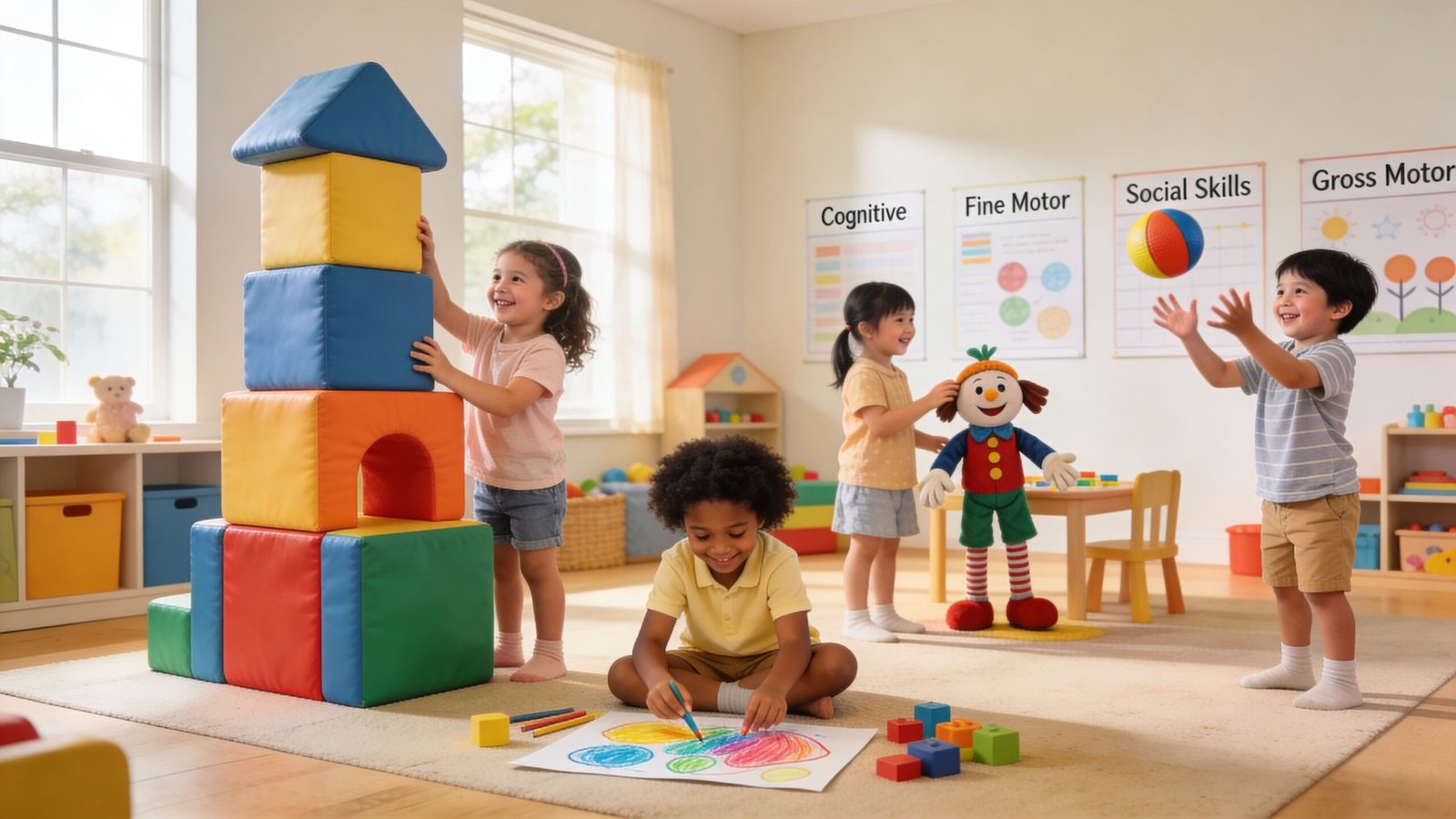
Most parents don’t first notice a “condition”. They notice patterns. Their child seems frustrated more often. Play looks different. Group time is difficult. Words aren’t coming, or they come in an unusual way. These are often the first signs that a child may benefit from extra support.
The key is not to treat this like a diagnostic checklist. Think of it as a set of things to notice.
Communication and speech
Some children understand a lot but struggle to express themselves. Others use words, but not always in a functional or flexible way.
You might want to look more closely if:
- You’re doing a lot of translating: You understand your child, but other people often don’t.
- Words are limited or inconsistent: They use language one day, then seem to lose it in everyday situations.
- They repeat phrases without clear purpose: Language may sound copied rather than used for real communication.
- Frustration builds quickly: Meltdowns happen because your child can’t get their message across.
If you’ve been wondering whether a communication difference could be linked to a broader developmental pattern, this parent-friendly guide on signs of autism in toddlers may help you organise what you’re seeing without jumping to conclusions.
Play and social interaction
Play tells us a great deal about development. It shows how a child explores, connects, copies, imagines, and shares attention with others.
Consider seeking advice if your child:
- Prefers objects over people most of the time
- Finds turn-taking very hard
- Gets overwhelmed in group activities
- Uses toys in a very repetitive way
- Struggles to join pretend play
A child doesn’t need to be outgoing to be developing well. Quiet children can be thriving. The question is whether they’re building flexible, connected play skills over time.
Trust the pattern, not one isolated moment. Every child has off days. Repeated concerns deserve attention.
Movement, regulation, and daily skills
Some children need support outside speech and social learning. Their body, attention, or sensory system may be making daily tasks harder.
You may notice:
- Fine motor difficulty: Trouble with crayons, blocks, feeding tools, or simple hand tasks.
- Coordination challenges: Frequent bumps, falls, awkward climbing, or avoiding movement.
- Sensory differences: Strong reactions to noise, textures, grooming, or busy places.
- Routine struggles: Dressing, sitting for meals, transitions, and sleep routines feel unusually hard.
A developmental evaluation doesn’t mean something is “wrong”. It means you’re gathering better information. That’s what strong advocacy looks like. You’re not overreacting by asking questions early. You’re paying attention.
The Four Pillars of Therapy at Georgetown
Parents often arrive hearing the same word in many places. Kids First. Child development. Early intervention. Support. In Dubai, that branding can blur together quickly. A clearer question helps more. What actually puts the child first?
At Georgetown, a child-first approach means choosing support based on how your child communicates, moves, learns, and copes in daily life. The therapy names matter less than the purpose behind them. Each service addresses a different part of development, and together they create a fuller picture, much like four corners helping hold up one strong tent.
Georgetown’s therapy services at a glance
| Therapy Type | Focuses On | Example Activity | Helps With |
|---|---|---|---|
| Speech Therapy | Understanding and using language, speech sounds, functional communication | Turn-taking games, picture choices, sound practice during play | Expressing needs, following instructions, reducing frustration |
| Occupational Therapy | Sensory processing, fine motor skills, body regulation, independence | Obstacle courses, hand-strength activities, dressing practice | School readiness, attention to task, daily routines |
| Educational Psychology | Learning profile, attention, emotional regulation, school participation | Play observation, structured tasks, parent discussion | Understanding strengths, barriers to learning, support planning |
| ABA and Play-Based Therapy | Behaviour, communication, social engagement, adaptive skills | Reinforced play routines, imitation games, transition practice | Participation, flexibility, learning through structured support |
Speech therapy
Speech therapy supports more than clear words. For many young children, the first goal is functional communication. That means helping them ask for help, show what they want, refuse something calmly, respond to others, and share enjoyment.
Sessions often look simple from the outside. A therapist may use bubbles, books, toy food, songs, or pictures to create many chances to communicate. The method is purposeful. Like building a staircase one step at a time, the therapist starts with the easiest successful interaction and adds the next step only when the child is ready.
Parents are sometimes surprised by what counts as progress. A child pointing instead of crying, looking toward a parent to share interest, or using one useful word more consistently can change daily life at home.
Occupational therapy
Occupational therapy focuses on the skills that help a child manage the day. That includes fine motor control, sensory processing, body awareness, emotional regulation, attention, feeding, and independence with routines.
This area can feel confusing because the word “occupation” sounds adult. In childhood, the main occupations are play, learning, eating, dressing, joining family routines, and taking part at nursery or school. If those everyday tasks feel unusually hard, occupational therapy examines why.
A session might include climbing, balancing, squeezing putty, threading beads, opening containers, or practising dressing steps. Those activities are not random. They help strengthen the body, organise sensory input, and improve coordination so daily tasks require less effort.
Educational psychology
Educational psychology explains how a child learns and what may be getting in the way. That distinction matters because two children can show the same outward struggle for very different reasons.
The psychologist observes, asks careful questions, reviews developmental history, and studies how the child responds to tasks, change, attention demands, and social expectations. The goal is not a label for its own sake. The goal is a useful map. A good map shows both the roadblocks and the open roads.
This can be especially reassuring for families who hear comments like, “He understands more than he can show,” or, “She is capable, but group settings fall apart.” Educational psychology turns those vague impressions into practical guidance for parents, teachers, and therapists.
When adults understand why a child is struggling, support becomes calmer, kinder, and more effective.
ABA and play-based therapy
ABA can look very different depending on how a clinic uses it. In a child-first model, behavioural support is built into play, communication, and everyday routines. The aim is to help the child learn skills that make life easier and participation more possible.
A therapist may work on imitation, waiting, transitions, joint attention, flexible play, following simple directions, or using a skill with different people in different settings. Reinforcement is used carefully so the child experiences success and stays engaged. Done well, it should feel structured and warm, not mechanical.
Parents who want a clearer explanation can read this guide to ABA therapy in Dubai, which explains how behavioural support can sit alongside play and communication goals.
What makes these four pillars useful is not the list itself. It is how they connect. One child may need all four. Another may benefit from one or two. A child-first team does not force every child into the same package. It studies the child, matches the support, and adjusts the plan as skills grow.
Crafting Your Child’s Unique Therapy Plan

No thoughtful early intervention plan starts with a standard template. It starts with careful listening. Parents usually arrive with a mix of observations, reports, worries, and hopes. One family may be concerned about speech. Another may be struggling with behaviour at home. A third may say, “Something feels different, but I can’t explain it well.”
The first step is usually a conversation that turns those concerns into clear questions. What happens at nursery? How does your child play? What do meals, sleep, transitions, and outings look like? What calms them? What upsets them?
The assessment process in real life
Families often fear assessment because the word sounds formal. For young children, it’s usually much gentler than they expect. The clinician may observe play, invite the child into simple activities, watch how they respond to language, note movement patterns, and ask parents for examples from daily life.
That matters because children don’t always show their true abilities in a rushed or unfamiliar setting. A skilled assessment looks beyond first impressions.
A good evaluation often explores:
- Strengths first: What the child already enjoys, understands, and does well
- Barriers next: Which moments are breaking down and why
- Context: What happens at home, in nursery, and in social settings
- Readiness: Which goals are realistic to begin with now
Building the blueprint together
Once the picture is clearer, the therapy plan becomes a kind of developmental blueprint. It should reflect the child’s actual profile, not just a diagnosis or referral label.
One child’s plan may focus on requesting, imitation, and sensory regulation. Another may need hand strength, classroom readiness, and emotional flexibility. Even if two children both have speech delay, their goals may be completely different.
A useful plan should feel specific enough that a parent can recognise their child in it.
The strongest plans also include the family’s priorities. If parents say, “We want him to tell us what he needs without crying,” that goal matters. If they say, “She can cope at home but falls apart in group settings,” that should shape the work too.
What individualised really means
An individual plan isn’t only about choosing therapies. It’s about deciding:
- Which goals come first
- How progress will be noticed
- What strategies should carry over at home
- When goals need adjusting
That flexibility protects children from being pushed too fast or held at one level for too long. It also helps parents feel included rather than sidelined. You know your child in ways no checklist ever will. A well-crafted plan treats that knowledge as essential.
A Family’s Guide to Starting Therapy at Georgetown
Starting therapy often feels bigger before it begins than after it begins. Parents imagine a clinical process, but many children experience the first sessions as structured play with a new adult who knows how to connect.
In the early visits, the therapist is learning what motivates your child. That might be blocks, music, spinning toys, books, sensory play, movement games, or snack routines. Those interests become the bridge into learning.
What the first few weeks often feel like
Rather than expecting instant performance, therapists usually focus on comfort, rapport, and small wins. Your child may practise one or two meaningful skills again and again in different playful ways. That repetition is deliberate. Young children learn through familiarity.
Parents usually play an active role in several ways:
- Sharing observations: You explain what happens at home, what helps, and what triggers stress.
- Watching patterns: You notice whether skills used in therapy show up elsewhere.
- Using home strategies: You carry over simple techniques in daily routines.
- Reviewing progress: You ask questions and help decide what should come next.
How progress is shared
Progress isn’t always dramatic from one session to the next. Sometimes it looks like a child tolerating a new demand, sitting for longer, using one more gesture, accepting a transition with less distress, or copying a simple action for the first time.
Those changes matter because they build larger skills over time.
A good therapy process keeps families informed through regular feedback, practical suggestions, and review points. Parents shouldn’t feel they are dropping their child at a door and hoping for the best. They should understand what is being targeted and why.
Small steps count, especially when they make home and nursery life easier.
Frequently Asked Questions About Early Intervention
Parents in Dubai often hear many versions of “Kids First” and are left wondering what matters. The clearer question is simpler. Is the support genuinely child-first? At Georgetown, that means starting with your child’s present abilities, daily challenges, and next realistic steps, rather than trying to fit them into a standard programme.
Is my child too young for support?
Usually, no. Early support does not have to mean intensive therapy right away. For very young children, it often begins with guidance around communication, play, routines, attention, and interaction, much like giving a young plant the right light and water before problems take root.
Should I wait and see?
Some children do progress on their own in certain areas. Still, if the same concerns keep showing up across home, nursery, or play, an assessment can give you clarity instead of leaving you in limbo. It is a way to understand your child better, not a rush toward a label.
Can nursery support replace therapy?
Nursery support and therapy serve different purposes. A nursery teacher is helping your child function within a busy group. A therapist looks closely at the specific skill that is getting in the way, then teaches it in smaller, more intentional steps. Many children do best when both work together.
How long does therapy last?
That depends on your child’s needs and goals. Some children benefit from a short period of focused help. Others need support for longer, with goals changing as new skills develop. Progress is better judged by meaningful daily gains than by the number of months on a calendar.
What can I do at home?
Families contribute significantly by using simple strategies during ordinary routines. A few repeated moments at mealtime, bath time, or playtime often teach more than a long practice session once a week. Follow your child’s interests, pause to give them a chance to respond, and use the approach your therapist has shown you.
Small, steady practice counts.
Where can I read more parent-friendly questions?
If you would like another plain-language resource, these additional frequently asked questions can help you think through common concerns about communication and support options.
If you are looking for thoughtful, individualised support for your child, Georgetown early intervention center offers services in educational psychology, occupational therapy, speech therapy, and behaviour play-based therapy. Each learner receives an individual plan because every child develops in their own way, and support should reflect that.