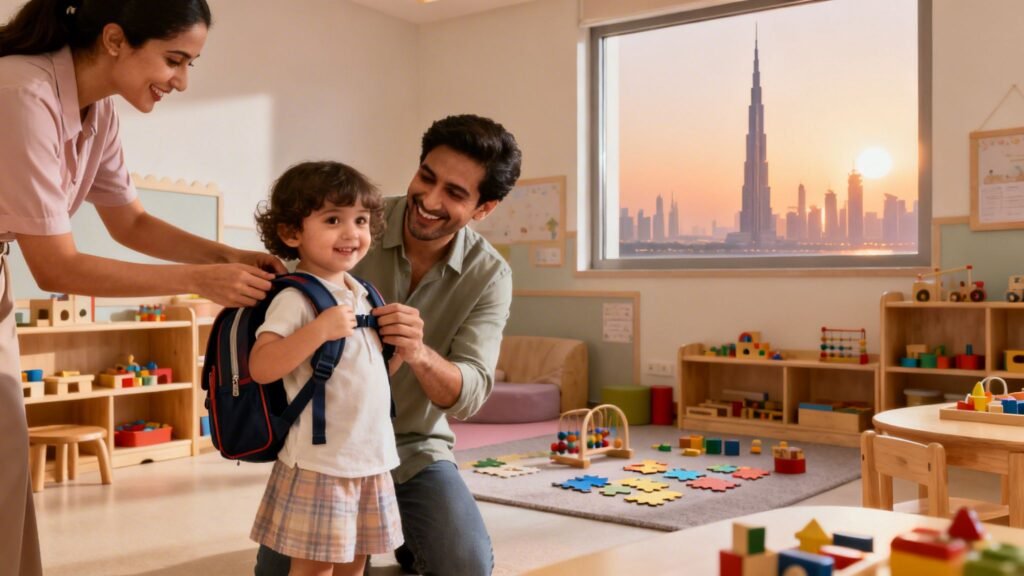
When we talk about school readiness Dubai, it’s about so much more than just a child’s age. It really comes down to their developmental ability to walk into a classroom and feel ready to thrive—socially, emotionally, and cognitively. It’s that spark of confidence to say goodbye to you, the natural curiosity to learn, and the independence to handle small tasks on their own.
What School Readiness Really Means in Dubai
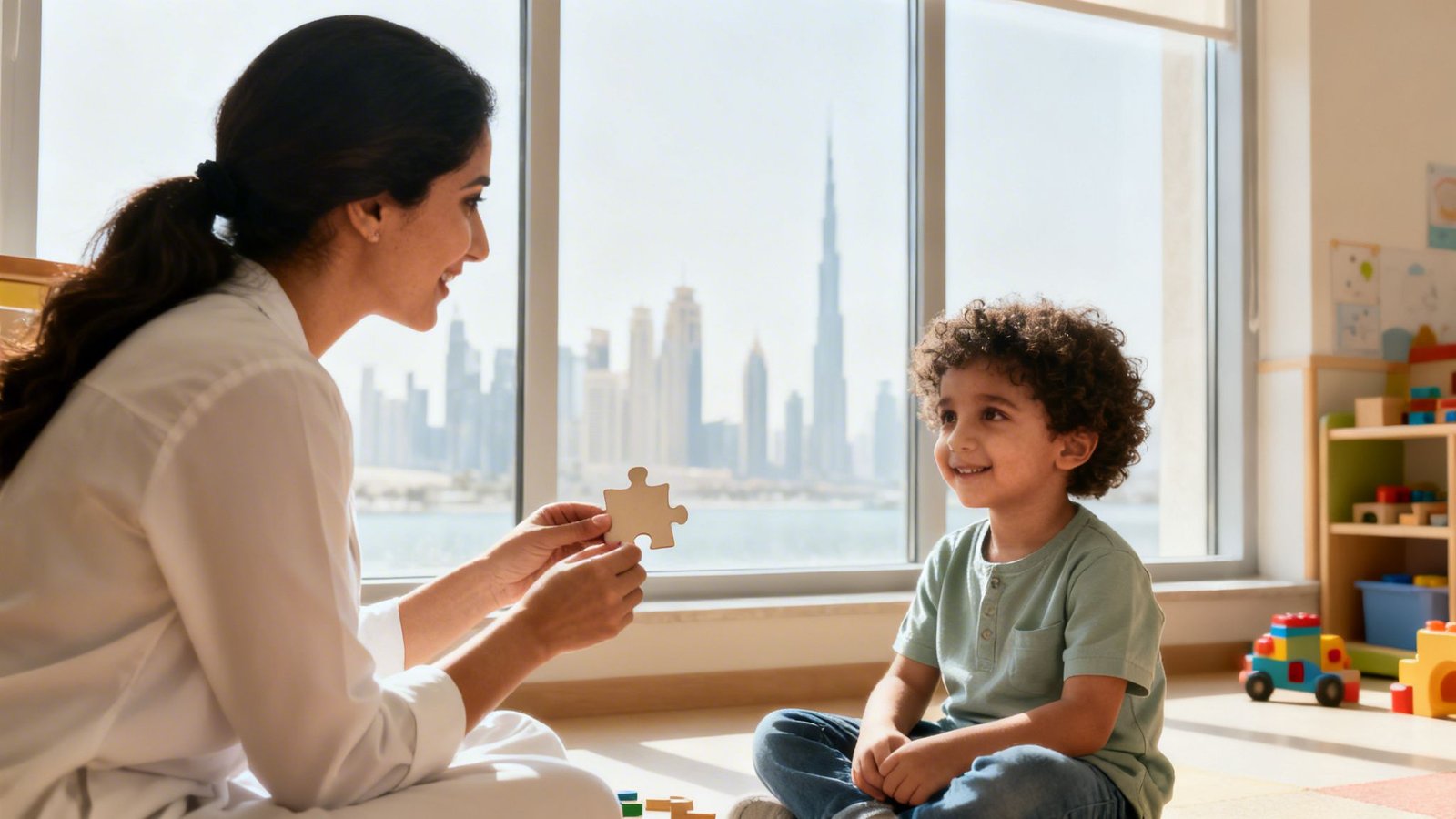
Trying to figure out “school readiness” can feel like a high-stakes exam for parents, especially here. With Dubai’s incredibly diverse international curricula and competitive school placements, the pressure is real. But what I want parents to know is that schools and the Knowledge and Human Development Authority (KHDA) aren’t looking for academic superstars at age three or four. They’re looking for a holistic set of skills.
Think of it as a collection of core abilities that allow a child to feel happy, secure, and genuinely able to participate in the learning environment of FS1 or KG1.
Quick Guide to School Readiness Pillars in Dubai
Schools in Dubai generally assess children across a few key developmental areas. Getting familiar with these “pillars” gives you a clear framework to see where your child is already flourishing and where they might need a bit more support.
| Developmental Pillar | What It Looks Like in a Preschooler |
|---|---|
| Social Confidence | Happily playing alongside peers, sharing toys (most of the time!), and taking turns in a simple game without constant adult prompting. |
| Emotional Self-Management | Handling small frustrations without a major meltdown. They might use words like “sad” or “mad” and can separate from you after a reassuring goodbye. |
| Communication & Language | Following simple, two-step instructions (“Get your shoes and put them by the door”) and using words or short phrases to express their needs and ideas. |
| Cognitive Curiosity | Asking those endless “why?” questions! It’s about showing interest in books, trying to figure out a new toy, and having a natural desire to learn. |
| Physical Independence | Being able to manage their own lunchbox, use the toilet independently, hold a crayon with a decent grip, and run or climb with coordination. |
Understanding these pillars helps clarify what schools are truly looking for. It’s not about rote memorisation; it’s about building a capable, confident little person.
This focus on foundational skills is exactly why high-quality early learning experiences are so vital. In fact, Dubai’s thriving early childhood sector saw enrolment at private early childhood centres (ECCs) jump by 8% between 2024 and 2025, reaching over 29,634 children. This isn’t surprising—parents are increasingly realising the value of early preparation.
True school readiness is not a race to see who can write their name first. It’s about building a child’s confidence and independence so they see school as an exciting adventure, not a daunting task.
This foundation is precisely what we focus on at Georgetown. If you’re looking for an environment that nurtures these skills with individualised care, I invite you to learn more about our approach at the Georgetown Early Childhood Centre. Our goal is simple: to ensure your child doesn’t just meet the criteria but feels genuinely prepared to step into their first classroom with a smile. The next sections will give you actionable checklists and tips to help you on this journey.
The Ultimate Dubai School Readiness Checklist
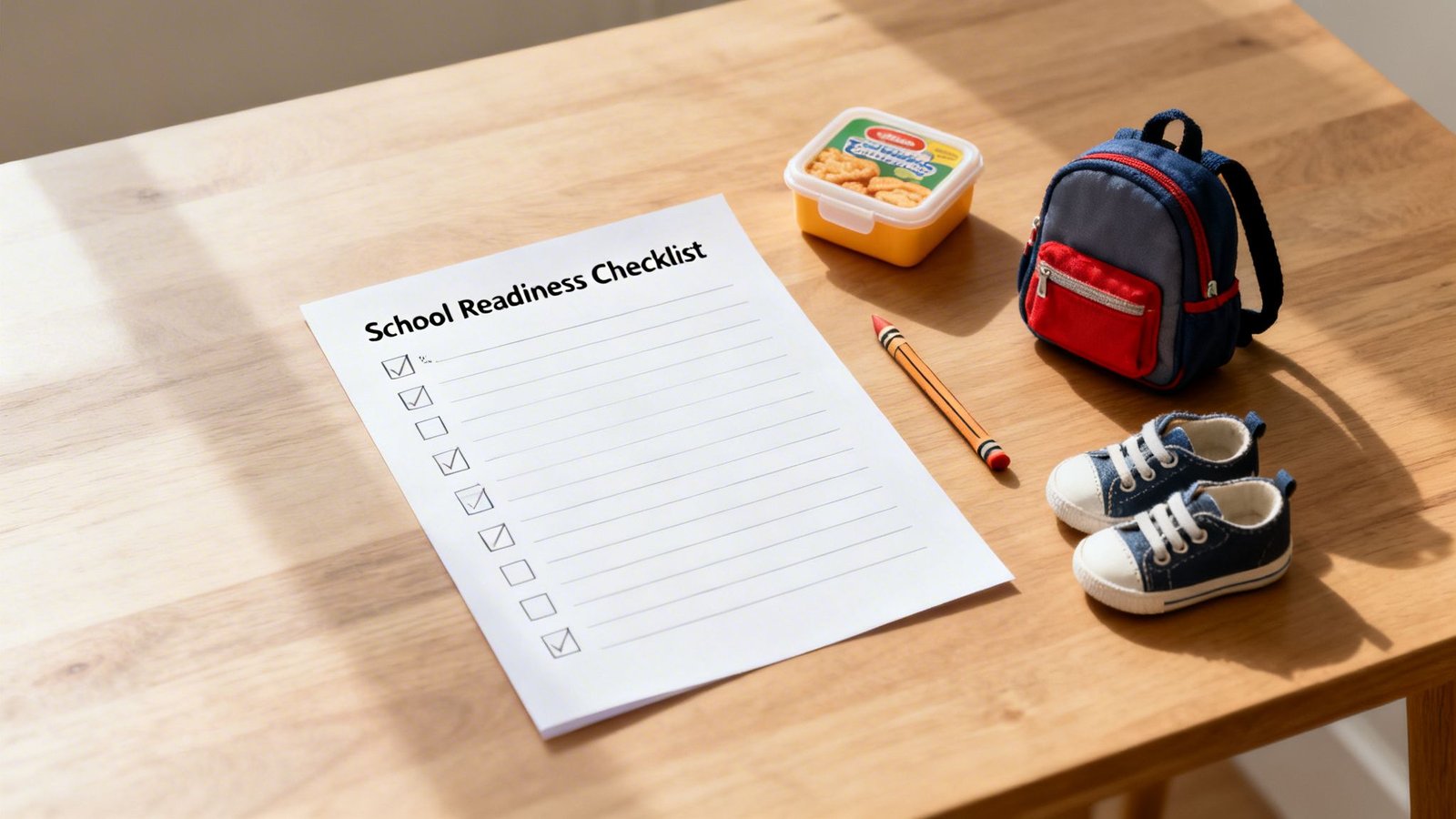
Getting your child ready for school in Dubai goes far beyond them simply being the right age. It’s really about making sure they have the core skills to walk into a classroom feeling capable, confident, and ready to learn. This checklist isn’t a test to pass or fail; think of it as a guidepost.
We’ve designed this based on what we see every day, focusing on the key developmental areas that truly matter. Use it to spot your child’s amazing strengths and pinpoint where a bit more support at home could make all the difference as you prepare for this big step.
Social and Emotional Skills
From a teacher’s perspective, a child’s ability to get along with others and manage big feelings is probably the single most important factor for a smooth start. In a busy Dubai classroom, teachers are looking for children who can settle into the group without too much difficulty.
Here’s what that looks like in practice:
- Separates from you with confidence: It’s normal for them to be a little sad at goodbye, but can they recover and join an activity? This shows they’re building trust with other adults, like their new teacher.
- Shows empathy for others: Have you seen them notice when a friend is upset? Offering a toy or a gentle pat is a huge step in understanding others’ feelings.
- Takes turns in games: Sharing and waiting for a turn is tough! But being able to do it, even for a short while, is fundamental for group games and classroom life.
- Interacts with peers: Do they seem interested in what other kids are doing? They might jump right into their game or simply play beside them (this is called parallel play), and both are great signs.
When a child feels socially confident, they are free to focus on learning and having fun.
Language and Communication
Being understood and understanding others is critical for learning and for safety. Your child needs a way to express themselves, whether they’re asking for help with their lunchbox or sharing a brilliant idea.
Pay attention to these communication milestones:
- Follows two-step instructions: Can they follow a simple direction like, “Please get your water bottle and put it in your bag”?
- Uses words to express needs: Instead of just pointing, are they trying to use words? Simple phrases like “More juice” or “Help, please” are fantastic.
- Answers simple questions: How do they respond to basic “who,” “what,” and “where” questions, like “Where are your shoes?”
- Enjoys listening to stories: Showing interest in books, pointing at pictures, or even asking questions shows they are developing crucial pre-literacy skills.
A child’s ability to communicate effectively reduces frustration and opens the door to more complex learning. It’s their primary tool for connecting with their new world.
Cognitive and Thinking Skills
These skills are all about curiosity—the engine of learning. Schools in Dubai work hard to create an environment of inquiry, so a child who naturally asks questions will thrive.
Look for these budding abilities:
- Shows curiosity about the world: Is your home filled with “why?” This is a wonderful sign of an active, hungry mind trying to figure things out.
- Recognises basic colours and shapes: Can they point to the red car or the square block when you ask?
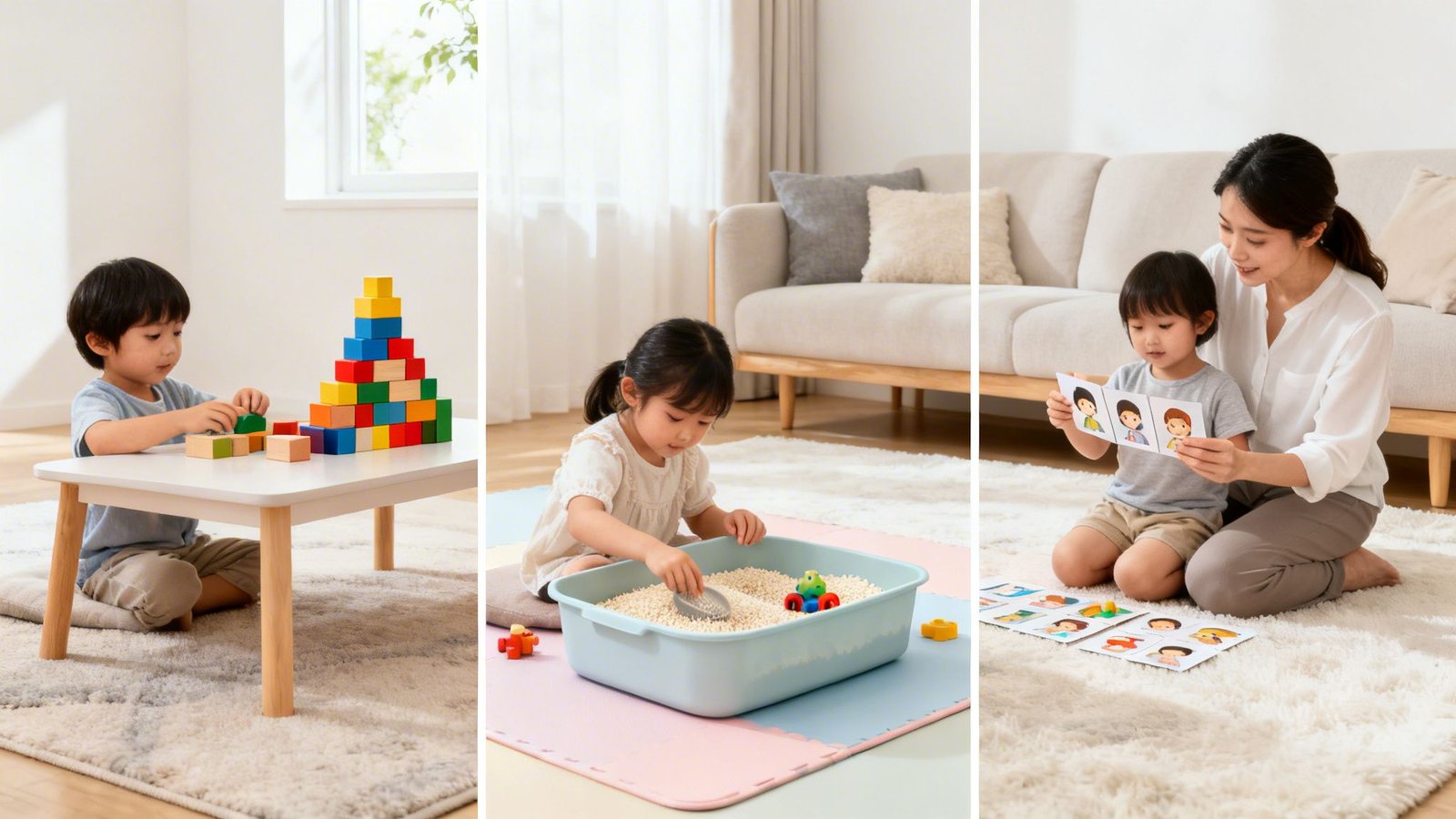
- Completes simple puzzles: Working with puzzles of 3-5 large pieces shows they’re developing problem-solving skills and spatial awareness.
- Engages in pretend play: Using a block as a phone or “feeding” a teddy bear is a powerful sign of imagination and creativity taking root.
Self-Care and Independence
Helping your child become more independent is one of the most empowering things you can do before they start school. It helps them feel capable and frees up the teacher to focus on the group, which is essential in a classroom with many children.
Key markers of independence include:
- Manages their own snack and lunchbox: Can they open their own containers and feed themselves with minimal help?
- Uses the toilet independently: This is a big one! It includes managing their clothes and, of course, washing their hands.
- Can put on their shoes and jacket: They don’t have to be perfect with zips or laces, but the effort to try is what counts.
On top of these milestones, there are plenty of other practical things to think about. To make sure you’ve covered all your bases, a detailed list like this ultimate kindergarten preparation checklist can be a fantastic resource.
Motor Skills Development
Finally, don’t forget motor skills! From running on the playground to holding a crayon, these physical skills are crucial. Fine motor skills, in particular, are a major focus for early years teachers as they are the foundation for writing.
If you’re looking to give your child an extra boost in this area, specialist support can make a world of difference. You can read more about how occupational therapy in Dubai helps children build these specific skills for school.
- Gross Motor Skills: Are they running, jumping, and climbing with pretty good coordination?
- Fine Motor Skills: Can they hold a thick crayon or pencil with a functional grip? It doesn’t have to be perfect yet.
- Building with Blocks: Can they stack several blocks on top of one another? This is a great indicator of developing hand-eye coordination.
Getting to Grips with Dubai School Applications and Timelines

The Dubai school application process can feel like a high-stakes sprint. With tight deadlines, assessments, and the dreaded waitlists, it’s easy to feel overwhelmed. But from my experience helping countless families, the secret isn’t frantic searching; it’s organised, early preparation.
The first thing I always tell parents is to start early. And I mean way earlier than you probably think. The ideal window to begin researching schools is actually 18 to 24 months before your child is due to start. This gives you the breathing room to join school tours (virtual or in-person), get a genuine feel for each one’s culture, and make choices you’re confident in, rather than ones you’re forced into.
Decoding the Admissions Calendar
Dubai’s most popular schools run on a fiercely competitive schedule. For the most in-demand places, application windows can open and slam shut a full year before the academic term even begins. If you’re targeting a September start date, you need to be ready to apply the previous October or November.
There’s also a significant policy change on the horizon that parents need to be aware of. Starting with the 2026-27 academic year, Dubai’s school entry age cut-off will shift to December 31. This means children who turn three by December 31 will be eligible for Pre-KG/FS1. It’s a great move that allows younger children (those born between September and December) to start school with their peers, aligning the UAE with global standards.
For parents of children with developmental needs, this makes early intervention even more crucial to ensure they have the social and emotional tools to thrive. You can find out more about Dubai’s new school age cut-off and how it might affect your plans.
Insider Tip: Never put all your eggs in one basket. I’ve seen the stress it causes. With long waitlists being the norm, it’s smart to apply to at least 3-5 schools. This gives you a crucial safety net and, hopefully, the power of choice.
Your Application Toolkit
Being organised is your superpower here. Before the application frenzy begins, do yourself a huge favour and create a digital folder with everything you’ll need. When a spot opens up, you want to be able to apply in minutes, not hours.
Get these documents scanned and ready to go:
- Child’s Documents: Birth certificate, passport, residency visa, and Emirates ID (front and back).
- Parent’s Documents: Passports, residency visas, and Emirates IDs for both parents (front and back).
- Medical Records: Your child’s complete immunisation history is non-negotiable.
- Nursery Reports: If your child attended a nursery or preschool, have the last two years of reports on hand.
- Photographs: Recent passport-style photos of your child and both parents.
Preparing for School Assessments
Almost every school in Dubai includes an “assessment day” as part of its admissions process. Don’t let the word scare you! For young children, it’s not a test. It’s a gentle, play-based observation where staff look for the very skills we’ve been talking about: how they interact, communicate, and handle simple tasks independently.
Here’s how you can set your child up for success, particularly if they have different learning needs:
- Frame it positively. Talk about it as a “fun morning at a new school” or a “playdate with new teachers.” Keep the pressure off.
- Practise group skills. At home or during therapy, play simple games that involve taking turns or following easy, two-step directions (“Get the blue block and put it in the box”). These are precisely the kinds of things assessors are looking for.
- Be open with the school. When you apply, be upfront about your child’s needs and their strengths. Most schools appreciate transparency. Sharing reports from specialists gives them a complete and accurate picture of your child.
This is an area where we at Georgetown frequently support families. We can simulate a classroom environment and work on the specific social skills needed for the assessment, helping your child feel confident and prepared. This kind of proactive support not only eases their anxiety but also helps the admissions team see your child’s true potential, paving the way for a brilliant start to their school journey.
Crafting Your Child’s Personalised Roadmap to School

This is where all the pieces come together. We take the insights from our assessments and the specific requirements of Dubai’s schools to build a plan that is as unique as your child. From our years of experience, we know a generic, one-size-fits-all approach simply doesn’t work.
Every child’s journey is different. One might be a social butterfly who struggles with the fine motor skills needed for writing, while another could be a little artist who finds the noise and bustle of group transitions overwhelming.
At Georgetown, we look beyond a simple checklist of skills. We see your child’s individual personality and potential. Our entire approach is built on collaboration, with a team of specialists working together to create a living, breathing roadmap for your child’s success in the classroom and beyond.
A Team That Sees the Whole Child
Real progress happens when we see the complete picture. That’s why our educational psychologists, occupational therapists, speech therapists, and play-based ABA therapists don’t work in separate silos. Instead, they form a dedicated, unified team around your family.
The process starts with a comprehensive assessment, but it’s far more than a simple evaluation. We get to know your child’s world by observing them in their element—at play—and by talking with you about your goals, hopes, and concerns. This helps us piece together a full picture of their strengths and the areas where they might need a bit of a helping hand.
This team approach means all the goals we set are interconnected. For instance:
- A speech therapist might work on helping your child use phrases to ask a friend to play.
- An occupational therapist will focus on the sensory regulation skills needed to stay calm and engaged during that playtime.
- An ABA therapist uses play to practise the social turn-taking skills essential for the game itself.
This creates a powerful synergy. Progress in one area naturally supports growth in another, making the journey to school readiness much smoother and more effective.
From Assessment to Action: The IEP
The outcome of our collaborative assessment is your child’s Individualised Education Plan (IEP). This isn’t a rigid, clinical document full of jargon. Think of it as your child’s personal success story, mapping out exactly where they are now and the specific, measurable steps we’ll take together to get them to their next milestone.
An IEP at Georgetown is:
- Actionable: We break down big goals, like “improve social skills,” into small, achievable steps.
- Family-Centred: Your input is absolutely essential. We build the plan with you, not just for you.
- Dynamic: It’s a living document. We regularly review and adapt it as your child grows and masters new skills.
This personalised support is more critical than ever, given the rapid growth in Dubai’s education sector. The private K-12 market, valued at USD 10.34 billion in 2025, is projected to hit USD 19.02 billion by 2031, with enrolment expected to jump by 6%. For parents, this highlights an increasingly competitive landscape where being truly “ready” matters. Early, individualised support like play-based ABA and educational psychology can directly boost the key skills, like language and social regulation, that are vital for FS1 transitions, especially with the new December 31 cut-offs. You can read more about how the UAE private K-12 education market is evolving to understand the landscape better.
A Real-World Scenario
Let’s see how this works in practice. Imagine four-year-old Adam. He’s a bright boy who loves building incredible towers with blocks. His nursery, however, reports that he struggles with classroom transitions. When it’s time to pack away the blocks for circle time, he often has a meltdown. He also tends to play by himself, watching other children but unsure how to join in.
Here’s how our team would come together to build Adam’s readiness plan:
The Educational Psychologist: During the assessment, our psychologist identifies that Adam’s meltdowns are rooted in anxiety around sudden changes. The core goal becomes building his “flexible thinking” skills and tolerance for change.
The Speech Therapist: Our speech therapist observes that Adam has the vocabulary but lacks the social scripts to enter a game. The goal here is to teach him simple but effective phrases like, “Can I play?” or “My turn next?”
The Occupational Therapist: The OT notices Adam gets easily overstimulated by the noise and movement of a busy classroom. The plan is to teach him self-regulation techniques, like finding a quiet corner or using a fidget toy to calm his nervous system before a transition happens.
The ABA Therapist: Through play, our ABA therapist puts it all into practice. They might create fun, structured games that involve transitions, like a “tidy-up race.” They also role-play social scenarios, giving Adam a safe, supportive space to practise his new phrases.
The goal isn’t to change who Adam is. It’s to give him the specific tools he needs to navigate the social and structural demands of a school day, allowing his bright, creative personality to shine through.
This integrated plan means Adam isn’t just learning isolated skills. He’s learning how to manage his feelings so he can use his words to make a friend and confidently join a new activity—the very definition of being ready for school in Dubai. This thoughtful, coordinated effort is what turns a child’s challenges into their greatest strengths.
Making the Transition to School as Smooth as Possible
The weeks just before school starts are all about turning preparation into reality. This isn’t about some last-minute crash course; it’s about building a calm, positive, and exciting vibe around this big new chapter. As a parent, you’re the most important person in this process—think of yourself as your child’s guide to this new adventure.
I’ve seen it countless times in my work: children are emotional sponges. They absorb and reflect our feelings. If you’re anxious, they’ll be anxious. If you’re excited for them, they’ll feel that excitement, too. So, the most powerful thing you can do is project calm confidence. Frame school as a fun place for learning and making new friends. Your positive attitude is the most reassuring message you can send.
Get into a “School Rhythm” Early
Children absolutely thrive on routine. The structured nature of a school day—with set times for everything—can be a huge shift from the looser schedule they might be used to at home or nursery. You can soften this change by slowly introducing a “school day” routine a few weeks ahead of time.
This makes the actual first day feel like just another day, not a massive, jarring change.
- Wake-up call: Gradually start waking them up at the time they’ll need to for school. No one enjoys a sudden switch to early mornings!
- Meal times: Try to have breakfast and lunch around the same times they will at school.
- Bedtime: An earlier, consistent bedtime is a must. A well-rested child is a happier, more focused child.
Getting their body clock adjusted ahead of time is a simple trick that pays off big time. It helps regulate their mood and gives them the energy they need to thrive in the classroom.
Build Confidence Through Little Wins
Think about all the little things you do for your child every day. Each one is a chance for them to practice independence. When they master a small task on their own, it gives their confidence a massive boost and helps them feel more capable in a new setting.
Turn it into a game instead of a chore. We often suggest things like:
- The Lunchbox Game: Have a picnic at home where they have to open their own snack boxes and water bottle.
- The Getting Dressed Race: See how fast they can put on their shoes (Velcro is a lifesaver here!) or try to zip up their own bag. It’s about the effort, not perfection.
- Musical Tidy-Up: Use a specific song to signal that it’s time to put toys away, just like their teacher might.
I can’t tell you how powerful it is when a child proudly says, “I did it myself!” That feeling of accomplishment is the bedrock of self-reliance, which is so crucial for navigating school life in Dubai.
Tell a Positive Story About School
Books are a fantastic tool for introducing the whole idea of school. They offer a safe and engaging way to talk about what’s coming, from meeting the teacher to playing with new friends. Pick stories that show school as a bright, happy, and welcoming place.
While you read, talk about what you see. Ask them questions like, “Wow, look at all those cool toys! Which one would you play with first?” or “The kids are all painting together. Doesn’t that look like fun?” This helps them build a positive picture of school in their minds long before they even get there.
To help manage any big feelings that come up, simple mindfulness exercises can be a game-changer. Things like guided meditation for children can give them the tools to process their worries and feel more in control.
School Transition Countdown Plan
To make things more manageable, it helps to have a simple timeline. Here’s a countdown plan we often share with parents to help organize the final month of preparations.
| Timeframe | Key Activity | Goal |
|---|---|---|
| 3-4 Weeks Before | Start introducing a consistent “school day” routine for waking up and sleeping. | To ease the body clock into the new schedule gradually, avoiding first-week exhaustion. |
| 2 Weeks Before | Begin practising self-help skills like opening their lunchbox and putting on shoes. | To build their confidence and practical independence for the classroom. |
| 1 Week Before | Do a “drive-by” of the new school. Talk excitedly about their classroom and playground. | To make the physical building familiar and reduce any fear of the unknown. |
| The Night Before | Lay out their uniform and pack their school bag together. Keep the evening calm and positive. | To create a sense of ownership and turn pre-school jitters into organised excitement. |
By breaking it down, the whole process feels less overwhelming for both of you.
In the end, a successful transition comes down to preparation, positivity, and staying connected with your child. Using these tips can help turn any potential anxiety into genuine excitement for the journey ahead. Another wonderful way to prepare their minds and bodies for the new environment is by engaging their senses. You can learn more about this in our guide to sensory play in Dubai.
Your Top Questions About School Readiness in Dubai, Answered
Thinking about your child starting school can bring up a ton of questions. As child development specialists, we’ve had conversations with hundreds of parents across Dubai, and we tend to hear many of the same worries. We wanted to tackle those common questions head-on with some straight-talking, practical answers from our team.
Our aim is to arm you with the information you need to feel confident, so you can make the best choices for your child as they get ready for their big school debut in Dubai.
“My child is young for their year. Is that a problem?”
We hear this one all the time, especially with the upcoming change to the KHDA’s age cut-off. From the 2026-27 academic year, the new rule means children who turn three by December 31 will be eligible to start FS1.
While this makes a younger child eligible on paper, their developmental readiness is what really counts. Age is just a number. For a child on the younger side of the cohort, you have to look honestly at their social-emotional skills, how independent they are, and whether they can communicate their needs in what will be a very busy classroom.
If you’re on the fence, a professional readiness assessment can offer real clarity. It’s not a pass/fail test; it simply helps figure out if your child would be happier with another year in a nurturing nursery environment or if some focused support from our specialists could help close any gaps. The goal is always a happy, successful start to school, not just ticking an age box.
“What if my child’s school assessment doesn’t go well?”
This is a huge source of anxiety for parents, but a challenging assessment isn’t a failure—it’s valuable information. My first piece of advice is always to be upfront and honest with the school’s admissions team from the very beginning. You’d be surprised how many top schools in Dubai are genuinely inclusive and appreciate that transparency.
Sometimes, a tough assessment just means that particular school’s environment isn’t the right match for your child right now. More often, though, it shines a spotlight on specific skills that just need a bit more work.
An assessment gives you a snapshot in time. It doesn’t define your child’s potential. Instead, use it as a roadmap to direct your support where it’s needed most.
At Georgetown, we take this exact feedback to heart. It helps us fine-tune a child’s Individualised Education Plan (IEP) to focus on the precise skills the school flagged. From there, we can help your child build confidence and even advocate on their behalf with the school if needed.
“How does ABA therapy help with more than just behaviour?”
That’s a brilliant question, and it gets right to the core of what modern, effective therapy looks like. When we talk about play-based Applied Behaviour Analysis (ABA) therapy, the way we practise it at Georgetown, we’re talking about building the essential foundations for learning and for life.
It’s so much more than “correcting behaviour.” It’s about teaching the crucial “learning-to-learn” skills that a child absolutely needs to manage in a school setting. This includes core abilities like:
- Paying attention when the teacher is talking to the group.
- Waiting patiently for a turn during a game.
- Following simple, multi-step instructions (“Please get your bag and line up at the door”).
On top of that, play-based ABA is fantastic for developing the social communication and play skills a child needs to make friends and feel like they belong. It builds those vital blocks of independence, cooperation, and social awareness that every child needs to thrive in the classroom and beyond.
At Georgetown Early Intervention Center, we know every child’s path to being ready for school is different. Our team of specialists is here to partner with you, creating a personalised plan that builds on your child’s strengths and prepares them to shine. To find out how we can support your family, visit us at https://www.georgetownuae.com.