
Kid speech therapy is a specialized service that helps children find their voice. It gives them the tools and strategies they need to express themselves clearly, understand others, and build real confidence in their everyday interactions.
Think of it as personalized coaching for all things communication—from talking and listening to making friends.
What Is Kid Speech Therapy and Who Can It Help?

When most people hear “kid speech therapy,” they immediately think of a child learning to say their “r” or “s” sounds correctly. While that’s definitely part of it—what we call articulation therapy—the field is so much bigger than that. It’s a supportive, dynamic process designed to strengthen all aspects of how a child communicates.
Imagine a Speech-Language Pathologist (SLP) as a personal coach. Just like a sports coach breaks down a game into specific skills and strategies, an SLP helps your child master the ‘game’ of communication. This coaching builds a solid foundation for everything that comes next, from making friends at school to lifelong learning.
It’s More Than Just Correcting Lisps
The world of pediatric speech therapy is incredibly broad. A skilled therapist works on multiple fronts to make sure a child can not only speak clearly but also connect with others confidently and effectively.
Here’s a quick look at the main areas we focus on in our sessions.
Table: Common Areas Addressed in Kid Speech Therapy
This table breaks down the core components of speech therapy, helping you see how it covers everything from making sounds to understanding conversations.
| Area of Focus | What It Means for Your Child |
|---|---|
| Expressive Language | This is all about putting thoughts into words. It involves building vocabulary, stringing sentences together correctly, and telling a simple story. |
| Receptive Language | This is the other side of the coin: understanding what others are saying. We work on following directions, answering questions, and grasping concepts. |
| Social Communication (Pragmatics) | This covers the unwritten rules of conversation—things like taking turns, making eye contact, and understanding body language or tone of voice. |
| Articulation & Phonology | This is the classic part of speech therapy, focused on the physical production of sounds and sound patterns so others can understand them clearly. |
As you can see, speech therapy is a comprehensive approach to communication.
A common misconception is that speech therapy is only for children who aren’t talking. In reality, it supports any child who struggles to be understood or to understand others, creating a bridge between their thoughts and the world around them.
A Proactive Step in Your Child’s Development
If you have a gut feeling that something isn’t quite right with your child’s communication, trusting that instinct and seeking an evaluation is a positive, proactive step. It isn’t about labeling a child; it’s about giving them the support they need to thrive.
Communication challenges are more common than you might think. In fact, about one in twelve children in the United States has some form of communication disorder.
The great news is that getting help early makes a huge difference. Around 59.7% of U.S. children aged 3–17 with a known communication disorder received intervention services in the past year, showing just how many families are taking that proactive step. You can learn more about the prevalence of communication disorders from the NIDCD.
By addressing these challenges early on, you give your child the best possible chance to build the skills and confidence they need for school, friendships, and life.
Recognizing Key Signs of Speech and Language Delays

As a parent, you are your child’s first and most important expert. You’re there for every new word, every pointing finger, and every attempt they make to connect with their world. So, it’s completely natural to wonder if their communication skills are keeping pace, especially when you see other kids their age chatting away.
Every child has their own unique developmental timeline, and small variations are perfectly normal. But having a good sense of the key communication milestones can help you spot the difference between a child who is just taking their time and one who might need a little extra support. This isn’t about ticking boxes on a rigid checklist; it’s about recognizing patterns that might signal it’s time to seek professional guidance.
Think of it this way: a single dropped pass doesn’t mean a football player needs a new coach. But if they consistently struggle to catch the ball, bringing in a specialist to build that skill makes a lot of sense. The same logic applies to a child’s communication journey.
Communication Milestones for Toddlers (1-3 Years)
This is an incredible period of language explosion, where children go from saying single words to stringing together simple sentences. While it’s normal for a two-year-old to stumble over some words, we’re looking for that shift toward combining words into short phrases like “more juice” or “daddy go.”
Key signs to watch for in your toddler:
- By 18 months: Not using at least a few single words, or having trouble understanding simple requests like “Come here.”
- By 2 years: Not yet combining two words together. Their vocabulary should be growing beyond just a small handful of words.
- By 3 years: Strangers find it difficult to understand most of what they say, or they aren’t using simple three-word sentences.
For parents wanting to dive deeper, this resource offers a practical guide to speech development milestones for children aged 0-3 years. Catching these signs early is the first step in effective early intervention.
Communication Milestones for Preschoolers (3-5 Years)
During the preschool years, your child’s sentences should be getting longer and much more complex. They start turning into little storytellers, sharing bits and pieces about their day and asking an endless stream of “why” questions. This is also when their social communication skills really start to bloom as they learn to play and interact with friends.
Red flags for this age group might include:
- Articulation Issues: By age 4, most of what a child says should be understood by unfamiliar adults. If they’re still having a lot of trouble with certain sounds, it could point to an articulation or phonological delay.
- Sentence Structure: Struggling to form complete sentences or consistently leaving words out can be a sign of a language delay.
- Following Directions: Having difficulty with multi-step directions (e.g., “Go to your room and bring me your blue shoes”) could suggest a challenge with receptive language.
One of the most common questions we hear from parents is, “Is my child just a late talker?” While some children do catch up on their own, studies show that a significant percentage of “late talkers” won’t close the gap without intervention. A professional evaluation gives you peace of mind and, if needed, unlocks crucial early support.
Communication Milestones for School-Aged Children (5+ Years)
Once children start school, the demands on their language skills jump significantly. They need to understand complex classroom instructions, tell stories that make sense, and use language to navigate friendships. Difficulties at this stage can affect not just their social life but their academic performance, too.
Look for these signs in school-aged children:
- Limited Vocabulary: Having a noticeably smaller vocabulary than their peers or frequently struggling to find the right words when speaking.
- Storytelling Trouble: Finding it hard to retell a story in a logical sequence or summarize the main ideas of something they’ve read.
- Social Difficulties: Struggling to join conversations, understand jokes, or read the social cues their friends are sending.
If you recognize any of these patterns in your child, it’s a good indication that a conversation with a specialist could be really helpful. For a more detailed breakdown, feel free to explore our guide on the signs your child might need speech therapy in the UAE. Seeking an evaluation is a proactive, positive step toward ensuring your child has all the tools they need to communicate with confidence.
Exploring Different Types of Speech Therapy for Kids

Stepping into the world of kid speech therapy can feel a bit like opening a big toolkit—inside, you’ll find many different instruments, each designed for a specific job. There’s no single, one-size-fits-all method. Instead, a skilled Speech-Language Pathologist (SLP) carefully selects and combines various approaches to create a plan that fits your child’s unique personality, needs, and goals.
This personalized strategy is what makes modern speech therapy so effective. It’s a dynamic and creative process that meets your child right where they are, often using techniques that feel much more like play than work. Understanding these core approaches helps you see the thoughtful strategy behind your child’s sessions.
Play-Based Therapy: The Art of Learning Naturally
For young children, play is serious business. It’s how they explore, learn, and make sense of the world around them. Play-based therapy harnesses this natural instinct to build communication skills in a fun, low-pressure environment.
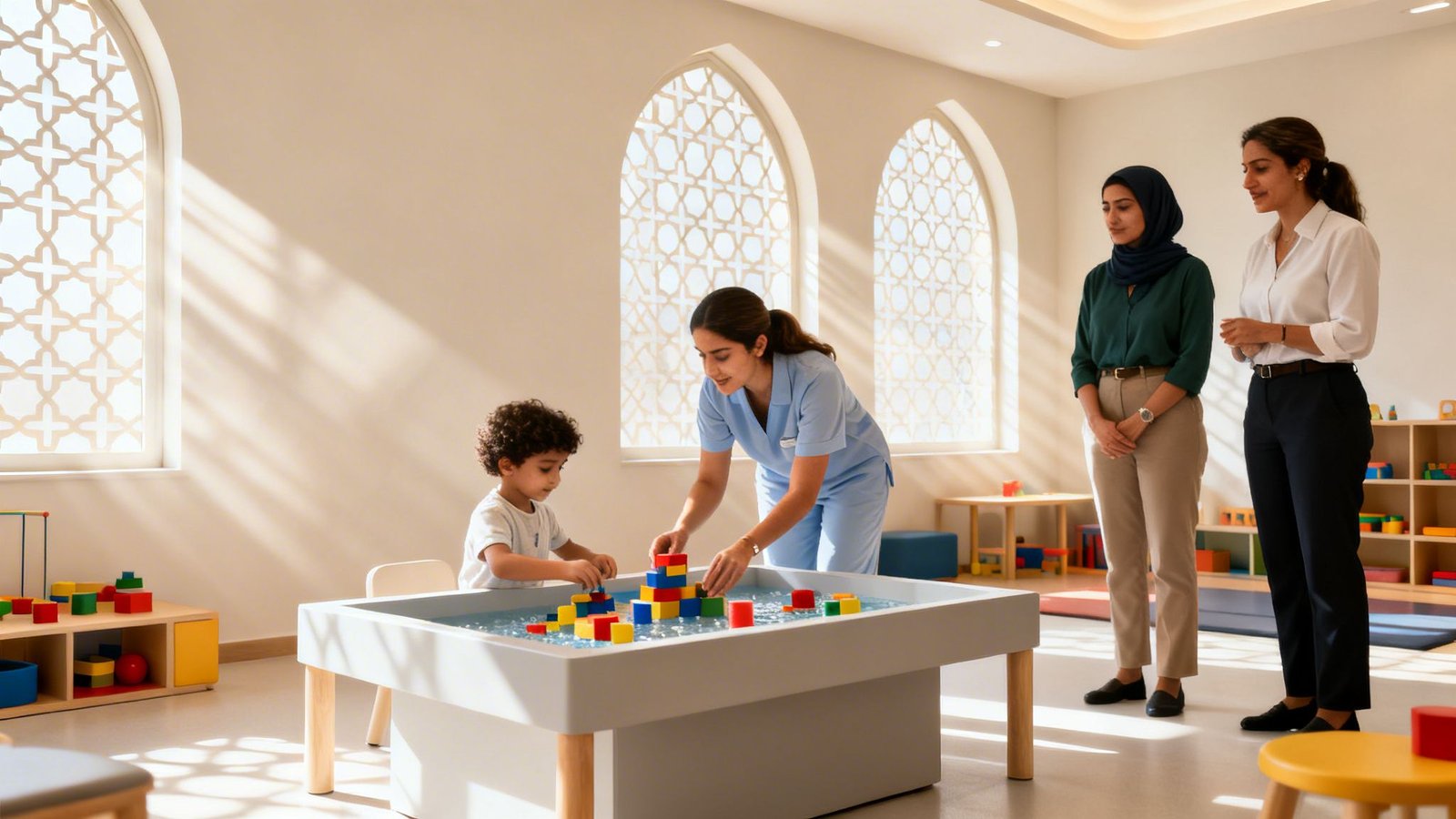
Instead of sitting at a table doing drills, your child might be building a block tower, having a tea party with stuffed animals, or playing with a toy farm. The therapist skillfully guides these activities to create organic opportunities for communication. They might hold back a favorite toy to encourage your child to ask for it, or model new vocabulary while narrating what’s happening in the game.
This approach is incredibly powerful because it builds skills in a context that feels natural and motivating, fostering a genuine desire to communicate.
Articulation Therapy: Honing in on Specific Sounds
When a child has trouble producing specific sounds, making their speech difficult for others to understand, articulation therapy often becomes the main focus. This approach is more structured and is all about teaching the correct way to form sounds using the tongue, lips, and jaw.
Think of it like a coach teaching an athlete the proper form for a specific movement. The therapist breaks down the sound into manageable steps.
- Isolation: Practicing the sound all by itself (e.g., making a long “sssss” sound).
- Syllables: Combining the sound with a vowel (e.g., “see,” “say,” “so”).
- Words: Using the sound in different spots within a word (e.g., “sun,” “pencil,” “bus“).
- Sentences: Weaving the sound into short phrases and sentences.
The goal here is to build muscle memory until producing the sound correctly becomes second nature.
The demand for qualified professionals who can provide these specialized services is growing quickly. Projections show that the need for speech-language pathologists is expected to grow by 15-19% over the next decade, reflecting a greater awareness of pediatric communication disorders. You can discover more insights about this expanding field and its workforce needs on eres.com.
Language Intervention: Building a Stronger Foundation
Language intervention moves beyond single sounds to focus on the bigger picture of communication. This means building vocabulary, understanding grammar, and learning how to put sentences together correctly. It’s about giving a child the essential building blocks they need to express complex thoughts and understand others.
Activities might involve reading stories and asking questions about the plot, using picture cards to build sentences, or playing games that introduce concepts like opposites or categories. This type of therapy helps a child grow from making simple requests to sharing detailed stories and ideas.
Specialized Approaches for Diverse Needs
For some children, especially those with conditions like Autism Spectrum Disorder (ASD), specialized techniques are essential. One of the most important is Augmentative and Alternative Communication (AAC).
AAC includes all the ways someone communicates besides talking. This can range from simple sign language or picture boards to high-tech speech-generating devices. The goal of AAC is not to replace speech but to support it. It gives non-verbal or minimally verbal children a reliable way to express themselves, which often reduces frustration and can even encourage the development of vocal speech.
Navigating Your Child’s Speech Therapy Journey
Embarking on speech therapy can feel like exploring a new country without a map. You know the destination—confident communication for your child—but the path to get there might seem a little hazy. Think of this section as your personal roadmap, guiding you from that first meeting all the way to celebrating exciting new skills.
This is a journey we take together. It’s a partnership between you, your child, and your therapist, built on trust and open communication every step of the way.
The process always starts with an assessment, but it’s so much more than a series of tests. It’s more like a friendly investigation, where the therapist gets to know your child’s unique communication style from every angle.
The Initial Assessment: A Holistic View
A truly comprehensive assessment looks at the whole child. While standardized tests give us some valuable data, they’re just one piece of a much bigger puzzle. A skilled Speech-Language Pathologist (SLP) pulls together information from several places to create a complete and accurate picture.
This process nearly always includes:
- Structured Observation: The therapist will jump right into play-based activities with your child. This is the best way to see how they communicate naturally when they’re comfortable, engaged, and just having fun.
- Parent Interview: This conversation is absolutely crucial. You hold a treasure trove of knowledge about your child’s history, their strengths, and the daily struggles that no formal test could ever capture.
- Formal and Informal Testing: These tools help us measure specific skills, like how many words are in their vocabulary or how they produce certain sounds, and compare them against developmental benchmarks.
This multi-faceted approach guarantees that the therapy plan we create isn’t just based on test scores, but on your child as a unique individual.
Creating the Individualized Therapy Plan
Once the assessment is complete, your therapist will craft a personalized therapy plan. At Georgetown Early Intervention Center, we see this plan as a living document that we build collaboratively with you. Your insights and family priorities are essential for setting goals that are both meaningful and functional.
A great therapy plan doesn’t just list deficits to be “fixed.” Instead, it outlines positive, skill-based goals broken down into small, achievable steps. This approach ensures your child experiences success early and often, building their confidence along the way.
The plan will clearly detail the “what, why, and how” of therapy:
- Specific Goals: What skills will we target? (e.g., “produce the /s/ sound in initial words,” or “use three-word phrases to make requests”).
- Therapy Frequency: How often will we see each other? (e.g., once or twice a week).
- Chosen Methods: What types of therapy approaches will we use to get there?
This plan becomes our shared agreement, making sure everyone is on the same page and working together toward the same positive outcomes.
What a Typical Therapy Session Looks Like
Many parents worry that therapy will feel clinical or demanding. The reality? For your child, it should feel like structured playtime. Sessions are carefully designed to be motivating and engaging, embedding therapeutic goals into fun, game-like activities.
A session might involve building a block tower to practice requesting (“more blocks!”), playing a board game to work on taking turns, or reading a favorite storybook to build vocabulary and comprehension. Our therapists are experts at weaving skill-building opportunities into the activities your child already loves. This play-based approach keeps motivation high and makes learning feel almost effortless.
Measuring and Communicating Progress
Progress isn’t always a straight line. There will be exciting periods of rapid growth and other times where things seem to plateau for a bit. That’s completely normal. Your therapist is your guide, constantly tracking progress and tweaking the plan as needed. They measure success through a combination of data collection during activities and simple observation.
Regular communication is absolutely key. You can expect frequent updates, whether it’s a quick chat after a session or a more formal progress report. This ongoing dialogue ensures you’re always in the loop about your child’s achievements and the next steps on their journey. If you’re ready to take that next step, finding a qualified speech language pathologist near you is the perfect way to begin this rewarding process.
How to Support Your Child’s Progress at Home

Your child’s therapy sessions are powerful, but the real magic happens when those skills are woven into the fabric of your daily life at home. As a parent, you are your child’s most important communication partner, and your involvement is one of the biggest predictors of their success.
The good news? This doesn’t mean you need to become a therapist or set aside hours for drills. It’s about seeing the learning opportunities in the moments you already share—getting dressed, heading to the grocery store, or making a snack. Your role is to create a rich, supportive environment where your child feels confident enough to try, practice, and grow.
Turn Everyday Routines into Language Lessons
You can seamlessly fold speech and language practice into your family’s daily rhythm. The goal is to be intentional but playful, turning ordinary routines into moments of connection and learning. This keeps things natural and pressure-free.
Here are a few simple ideas to get you started:
- During Bath Time: Talk about concepts like wet and dry, full and empty. Let your child ask for specific toys to practice requesting.
- While Grocery Shopping: Name the items you place in the cart, describing their color, shape, and size. Turn it into a game by asking them to spot things, like, “Can you find the yellow bananas?”
- When Getting Dressed: Practice naming body parts (“Let’s put your arm through the sleeve!”) and clothing. You can also work on sequencing by talking about what comes first, next, and last.
Model Language Without Direct Correction
One of the most powerful things you can do is language modeling. When your child makes a mistake, the instinct might be to correct them by saying, “No, that’s wrong.” Instead, try gently repeating their sentence back, but with the correct words or structure.
For example, if your child says, “I see a wawa,” you can respond warmly, “Oh, you see the water! Yes, let’s get some water.” This technique, called recasting, validates their effort while providing a clear, correct model for them to hear.
This approach builds their confidence because you’re celebrating their attempt to communicate, not highlighting a mistake. It’s a subtle but incredibly effective way to guide their learning. For more practical ideas, check out our guide on fun speech exercises to do at home with your child.
The Power of Reading Together
Reading aloud is one of the best things you can do to boost your child’s language development. It exposes them to new words, different sentence structures, and the rhythm of storytelling. Make it interactive—ask questions about the pictures, talk about the characters, and wonder together what might happen next.
Introducing books early on makes a huge difference. You can find some wonderful, engaging first birthday books that can help spark a lifelong love of reading.
Your involvement at home is an incredible investment in your child’s future. The importance of early intervention is well-recognized, with the U.S. speech therapy market valued at around USD 4.9–5.3 billion in the mid-2020s. Every bit of effort you put in now pays dividends for years to come.
Common Questions Parents Ask About Speech Therapy
Deciding to explore speech therapy for your child is a big step, and it’s completely natural to have a few practical questions running through your mind. Getting a handle on the logistics—from how long it might take to how your child will feel about it—can give you the clarity and confidence you need.
Let’s walk through some of the most common concerns we hear from parents just like you.
How Long Will My Child Need Speech Therapy?
This is usually the first question on every parent’s mind, and the honest answer is: it’s different for every child. The length of time a child spends in speech therapy really depends on a few key things, like the specific communication challenge we’re working on, how often we have sessions, and how much the strategies are practiced at home.
For some kids, like a child working on just one or two speech sounds, a few months of focused support might be all it takes. For others with more complex language needs or developmental delays, therapy might be a longer-term partnership. Your therapist will be right there with you, constantly tracking progress, tweaking goals, and giving you a clear picture of the expected timeline.
Will My Child Feel Singled Out by Going to Therapy?
This is such a loving and understandable concern. The wonderful news is that our therapists are experts at making sessions feel like focused, intentional playtime. We build therapy around engaging games, fun crafts, and exciting books that kids genuinely love. The therapy room is designed to be a positive, encouraging, and fun space.
We also help you frame it positively at home. You can try saying things like, “It’s time to go see Ms. Sarah to practice being an expert talker!” or “Let’s go play some fun word games!”
When parents and therapists treat speech therapy as a special part of a child’s week, children almost always see it the same way. It becomes an appointment they look forward to, not something they have to endure.
How Do I Know if My Insurance Covers Speech Therapy?
Navigating insurance can feel like a maze, but we’re here to help you through it. Coverage for pediatric speech therapy varies quite a bit from one plan to another. Many insurance policies will cover services that are considered “medically necessary,” which usually requires a formal diagnosis from a qualified professional like a Speech-Language Pathologist.
Here are the first steps we recommend taking:
- Call Your Insurance Provider: Get in touch with your insurance company directly and ask about your specific benefits for “pediatric speech-language pathology services.”
- Ask Key Questions: Be sure to ask about any requirements for a physician’s referral, pre-authorizations, deductibles, co-pays, or limits on the number of covered sessions per year.
- Let Us Help: Our administrative team has a lot of experience with this process. We can help you make sense of your benefits and get the right paperwork submitted.
What Is the First Step if I Have Concerns?
If you have that gut feeling that your child might need a little extra support, the best first step is to schedule an initial consultation. Think of it as a relaxed, no-pressure conversation with a professional.
During this first meeting, you can share what you’ve been noticing, and the therapist can interact with your child in an informal, friendly way. From there, they’ll let you know if a full evaluation seems like a good idea. Taking this one proactive step can either give you valuable peace of mind or a clear, actionable plan to move forward. You don’t need a doctor’s referral to reach out and book that first important chat with us.
Are you ready to get answers for your child? The team at Georgetown Early Intervention Center is here to guide you through every step, starting with a simple conversation. Learn more about our approach and schedule your consultation today at https://georgetownuae.com/services/speech-therapy-in-dubai/.