The thermometer is climbing, the school week has taken a lot out of everyone, and you need a plan that gets your child out of the house without ending in tears, overload, or a sugar-fuelled meltdown by lunch. This is the core challenge when searching for indoor activities for kids in Dubai. Parents aren’t only looking for entertainment. They’re looking for somewhere manageable, worthwhile, and realistic for their child’s actual needs.
That matters even more when your child is working on speech, regulation, motor coordination, school readiness, or flexible behaviour. A venue can look brilliant on social media and still be the wrong fit. Some places are visually exciting but too noisy. Others are calmer, but don’t offer enough movement for children who need strong sensory input. The best outings support development without making the day feel like therapy.
At Georgetown Early Intervention Centre, that’s how we think about community outings. We don’t separate fun from function. We look at what a space gives a child: chances to request, wait, climb, sequence, imitate, problem-solve, recover from disappointment, and succeed with support. A good outing can strengthen the same foundations we work on in occupational therapy, speech therapy, educational psychology, and play-based behavioural programmes.
This guide is built from that lens. It’s not another generic roundup of soft play and splash zones. It’s a practical list of indoor activities for kids in Dubai that can be adapted to real developmental goals, with honest trade-offs so you can choose based on your child, not just the venue’s marketing. If you also want simple ways to bring structure and connection into playtime at home, these fun indoor group games for kids to boost wellbeing can work well alongside outings.
1. OliOli
For many children, OliOli is one of the easiest “yes” venues in Dubai because it invites exploration without demanding performance. That distinction matters. Children don’t need to line up for a fixed script or keep up with a crowded group. They can enter a gallery, try, pause, come back, and repeat.
The museum’s hands-on style makes it especially useful for children who learn best through doing. When I recommend a first community outing for a child who needs support with transitions, shared attention, or sensory exploration, this is often near the top of the list.
Why it works well therapeutically
OliOli’s themed galleries give parents and therapists multiple ways to target goals in one visit. Air-based activities support visual tracking and cause-and-effect learning. Building zones encourage joint attention and problem-solving. Climbing and movement elements support motor planning and body awareness. Water play can be excellent for sensory exploration, turn-taking, and language such as “pour”, “more”, “stop”, and “my turn”.
The timed session format is also helpful. A shorter window often works better than an open-ended day, especially for children who struggle when they don’t know when an activity will end. Predictability reduces friction.
A practical advantage is that the venue includes one free adult with each child ticket, which makes it easier for a caregiver, therapist, or support adult to attend. You can check current details and booking options on the OliOli website.
Practical rule: Don’t try to “do everything” at OliOli. Pick two galleries, one movement goal, and one communication goal. Children usually do better with depth than with constant switching.
For families working on sensory regulation, it also pairs well with structured preparation. Looking at photos in advance, agreeing on a simple first-then plan, and bringing a towel or spare clothes for wet areas can prevent a good visit from becoming a stressful one. Parents exploring sensory-rich play ideas can also find useful support through https://georgetownuae.com/sensory-play-dubai/.
Trade-offs to know before you book
OliOli is popular for a reason, which means weekends can feel busy and loud. That doesn’t make it a poor choice, but it does make timing important. Children who are sensitive to noise, crowd movement, or waiting will usually cope better in quieter slots.
The Water Gallery is another clear trade-off. Some children love it and regulate better through water play. Others find the unpredictability of splashing, wet clothes, and nearby children very hard to manage. In those cases, skipping that gallery isn’t a missed opportunity. It’s good clinical judgement.
A strong visit here usually looks like this:
- Start with movement: Begin in a gallery that lets your child climb, push, or carry before asking for quieter attention.
- Use short language targets: Model phrases your child can use, such as “help please”, “open it”, or “again”.
- Leave while it’s still going well: Ending on success makes the next outing easier.
2. woo-hoo! Children’s Museum
Some children need novelty in smaller doses. They enjoy interactive learning spaces, but large venues with too many visual demands push them past regulation quickly. That’s where woo-hoo! often has an advantage.
Its contained layout makes the experience feel more manageable than bigger destination venues. For early learners, that can translate into better transitions and more successful participation. The museum is known for having more than 11 interactive play-and-learn exhibits, which supports variety without the scale of a theme park environment. You can explore current sessions and visitor details on the woo-hoo! website.
Best fit for early learners and transition practice
This is a strong choice for children who are working on:
- Short transition chains: moving from one area to another with support
- Shared play: copying actions, waiting briefly, watching another child
- Language expansion: naming, commenting, and answering simple questions
- Regulation breaks: pausing for a snack or reset without fully ending the outing
The on-site café, The Nest, is more useful than it might sound on paper. It gives families a natural decompression point. That matters for children who need a break but can return successfully after one. In practice, the best outings are often not continuous. They include recovery space.
The venue is also less visually overwhelming than mall-based attractions. That can help children who shut down when there’s too much happening around them. If your child tends to cope well in bounded spaces but struggles in open, high-stimulation venues, this is a smarter pick than somewhere larger and louder.
Some children don’t need “more fun”. They need fewer competing demands.
Where it may fall short
woo-hoo! isn’t the strongest option for children who need heavy vestibular input or very active movement to regulate. If your child seeks spinning, jumping, crashing, or sustained climbing, the exhibits may not give enough physical intensity.
There’s also a practical booking issue. Because capacity is limited, sessions can sell out during school holidays. That’s good for crowd management once you’re inside, but frustrating if you leave planning too late.
One detail sometimes listed online is an online ticket offer. Prices and packages change, so it’s better to confirm directly before promising a specific plan to your child.
What tends to work best here is a paced visit. Start with a familiar or inviting zone, build in a café break before signs of fatigue, then finish with one preferred activity. When parents push for “just one more” after a child is already fading, behaviour usually worsens fast.
For children who are building confidence in community settings, woo-hoo! can be one of the more forgiving indoor activities for kids in Dubai. It gives enough stimulation to be interesting, but often not so much that the outing becomes all about damage control.
3. KidZania Dubai
A child puts on a uniform, waits for instructions, completes a job, collects payment, and asks what comes next. For many children, that sequence gives far more developmental value than a standard soft play visit.
KidZania works best for children who can manage some structure and are ready to practise real-world routines through play. The role-play format creates repeated opportunities for following directions, coping with turn-taking, using functional language, and staying with a task until it ends. That makes it especially useful for school-readiness goals.
The environment supports more purposeful communication than many open-ended play venues. Children have a reason to ask questions, request items, greet staff, respond to directions, make choices, and complete a sequence in order. If a child struggles with pretend play that feels too abstract, these concrete scripts are often easier to join.
You can also use the outing to target independence in a measured way. Younger children still need adult support, but that support can be graded. Prompt at the start, step back during the task, then return for help with transitions. That pattern mirrors the gradual skill-building we focus on in an early childhood intervention setting, where the goal is not just participation, but participation with less adult input over time.
You can review bookings, age guidance, and current activity information on the KidZania Dubai website.
Where KidZania is especially useful
From a therapy perspective, KidZania is one of the stronger indoor activities for kids in Dubai for children working on:
- Functional language: asking for help, answering simple questions, using job-related vocabulary
- Sequencing: listening, starting, completing, and finishing a multi-step activity
- Behaviour regulation: waiting, accepting limits, and shifting from one station to another
- Social participation: sharing space, following group rules, and watching peer models
I would choose it more readily for a child who benefits from clear expectations than for one who still needs highly flexible, low-demand outings.
The main trade-off
KidZania can be overstimulating. It is busy, highly visual, and often full of queues. A child may cope well with the role-play itself but struggle with the waiting, noise, or disappointment when a preferred activity is unavailable.
That does not make it the wrong choice. It means planning matters more here than at simpler venues.
The most effective visits are usually narrow and intentional. Pick a small number of stations in advance. Preview the plan before you arrive. Use a visual schedule if that helps your child stay regulated. Stopping after a successful hour is often better than stretching the outing until behaviour falls apart.
A few practical strategies tend to help:
- Match the stations to the goal. Choose hands-on jobs for children who regulate through action. Choose more structured stations for children practising attention and sequencing.
- Rehearse key phrases beforehand. Simple scripts such as “My turn,” “I need help,” “Where do we go?” and “Finished” can reduce stress once you are inside.
- Build in an exit plan. Decide in advance where you will pause for water, a snack, or a quiet reset if regulation drops.
- Do not overpromise. Telling a child they can do everything usually creates conflict later.
KidZania is a strong option for the right child at the right stage. Used well, it is more than entertainment. It becomes a practical setting for speech, occupational, and behavioural goals, with enough structure to practise real-life participation under manageable pressure.
4. The Green Planet
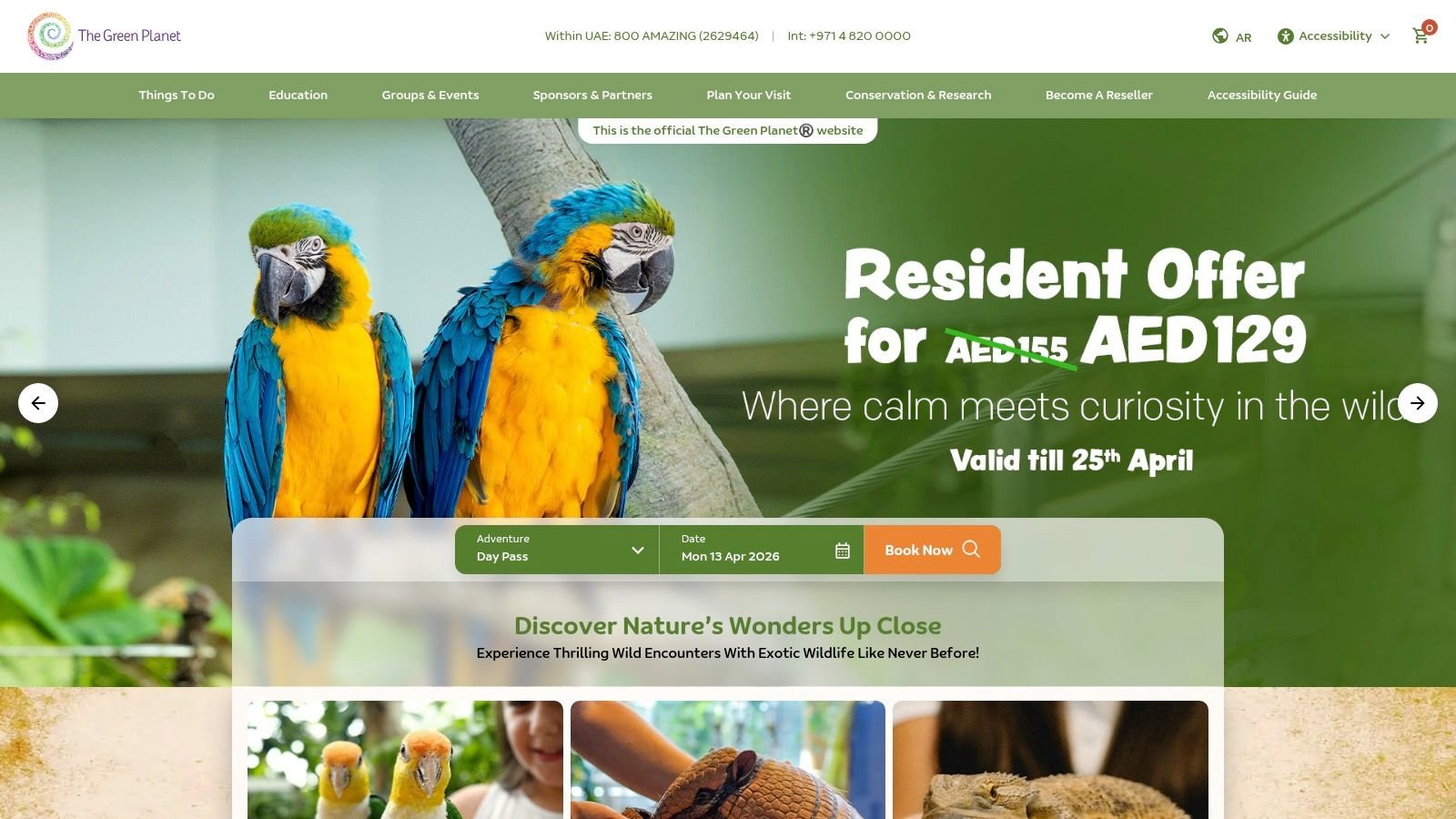
Not every child benefits from high-energy play. Some children do better in slower, observation-based environments where there’s less pressure to perform socially and more room to notice, label, compare, and wonder. The Green Planet fits that profile well.
Its indoor biodome format creates a different rhythm from most children’s venues in Dubai. Instead of racing from one attraction to another, children move through multi-level rainforest zones and engage with animals, sound, light, and vocabulary in a more measured way. You can see current visitor information on the The Green Planet website.
A strong option for language and calm attention
This venue is excellent for receptive and expressive language work. There are natural opportunities for:
- Describing: big, green, sleeping, flying, hiding
- Comparing: fast and slow, up and down, loud and quiet
- Questioning: what’s that, where is it, what is it doing
- Narrating: first we saw birds, then fish, then insects
For children who find direct social demands tiring, shared observation can be easier than face-to-face interaction. Looking at an animal together often creates more language than asking a child to “talk about your day”.
It can also support regulation. Dimmer lighting, shaded spaces, and a slower pace are often easier for children who become dysregulated in bright, noisy entertainment centres. Timed entries help reduce sudden crowd spikes, which is an important practical advantage when planning around sensory tolerance.
A calmer outing still counts as a successful outing. Progress isn’t measured only by how tired your child is at the end.
Watch for hidden sensory triggers
The Green Planet is calmer than a trampoline park, but it isn’t silent or neutral. Natural sounds, humidity, animal movement, and close-up encounters can still be overstimulating for some children.
The key difference is that the stimulation is less chaotic. If your child becomes anxious around birds, enclosed pathways, or unexpected sounds, preparation matters. Preview photos can help. So can a simple script: “We’ll walk, look, talk, and have a break.”
Optional guided experiences can be useful for older children who enjoy structured learning. They’re less useful for children who need freedom to move at their own pace.
This venue tends to work especially well for children who are interested in science, animals, or categorising. It’s also a good reset option for families who’ve tried louder indoor activities for kids in Dubai and realised their child learns better in quieter spaces.
One final practical note. Ticket packages vary, so plan ahead rather than assuming the same format each time. A rushed arrival usually raises stress before the visit has even started.
5. Dubai Aquarium & Underwater Zoo
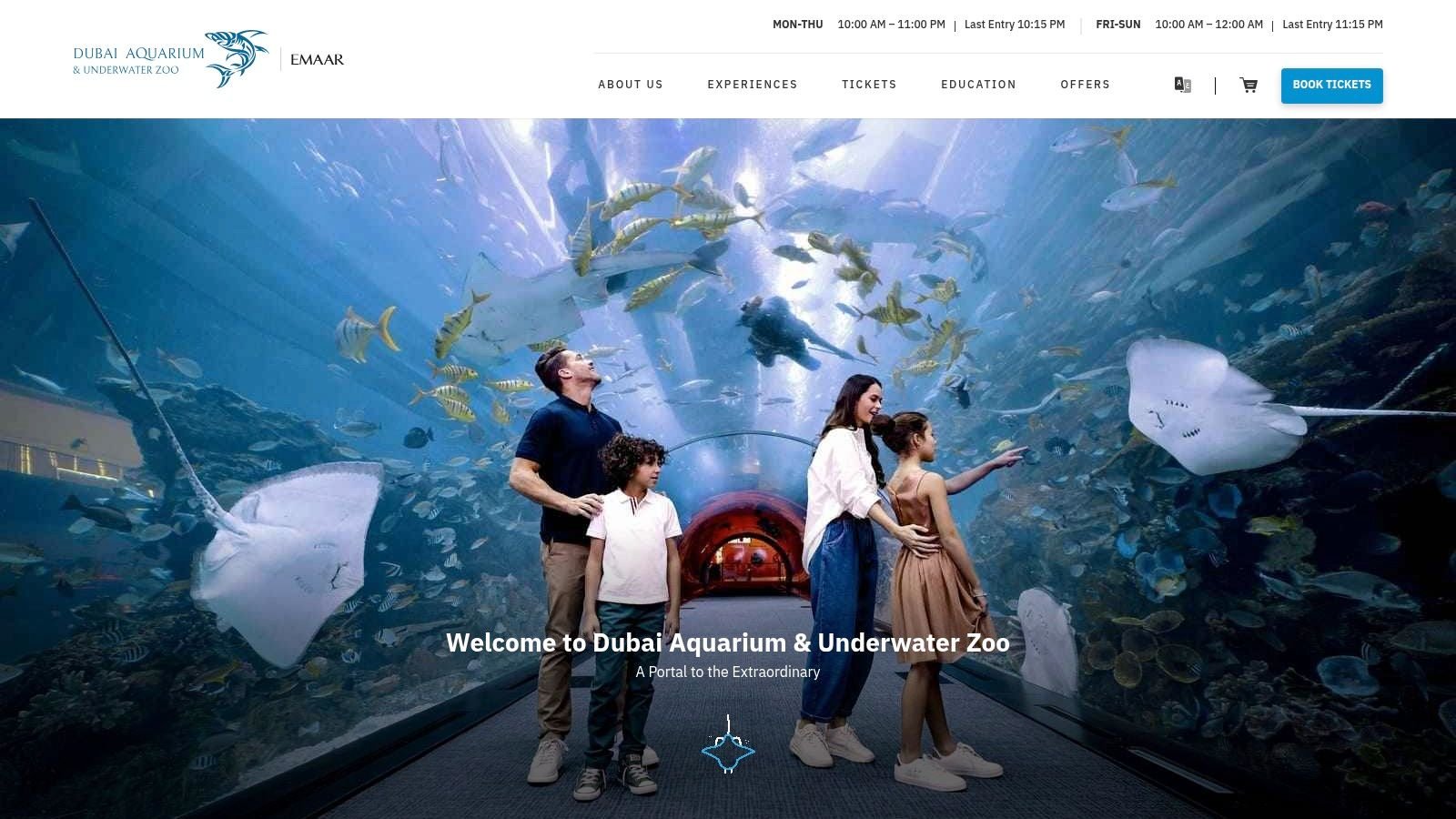
If your child likes to watch before joining, the aquarium can be a better fit than a more active play venue. Observation is often underestimated by adults. We assume a “good” outing means constant doing. In reality, many children build language, regulation, and shared attention best when they can slow down and take in a scene.
The tunnel and the upper-level zoo support exactly that kind of engagement. You can review official ticket options and experiences on the Dubai Aquarium & Underwater Zoo website.
Best for children who need calmer sensory input
The dimmer lighting and slow movement of marine life can be soothing for many children. This can make the aquarium a good choice after a demanding school week, or during periods when your child is more easily overwhelmed.
It’s especially useful for simple but meaningful developmental targets:
- Joint attention: “Look”, “I see it”, “There”
- Descriptive language: colours, sizes, textures, movement words
- Turn-taking in conversation: noticing, commenting, then listening
- Emotional regulation: staying in a calm rhythm in a public setting
The location inside Dubai Mall is also a practical advantage. If your child needs a quick break, snack, or change of environment, you can step away more easily than you could in a stand-alone attraction.
This kind of flexibility matters in real life. Families often do better when they stop treating a ticketed outing like an all-or-nothing event. Step out if you need to. Returning after regulation is often better than forcing the full plan.
Where parents often misjudge it
Because the visual environment is calming, families sometimes assume the whole experience will be easy. That isn’t always true. The mall can still be crowded. Entry areas can feel busy. Weekends and holidays reduce the soothing effect significantly.
Another common mistake is overloading the visit with add-ons. Encounters and extra experiences may sound exciting, but too many transitions can tire a child who was coping well with simple observation.
I usually suggest one main purpose for this outing. Make it a language visit, or a calm observation visit, or a sibling-friendly compromise outing. Don’t ask it to do everything at once.
This is also one of the indoor activities for kids in Dubai that suits mixed-age families fairly well. A younger child can focus on basic naming and sensory enjoyment, while an older child can discuss habitats, animal differences, and simple science concepts.
6. Ski Dubai
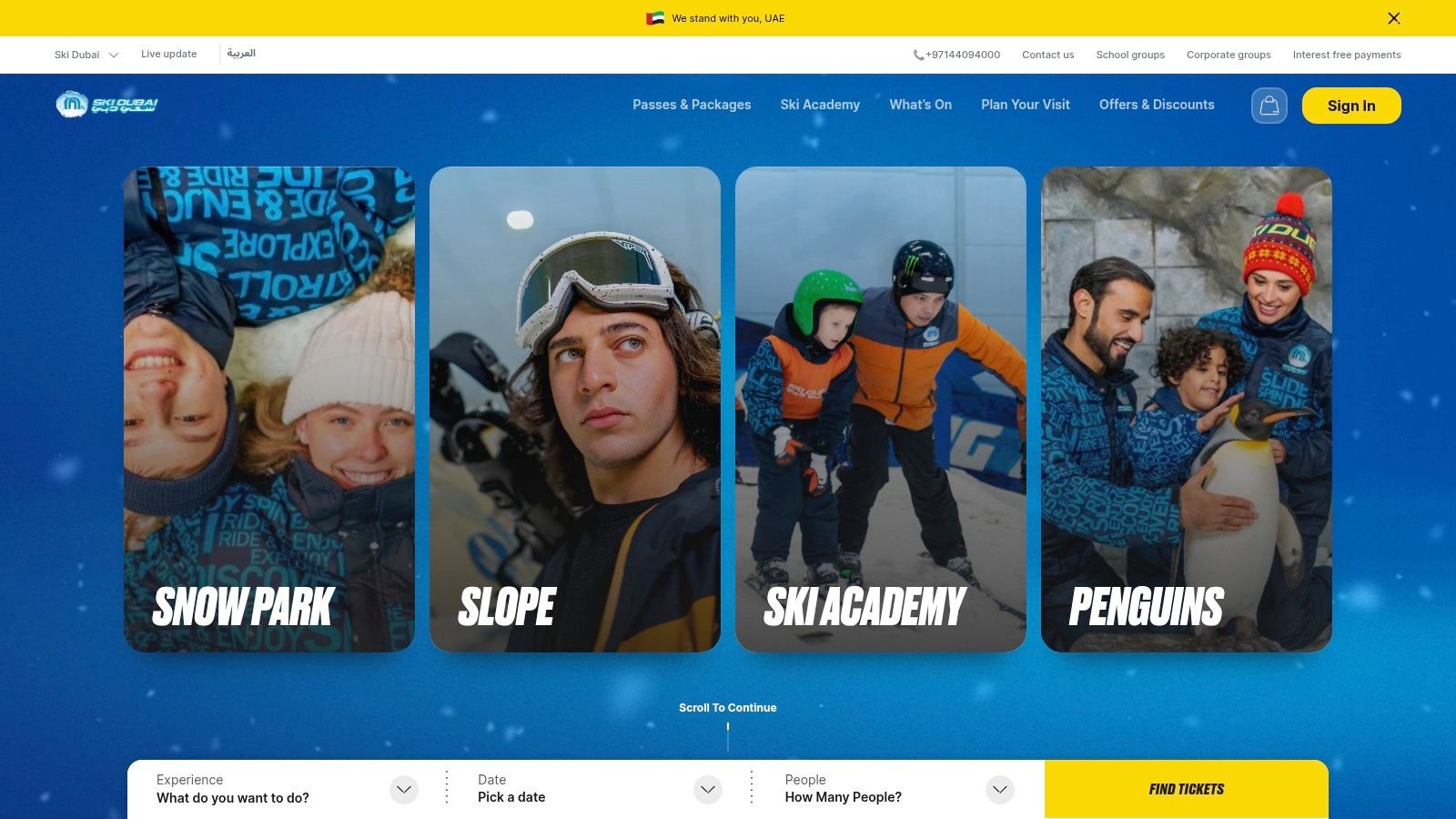
A child walks in excited, then freezes at the gloves, heavy jacket, cold air, and unfamiliar noise. I have seen that pattern more than once. Ski Dubai can be a strong developmental outing, but only if the child is prepared for the sensory demands before the snow starts to feel fun.
You can check current sessions, age rules, and activity options on the Ski Dubai website.
From a therapy perspective, this venue is best for children who benefit from clear sequences, adult-led instruction, and a concrete motor goal. The environment asks for waiting, following directions, tolerating equipment, and repeating a movement with feedback. That makes it useful for occupational therapy goals such as balance, bilateral coordination, motor planning, and postural control. It can also support behavioural targets like transition tolerance, turn-taking, and coping with small mistakes without giving up.
The trade-off is obvious. The same structure that helps one child stay organised can make another child feel trapped.
I usually recommend Ski Dubai for children who already manage winter clothing with only mild support and can handle a coached activity for a short block of time. Families often get better results by treating this as a lesson-based outing rather than free play. A simple plan works best: arrive fed, review the sequence, complete one main activity, then leave while regulation is still intact. If your child is still building tolerance for gear, start with indoor activities for kids at home that practise dressing, sequencing, and sensory preparation before booking a longer visit.
There are also practical limits that matter. Children under 2 are not permitted, so this is rarely an easy whole-family outing if you have a baby or young toddler. The clothing transition can also drain a child before the main activity begins. For some children, the hard part is not skiing or playing in snow. It is changing clothes, waiting in line, and staying regulated through multiple adult instructions.
Ski Dubai is usually a poor fit for children who are highly sensitive to cold, distressed by restrictive clothing, or unsettled by mechanical background noise. In those cases, parents often spend most of the visit trying to recover regulation instead of building confidence or skill. If your child does better with open-ended sensory play, another venue on this list will probably give you more value for the effort and cost.
Dubai families often rely on indoor movement options during the hotter months. Ski Dubai stands out because it offers a very specific kind of challenge: controlled discomfort, physical effort, and clear rules in one setting. For the right child, that combination can produce real progress. For the wrong child, it becomes an expensive struggle.
7. BOUNCE
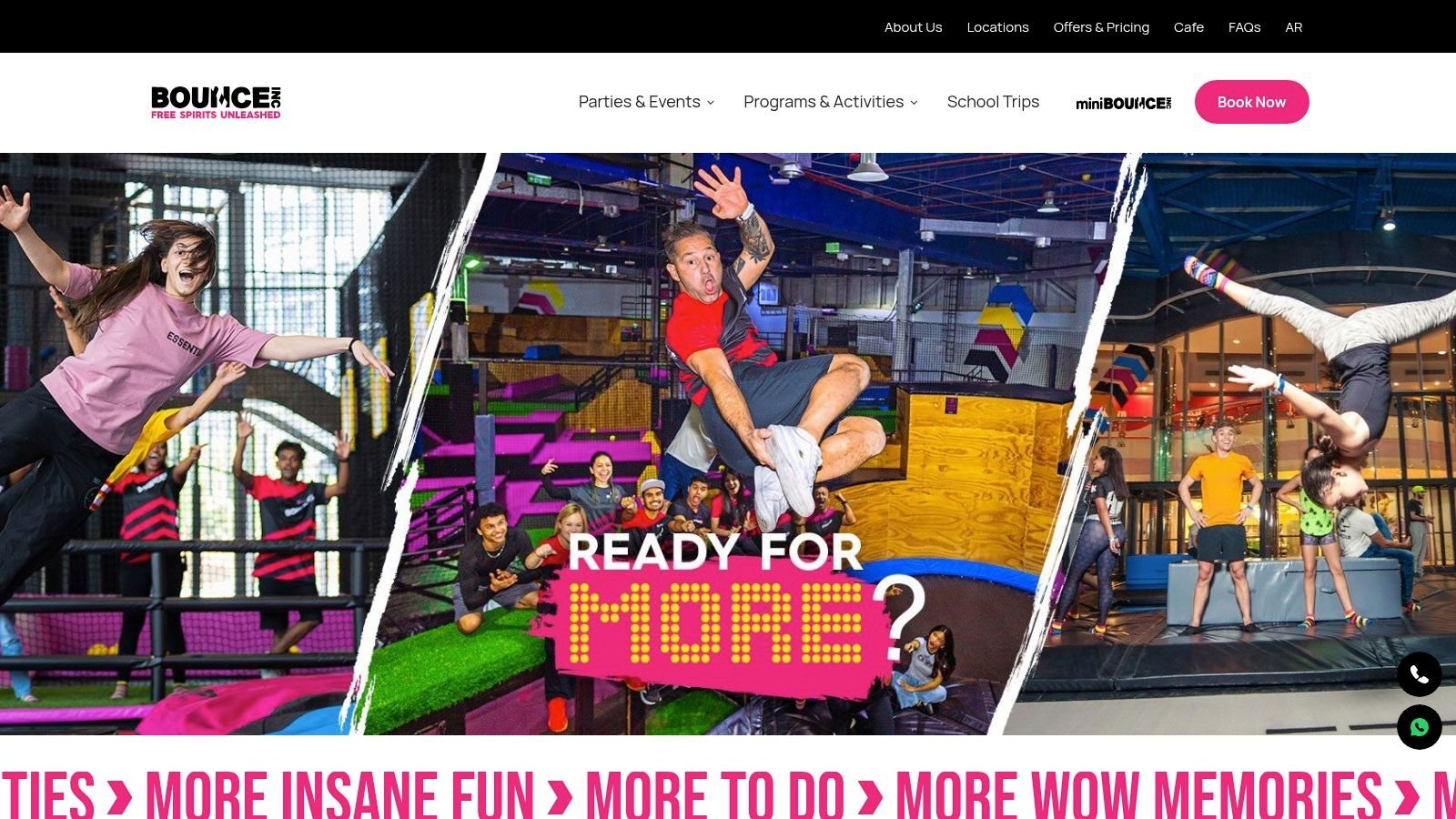
When a child needs movement first, BOUNCE often does the job better than museum-style play spaces. It delivers strong vestibular and proprioceptive input quickly. For some children, that means better regulation, better listening, and fewer behavioural struggles afterwards. For others, it tips them into over-arousal. Knowing which profile your child fits matters more here than at almost any other venue on this list.
You can check sessions, locations, and rules on the BOUNCE website.
Best use of BOUNCE from a therapy perspective
This is not a venue for wandering. It works best with a short, structured plan. Jump, rest, drink, jump again, then leave. That rhythm helps you use the sensory input without letting the environment take over.
BOUNCE is often useful for children working on:
- Motor planning: navigating jumps, landings, and body control
- Confidence: trying a physical challenge in a supervised setting
- Behaviour plans: earning a preferred activity through clear expectations
- Body regulation: getting intense input in a contained session
miniBOUNCE areas can be a better starting point for younger children or those who need less chaotic movement opportunities. Staff supervision and clear rules also help. Predictability matters in active spaces just as much as in quiet ones.
“Use BOUNCE as a purposeful burst, not an all-day plan.”
The venue also pairs well with home follow-through. If your child benefits from heavy movement but can’t cope with public trampoline parks every week, parents can build in simpler routines at home using ideas from https://georgetownuae.com/indoor-activities-for-kids-at-home/.
Important cautions and real-world limits
This is one of the loudest, highest-energy indoor activities for kids in Dubai. Morning weekday slots are usually a smarter choice for children with sensory sensitivities. Loud music and fast crowd movement can override the benefits if the setting is too busy.
It’s also not suitable for every medical profile. If your child has an uncontrolled seizure disorder or another condition affected by intense movement, check with your clinician before booking.
The broader market context helps explain why active indoor venues keep expanding. UAE indoor amusement centres generated USD 408.2 million in 2024 and are forecasted to reach USD 649.7 million by 2030, with family demand strongly tied to active, hands-on entertainment. That trend matches what many parents already know. Children often need more than passive screen-based indoor time.
BOUNCE is effective when you use it deliberately. It’s less effective when adults hope the venue itself will regulate the child. The environment offers input. It still needs adult pacing and decision-making to turn that input into a successful outing.
Comparison of 7 Indoor Kids Activities in Dubai
| Attraction | Complexity 🔄 | Resources & access 💡 | Expected outcomes ⭐📊 | Ideal use cases | Key advantages ⚡ |
|---|---|---|---|---|---|
| OliOli (Children’s Museum – Al Quoz) | Moderate: themed galleries with timed session logistics | Paid ticket; one free adult per child; advance booking recommended | ⭐⭐⭐⭐: fine/gross motor, turn-taking, language, sensory exploration | Therapy carryover, caregiver-led sensory play, small-group visits | Curated tactile play; staff experienced with school/therapy groups; capacity-managed sessions |
| woo-hoo! Children’s Museum (Al Quoz) | Low–Moderate: contained zones simplify transitions | Online ticketing; on-site café; limited session capacity | ⭐⭐⭐: developmental play, early social/practice opportunities | Early learners, social-play practice, family visits | Clean, contained zones; supportive staff; less visually overwhelming |
| KidZania Dubai (The Dubai Mall) | High: large, structured role-play city with many stations | Higher cost tiers; longer visit; RFID control; Premium/fast options available | ⭐⭐⭐⭐⭐: social communication, sequencing, following instructions, functional language | Goal-based visits, full-day indoor option, older children (4–16) | Highly structured activities; extensive choices; clear routines and safety features |
| The Green Planet (City Walk – Indoor Biodome) | Moderate: multi-level biodome with timed entries | Ticketed; optional guided/VIP experiences; shaded/climate-controlled environment | ⭐⭐⭐: observation-based learning, vocabulary, science exposure | Science learning, calmer observation sessions, sensory-friendly exploration | Slower pace and cooler lighting; timed entries reduce crowd spikes; rich science content |
| Dubai Aquarium & Underwater Zoo (The Dubai Mall) | Low: walk-through exhibits with optional add-ons | Ticketed; add-on encounters/dives; easy mall access for quiet breaks | ⭐⭐⭐: calm visual engagement, descriptive language opportunities | Calm observation, language practice, short sensory-friendly visits | Dimmer lighting and slow movement soothe many children; convenient quiet exits |
| Ski Dubai (Mall of the Emirates – Snow Park, Lessons, Penguins) | High: cold indoor environment, scheduled lessons and encounters | Higher cost; age restrictions (under-2s not permitted); gear rental and lesson bookings | ⭐⭐⭐: balance, coordination, structured skill progression | Skill-based lessons, motivating novel environment, OT/ABA carryover | Clear rules and lesson progressions; motivating setting; predictable environment |
| BOUNCE (Trampoline Parks – Al Quoz and Dubai Festival City) | Moderate: supervised sessions with safety rules and zones | Ticketed; multiple locations; miniBOUNCE for younger children; off-peak recommended for sensitivities | ⭐⭐⭐⭐: strong vestibular/proprioceptive input, motor planning, confidence | High-energy sensory input, motor therapy, short focused activity bursts | Intense sensory/proprioceptive benefits; staff supervision; short sessions fit behavior plans |
Turning Play into Progress Your Next Steps
You arrive at a well-known indoor venue with a child who was excited in the car, only to see that excitement disappear at the entrance. The lights are brighter than expected, the queue is longer, and a simple transition becomes the hardest part of the trip. In practice, that does not mean the outing failed. It usually means the match, timing, or goal needed adjustment.
That is the lens I encourage families to use. The venue matters, but the therapeutic target matters more. A strong outing can support requesting, turn-taking, sensory regulation, motor planning, frustration tolerance, and independence. The same venue can also be the wrong choice on a tired day, a language-heavy day, or a day when a child needs movement before any learning can happen.
Start with one question. What does my child need to practise today?
For one child, the goal may be tolerating a short wait and using a two-word request. For another, it may be climbing, balancing, and following a visual sequence. A third child may benefit most from pretend play with clear roles. A place like KidZania can work well for some profiles but feel too demanding for others. Parents often get better results by choosing one or two measurable goals before leaving home, rather than hoping the environment will do the work on its own.
Preparation changes outcomes. Show a photo of the venue. Keep the plan brief. Use first-then language. Pack what already helps regulation, such as headphones, a familiar snack, or a comfort item. Decide what success will look like before you go. Success might be one calm transition, one spontaneous greeting, five minutes of shared attention, or leaving without distress. Those are meaningful gains because they can be repeated and built on.
The wider market explains why families can feel spoiled for choice and still unsure what fits. Analysts at IMARC Group report that the UAE children’s entertainment centres market reached USD 64.55 million in 2024 and is projected to grow to USD 126.15 million by 2033. More venues give families more options, but they also place more pressure on parents to judge sensory load, pacing, cost, and developmental value.
That gap becomes sharper for neurodiverse children. Many roundups focus on popularity and miss the questions therapists and parents usually need answered first. How loud is it? Are exits easy if regulation drops? Can the visit be shortened without losing the point? Is the play open-ended, or does it support structured imitation and communication? One source discussing family needs in Dubai notes autism prevalence at approximately 1 in 94 children, with over 10,000 cases reported in Dubai alone as of 2025 data. Whether or not a venue presents itself as inclusive, families still need a plan that fits the child in front of them.
Cost matters too. A UAE-focused summary of home and outing barriers reports that 60% of UAE parents cite cost as a barrier to paid venues. That is one reason I often recommend using indoor venues selectively. One well-planned visit every week or two, tied to therapy or school goals, often gives better carryover than frequent unstructured trips. The rest of the work can happen in ordinary routines at home, in school, and in the community.
Physical activity also deserves attention. The 2022 UAE Report Card on Physical Activity for Children and Adolescents graded overall activity levels at D-. That does not mean every indoor outing should be high energy. It does mean movement, participation, and stamina deserve a place in the plan, especially during hotter months when outdoor time is harder to sustain.
If you want more ideas beyond weekend outings, these after-school club activity ideas can help you think about routine, variety, and skill-building over the longer term.
The goal is not to find the perfect venue. The goal is to choose the next useful experience, set it up well, and know what you are practising. Progress often looks small to other people. A clearer request. A shorter recovery after disappointment. A child who enters with support and leaves feeling competent. Those are the outings worth repeating.
If you’d like help turning everyday play, outings, and routines into a more individualised developmental plan, Georgetown early intervention center can support you. Georgetown’s team includes educational psychologists, occupational therapists, speech therapists, and behaviour play-based therapists who build personalised plans because each child is unique, and their therapy plan should be too.