
You might be here because something small has started to feel big.
Your child may be bright, affectionate, and full of personality, but something doesn’t sit right. Perhaps they aren’t using words the way other children their age do. Perhaps nursery feedback keeps circling back to attention, behaviour, play, or following instructions. Perhaps family members tell you to “wait and see”, while your instinct keeps telling you to look deeper.
That instinct matters. When parents search for a psychologist in Sharjah, they often think they’re looking for one person who will explain everything. In practice, the strongest support usually comes from a team that looks at the whole child, not one symptom in isolation. A child who struggles with communication may also need speech and language therapy. A child who melts down in class may also have sensory or regulation needs that an occupational therapist can identify. A child who finds social routines hard may benefit from behavioural support, educational psychology, or both.
Recognizing When Your Child Needs Support
A common starting point is the playground, a birthday party, or a family gathering. Other children join in a game, copy each other, negotiate over toys, and drift in and out of conversation. Your child may stay close to you, repeat the same activity, avoid eye contact, or become overwhelmed by noise and transitions. None of these observations alone gives a diagnosis, but together they tell you it’s worth seeking support.

Many parents delay help because the early signs can look subtle. Some children compensate well at home and struggle only in group settings. Others seem to understand far more than they can express, which can make speech, behaviour, and emotional regulation look like separate issues when they are connected.
In the UAE, 1 in 94 children are diagnosed with autism, and a 2025 Emirates Health Services report found that only 32% of Sharjah parents access integrated early intervention before age 5, which is why a team-based approach matters so much when you're looking for help (UAE child development and autism support context).
What concern often looks like in real life
Some parents come in saying, “He’s talking, so I don’t think it’s speech.” Then we hear that he repeats phrases but doesn’t use language to ask, answer, or join play. Others say, “She knows her letters, so school should be fine,” but she can’t sit in circle time, manage transitions, or tolerate group demands. A strong assessment starts by looking beneath the surface.
A helpful first step at home is to compare your concerns with a grounded developmental reference, not random social media advice. This comprehensive guide to child development can help you organise what you’re noticing by age and developmental area.
Practical rule: If your concern has lasted across settings, home, nursery, school, outings, it’s worth discussing with a qualified professional.
Why a psychologist is often only part of the answer
A psychologist in Sharjah can help identify how your child thinks, learns, regulates emotions, and responds to demands. But for many children, especially those with autism, speech delay, sensory needs, or school readiness concerns, progress depends on how well the professionals work together.
That’s why families often benefit more from a coordinated pathway than a simple provider search. If you're starting that search, it helps to look for options that consider the wider developmental picture, such as a children’s psychologist pathway in the UAE, rather than assuming one discipline will cover everything.
Identifying Your Child’s Unique Needs and Goals
Parents often arrive with a broad concern like “speech delay” or “behaviour issues”. That’s understandable, but broad labels don’t give a clinician much to work with. Specific examples do.
The fastest way to improve a first consultation is to describe what your child does, when it happens, and what seems to trigger it. That level of detail helps separate communication difficulties from sensory overload, attention differences, learning gaps, and emotional regulation needs.
According to UAE Ministry of Community Development data, autism spectrum disorder accounts for 12% of disabilities, and early and intensive intervention can yield up to a 47% gain in adaptive skills for children under 5, which is why identifying needs precisely, early, and across disciplines matters (UAE autism and early intervention context).
Start with what you can observe
Write down short, concrete examples under a few headings.
Communication concerns
Your child doesn’t respond consistently to their name, uses very few words, echoes phrases, points less than expected, or gets frustrated when trying to ask for help.Social interaction
They prefer to play alone, don’t imitate other children, struggle with turn-taking, or seem unsure how to join a simple game.Behaviour and regulation
You notice repetitive actions, rigid routines, strong reactions to change, or tantrums that seem far bigger than the situation.Learning and school readiness
They find it hard to follow group instructions, stay with a seated task, hold a pencil, listen to a story, or move between activities calmly.Sensory and daily function
They avoid certain textures, cover their ears, seek movement constantly, resist dressing or feeding routines, or become distressed in busy spaces.
Match the concern to the likely professional
In this scenario, many families get stuck. They know something is wrong, but they don’t know who does what.
| Concern you notice | Professional who may help | What they usually look at |
|---|---|---|
| Limited speech, unclear speech, difficulty understanding language | Speech and language therapist | Understanding, expression, play communication, social language |
| Sensory seeking, poor fine motor skills, dressing or feeding difficulty | Occupational therapist | Sensory processing, motor planning, regulation, daily living skills |
| Learning, school readiness, attention to task, emotional patterns | Educational psychologist | Learning profile, behaviour, classroom functioning, cognitive and emotional needs |
| Repetitive behaviours, transitions, skill building, behaviour patterns | ABA therapist or behaviour therapist | Functional behaviour, routines, teaching new skills through structured support |
| Anxiety, mood, emotional distress, broader mental health concerns | Clinical psychologist | Emotional wellbeing, coping, family support, psychological formulation |
Don’t ask, “Who is the best therapist?” Ask, “What combination of skills does my child need right now?”
Turn concerns into goals
A useful goal isn’t “improve behaviour”. It’s “follow a one-step instruction without protest” or “ask for help with words, signs, or pictures”. Good goals are practical, visible, and relevant to daily life.
For example:
- A child who screams when a toy is removed may need a communication goal before a behaviour goal.
- A child who avoids table tasks may need sensory regulation and fine motor support before pre-academic work.
- A child who speaks in sentences but struggles in class may need support with flexible thinking, group learning, and emotional control.
When parents describe goals this way, the assessment becomes sharper and the therapy plan becomes far more useful.
How to Verify Credentials and Experience in Sharjah
The hardest part of finding a psychologist in Sharjah often isn’t availability. It’s knowing whether the person in front of you is the right fit for your child’s age, needs, and developmental profile.
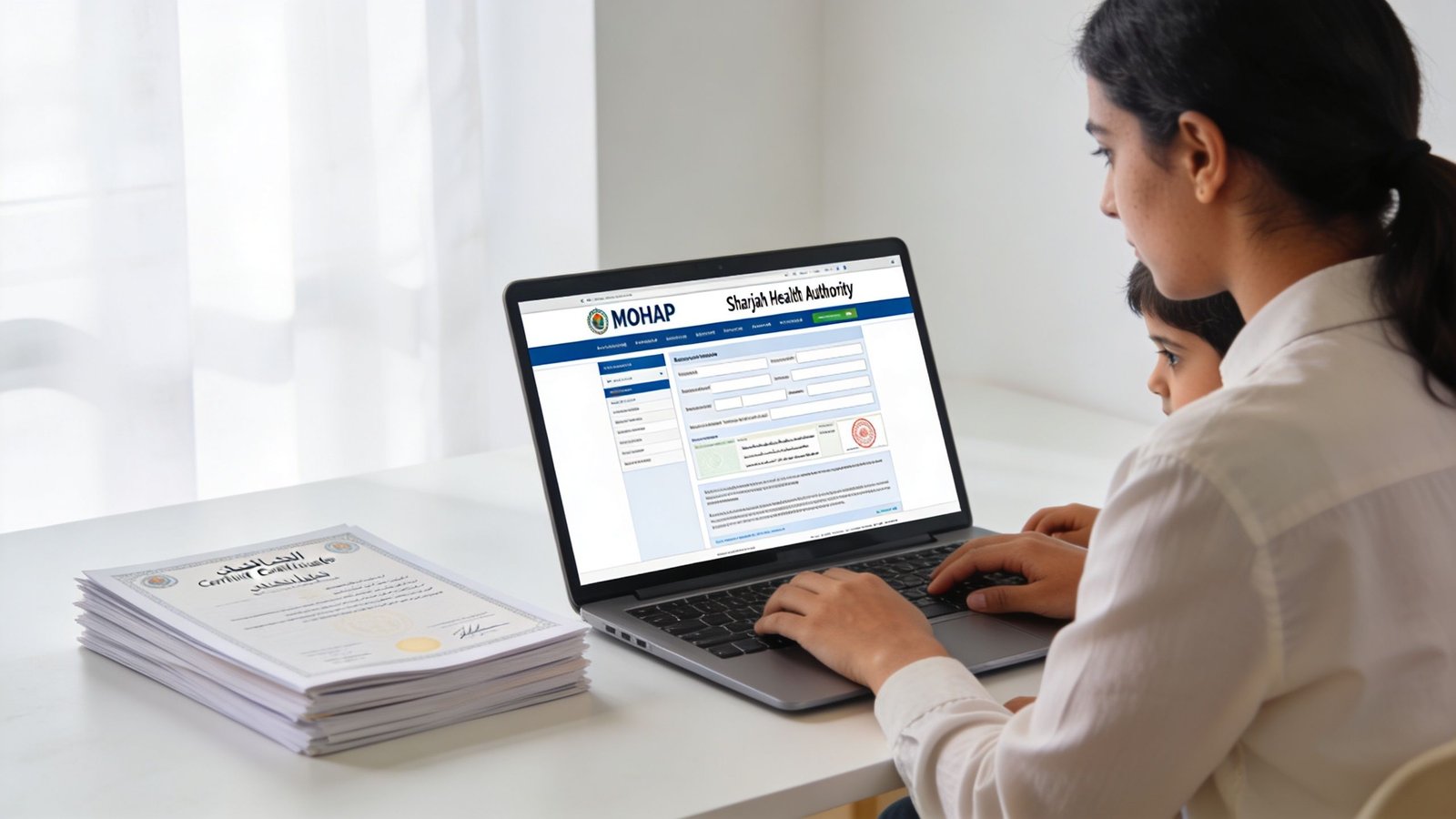
That confusion is common. Child mental health referrals in Sharjah surged 28% between 2025 and 2026, 60% of families reported confusion over therapist qualifications, and only 15% of Sharjah psychologists were licensed educational specialists, which makes credential checks essential, not optional (Sharjah therapist qualification context).
What to verify before booking
Parents often feel awkward asking direct questions. Don’t. A reputable provider expects them.
Check these points:
Licensing status
Ask which UAE authority licenses them to practise and whether that licence is current.Discipline and title
“Psychologist” is too broad on its own. Ask whether they are a clinical psychologist or educational psychologist, and what that means for your child’s needs.Age-group experience
A professional who mainly sees adults won’t automatically be the right choice for a four-year-old with speech delay or autism-related concerns.Condition-specific experience
Ask how often they work with autism, speech delay, school refusal, sensory regulation, or behaviour concerns, depending on your child’s profile.Team collaboration
If your child may need more than one therapy, ask how they coordinate with speech therapists, occupational therapists, and behaviour therapists.
Know the difference between roles
Parents are often referred in circles because each title sounds similar. The roles are not interchangeable.
An educational psychologist usually focuses on learning, behaviour in educational settings, school readiness, developmental profiles, and how a child processes information in real-world tasks.
A clinical psychologist usually examines emotional wellbeing, behaviour, mental health, anxiety, trauma, and broader psychological patterns in detail. If your concern includes emotional distress alongside developmental needs, it helps to understand the clinical psychologist support pathway.
An occupational therapist addresses sensory processing, fine motor ability, self-care, and body-based regulation. A speech and language therapist focuses on communication, comprehension, speech clarity, and social language. An ABA or behaviour therapist works on learning, routines, communication alternatives, and behaviour change through structured teaching.
If a provider speaks confidently but vaguely, keep asking. Clear professionals answer clearly.
Questions that reveal real experience
You’ll learn more from examples than from a polished introduction. Ask:
- What does your assessment process look like for a child this age?
- What signs tell you a child needs referral to speech or occupational therapy as well?
- How do you measure progress?
- How do you involve parents between sessions?
- What would make you reconsider your initial plan?
A strong clinician won’t promise quick fixes. They’ll talk about patterns, function, collaboration, and review points. That’s usually a good sign.
Key Questions for Your Initial Consultation
The first consultation isn’t just for the professional to assess your child. It’s also your chance to assess the centre, the thinking behind the recommendations, and how seriously they take individual differences.
Parents sometimes leave a consultation with a list of sessions but no real clarity. That usually happens when the questions are too general. Specific questions uncover whether the team has a thoughtful process or a one-size-fits-all package.
Essential Questions to Ask a Potential Child Psychologist
| Category | Question to Ask |
|---|---|
| About the assessment process | What will you look at in the first assessment, and how will you decide whether my child also needs speech, occupational, or behavioural input? |
| About the assessment process | Will you gather information from home and school, or only from the clinic session? |
| About the assessment process | How do you separate communication difficulty from behaviour difficulty? |
| About therapy approaches | What therapy approaches do you use for children with profiles like my child’s? |
| About therapy approaches | If autism or developmental delay is a concern, how do you decide which goals come first? |
| About therapy approaches | Do you adapt therapy if my child learns better through play, movement, visuals, or routines? |
| About family involvement | How will you help me support these goals at home without turning home into a clinic? |
| About family involvement | How often will I receive feedback, and what kind of feedback will it be? |
| About measuring progress | What will progress look like in practical terms over the next few months? |
| About measuring progress | How do you track change if my child’s needs are behavioural, social, and communication-based at the same time? |
| About planning | Who will be involved in designing the plan, and how do different therapists coordinate with each other? |
| About review and adjustment | If my child isn’t responding well, what changes do you make and how quickly do you review them? |
What a good answer sounds like
A thoughtful answer is usually detailed and calm. It mentions observation, parent interview, developmental history, and coordination across professionals if needed. It connects the child’s behaviours to function, not just labels.
A weaker answer sounds rushed or fixed. If you hear “we usually start everyone the same way” or “let’s just begin sessions and see”, be careful. Children do need flexibility in treatment, but they also need a clear rationale.
“I want to understand how you think, not just what you offer.” That sentence changes the tone of a consultation immediately.
Listen for these signs
You don’t need clinical training to spot quality. You need to listen for whether the provider can translate jargon into practical steps.
Good signs include:
They ask for examples
They want to know what happens at home, school, and in public settings.They talk about strengths
They notice what your child can already do and use that as part of planning.They explain priorities
They tell you why communication may need to come before compliance, or why regulation may need to come before academics.They describe measurable goals
They don’t settle for vague outcomes like “improve confidence”.They welcome collaboration
They treat you as part of the process, not as someone who drops the child off and waits.
Red flags during the meeting
A few patterns should make you pause.
- The provider gives a heavy conclusion after a very brief interaction and without enough background.
- They dismiss nursery or school feedback without exploring it.
- They recommend a full schedule before explaining the assessment logic.
- They avoid discussing progress tracking.
- They speak about your child only in deficits and never in learning style, interests, or strengths.
An initial consultation should leave you feeling informed, not pressured.
Understanding the Assessment and Individualized Plan
A good assessment doesn’t feel like an interrogation. It feels organised, respectful, and observant. The child may play, move, respond to structured tasks, interact with materials, and show you far more through behaviour than through direct answers.
That atmosphere matters. A University of Sharjah study found that nearly 90% of students had not used university counselling services, partly due to perceived stigma, which is a useful reminder that families engage more openly when the process feels professional, welcoming, and free of judgement (Sharjah counselling and stigma context).

What usually happens in a strong assessment
You’ll usually begin with a parent interview. Expect questions about pregnancy and birth history, milestones, speech development, play, feeding, sleep, behaviour, family routines, school feedback, and previous support.
Then the clinician observes your child directly. Depending on the concern, that may include play-based interaction, structured tasks, regulation challenges, communication sampling, and practical problem-solving. In integrated settings, different therapists may contribute their observations rather than working in isolation.
What the plan should include
The most useful outcome is not a thick report. It’s a clear, individualised plan that tells you what happens next and why.
Look for these elements:
A clear summary of strengths and needs
Not just what your child struggles with, but what motivates them and helps them learn.Specific goals
For example, following one-step instructions, increasing functional communication, improving transitions, or developing pre-writing control.Therapy recommendations by discipline
Which concerns need psychology, speech therapy, occupational therapy, ABA support, or a combination.Session frequency and focus
You should understand why a certain intensity is being recommended.A progress method
Review meetings, therapist notes, parent feedback, and concrete examples of change should all be part of this.
A plan should read like it was written for your child, not copied from the previous file.
Red flags in an individualized plan
Some plans look polished but aren’t clinically useful. Be cautious if the goals are generic, the wording is broad, or every child seems to receive the same recommendation.
A weak plan often says things like “improve behaviour”, “develop communication”, or “enhance social skills” without defining how anyone will know whether that’s happening. A stronger plan identifies the exact behaviour, context, and support strategy.
When a centre gets this stage right, parents usually feel less overwhelmed. They stop chasing separate opinions and start following a map.
Navigating Costs and Finding Local Centres in Sharjah
Cost matters, and most families need to think about it early. The challenge isn’t just the price of one appointment. It’s understanding whether you’re paying for scattered sessions or a coherent support plan.
In Sharjah, psychology therapy sessions average AED 550, compared with AED 800 in Dubai and AED 700 in Abu Dhabi, which makes Sharjah a more accessible option for many families seeking well-rounded support (Sharjah psychology session pricing).
Think beyond the session fee
A lower session cost doesn’t automatically mean better value. What matters is whether the recommendation is targeted.
Ask practical questions before you commit:
What does the fee include
Is it only the session, or are parent feedback, coordination, and goal reviews included?How many disciplines are likely to be involved
If your child needs speech, OT, and psychology, budgeting for a team makes more sense than budgeting one service at a time.Does insurance cover any part of care
Some families receive partial support, especially when they ask specifically about developmental and therapy-related categories rather than using a general mental health label.What happens if priorities change
A child may start with speech and psychology, then later need more OT input. Ask how the centre handles those transitions.
How to narrow local options
If you’re comparing centres, avoid choosing purely by location, marketing, or social media presence. Shortlist providers that can explain assessment quality, collaboration, and progress review in plain language.
A broad location search can still help you understand the available options. For families comparing support options across the UAE, this DeTalks mental health support resource can be a useful starting point for thinking about what to ask and how to evaluate fit.
If your family also compares services across emirates, it can help to understand related pathways such as a child psychologist option in Dubai, then compare that with what’s available closer to home in Sharjah.
What works better in practice
The families who usually feel most settled aren’t the ones who found the flashiest provider. They’re the ones who found a centre that could explain three things clearly: what the child needs, who will work on it, and how progress will be reviewed.
That’s the core difference between finding a psychologist in Sharjah and finding the right support system for your child.
If you're looking for coordinated help rather than disconnected sessions, Georgetown early intervention center offers a multidisciplinary approach with educational psychologists, occupational therapists, speech therapists, and behaviour play-based therapists. Their focus on an individual plan for each child reflects what good early intervention should look like in practice: personalised, collaborative, and built around how your child learns.