
Occupational therapy in Dubai offers a structured, supportive path for children to master the essential activities that make up their world. You can think of it as a personalized coaching program designed to build independence, whether that's learning to tie shoelaces and hold a pencil or navigating social situations with confidence. The therapy focuses on a child's unique 'occupations'—the meaningful tasks of playing, learning, and growing.
What Is Occupational Therapy for Children in Dubai?
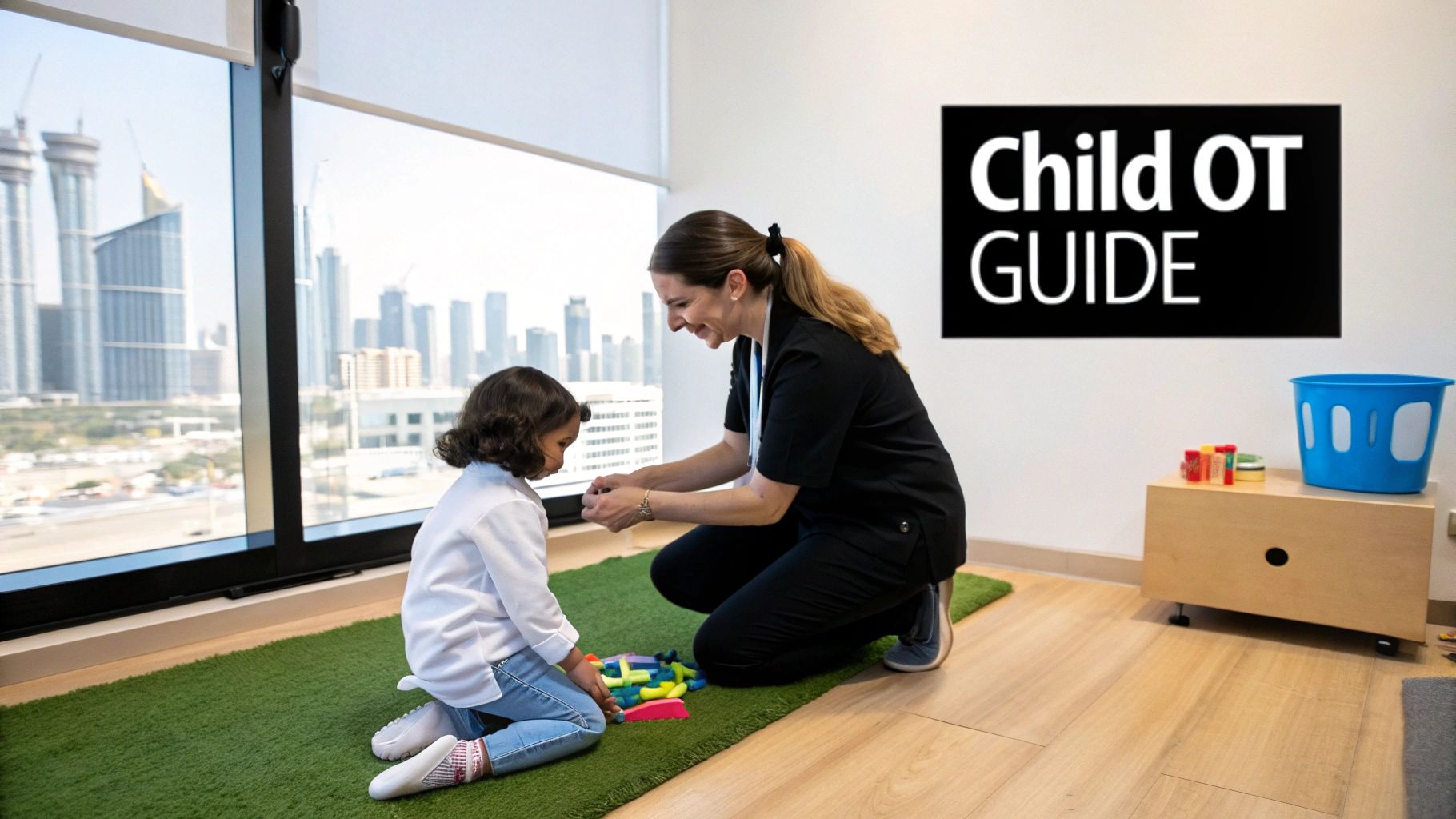
Imagine a child's world is like a bustling construction site. Some kids naturally figure out how to use all the tools—their hands for building blocks, their focus for following instructions, and their emotions for working with others. But sometimes, a child needs a little help learning how to use these tools effectively. That's where occupational therapy (OT) comes in.
Forget dry clinical definitions. OT is really a partnership between the therapist, the child, and their family. It’s a dynamic process that uses purposeful play and carefully chosen activities to build foundational skills. The 'occupation' in the name simply refers to any activity that occupies a child's time and gives their life meaning.
An occupational therapist doesn't just see a child struggling with handwriting; they see a future artist, writer, or engineer who needs support developing the fine motor control to bring their ideas to life. The goal is always function, participation, and confidence.
The Core Focus of Paediatric OT
Occupational therapy in Dubai isn't about 'fixing' a problem. It’s about building a bridge between a child’s current abilities and the skills they need to thrive. This means targeting several key areas:
- Fine and Gross Motor Skills: This covers everything from the dexterity needed for writing and using scissors to the coordination for running and climbing on the playground.
- Sensory Processing: We help children make sense of information from their environment—sights, sounds, and textures—so they don’t feel overwhelmed or under-stimulated.
- Cognitive Skills: This involves supporting attention, problem-solving, and organizational abilities, which are absolutely crucial for learning in the classroom and handling daily routines.
- Social-Emotional Regulation: OTs teach children how to understand their feelings, manage frustrations, and interact positively with their peers.
A Growing Need in the UAE
The role of occupational therapy in Dubai has become more and more vital as awareness of developmental differences grows. Today, specialized centers, clinics, and hospitals across the city employ talented therapists who work closely with children facing challenges like autism spectrum disorder, cerebral palsy, and learning disabilities. They provide essential support not just for the child, but for the entire family. If you're curious, you can read the full research about occupational therapists in Dubai to find out more about their important work.
How Occupational Therapy Unlocks a Child's Potential
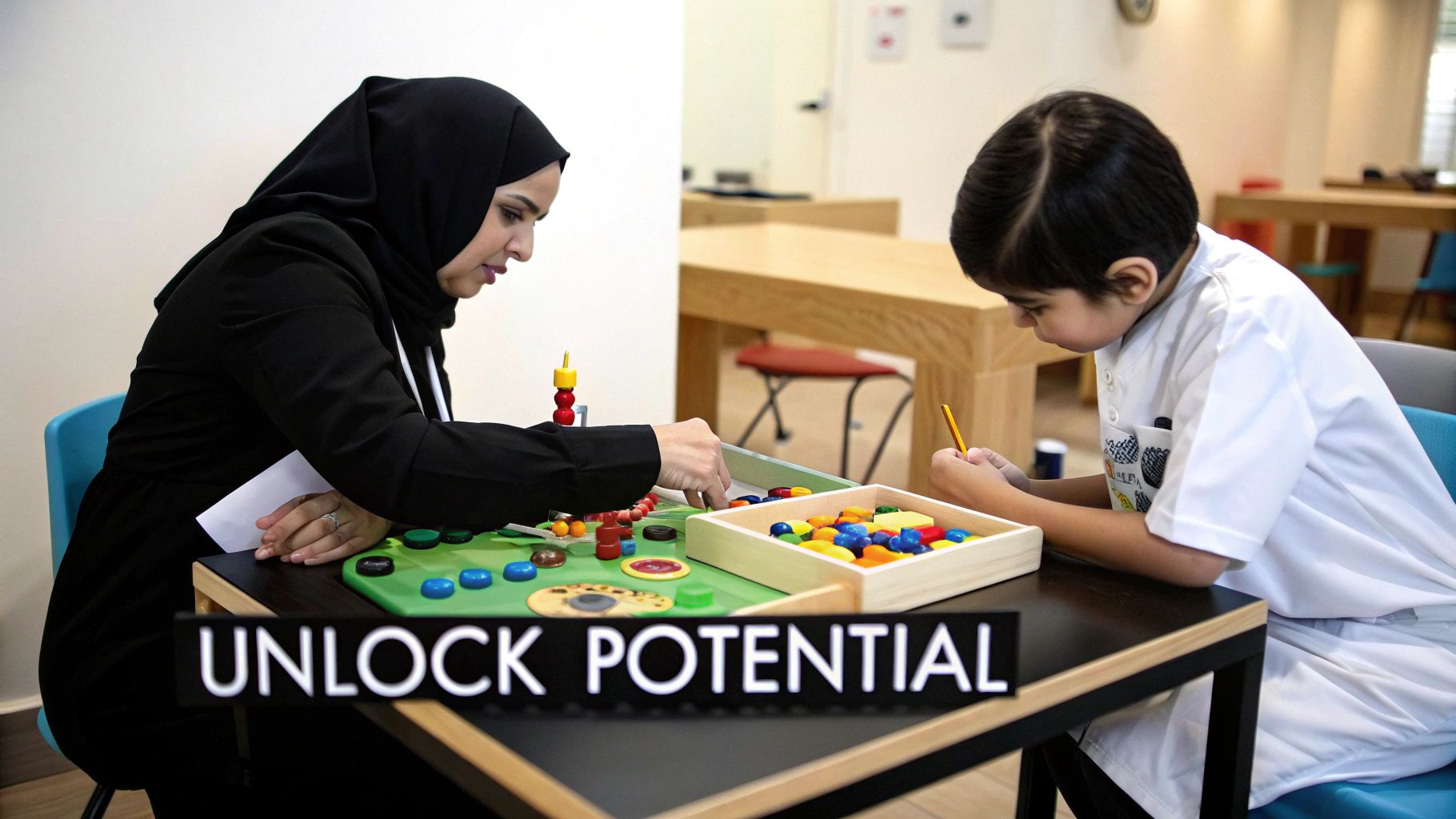
Occupational therapy is all about unlocking a child’s natural abilities so they can connect with the world around them. It’s not just about managing symptoms; it’s about building the core skills needed to succeed in day-to-day life. Every child is different, and OT support is designed to meet them where they are, helping them tackle specific hurdles in a positive, encouraging way.
You could think of an occupational therapist as a personal coach for essential life skills. They take big, overwhelming tasks and break them down into small, manageable steps, turning what was once a challenge into a win. The progress made in occupational therapy in Dubai shows up everywhere—in more confidence at home, better engagement in the classroom, and happier times on the playground.
Building Control With Fine Motor Skills
When we talk about fine motor skills, we mean all the small, precise movements we make with our hands and fingers. They are the absolute foundation for so many daily tasks that help a child become independent and keep up at school. It’s about much more than just handwriting; these are the skills a child uses to button up a shirt, hold a fork, or click LEGO bricks together.
If these skills aren’t quite there yet, a child can get frustrated and start avoiding activities that need a delicate touch. An occupational therapist uses fun, play-based activities to strengthen these little muscles and improve hand-eye coordination.
- Handwriting and Drawing: Getting the pencil grip right and learning the control needed to form letters and shapes.
- Self-Care Tasks: Mastering zipping up a jacket, tying shoelaces, and using cutlery properly at mealtimes.
- Play and Learning: Confidently using scissors, picking up small toys, and putting together puzzles.
Organizing the Senses for Better Focus
Sensory processing is how our brain makes sense of all the information coming in from our senses—sight, sound, touch, and even our sense of movement. For some kids, this system is like a well-organized control room, managing signals smoothly. For others, it’s more like a constant traffic jam, leaving them feeling overwhelmed or, on the flip side, under-stimulated and restless.
A child who is extra sensitive to noise might find it impossible to concentrate in a loud classroom. Another child who needs more sensory feedback might be constantly fidgeting or seeking out movement. OT helps direct this "sensory traffic," allowing the child to feel calm, focused, and ready to learn.
This is often done through a personalized "sensory diet," which is a curated set of activities designed to give a child just the right amount of sensory input they need. The goal is to create a balanced state that supports their attention and helps them manage their emotions.
Nurturing Social and Emotional Growth
Making friends and figuring out social cues are complex skills for any child. Occupational therapy offers a safe, structured environment to practice this social and emotional side of life. Therapists use guided, play-based scenarios to teach children how to read body language, take turns in a game, and handle their feelings when things don’t go their way.
This support is crucial for helping children build real connections with their peers, which can reduce social anxiety and make it easier to join in group activities. By developing emotional regulation, a child learns how to deal with frustration and communicate their needs in a healthy way. This is the bedrock of strong self-esteem and lasting friendships.
Occupational therapy provides targeted support across several key areas to help children master essential life skills. The table below breaks down what this looks like in practice.
Core Developmental Areas Supported by Occupational Therapy
| Developmental Area | What It Looks Like | Skills Developed in Therapy |
|---|---|---|
| Fine Motor Skills | A child struggles with buttoning their shirt, holding a pencil, or using scissors. | Developing hand strength, finger dexterity, and precise hand-eye coordination through targeted play and activities. |
| Gross Motor Skills | The child seems clumsy, has poor balance, or avoids playground activities like climbing. | Improving balance, coordination, and body awareness for activities like running, jumping, and catching a ball. |
| Sensory Processing | A child is easily overwhelmed by loud noises, picky about food textures, or constantly on the move. | Creating a "sensory diet" to help regulate responses to sensory input, improving focus and emotional stability. |
| Self-Care & Daily Routines | Difficulties with dressing, feeding, or following a morning routine independently. | Breaking down tasks into simple steps to build confidence and independence in personal care. |
| Social & Emotional Skills | Trouble with sharing, taking turns, or managing frustration during play with others. | Practicing social cues, emotional regulation, and cooperative play in a supportive setting. |
Ultimately, OT helps children build a toolkit of practical skills they can use in every part of their lives, from the classroom to the playground.
Supporting Children With Autism And Speech Delays
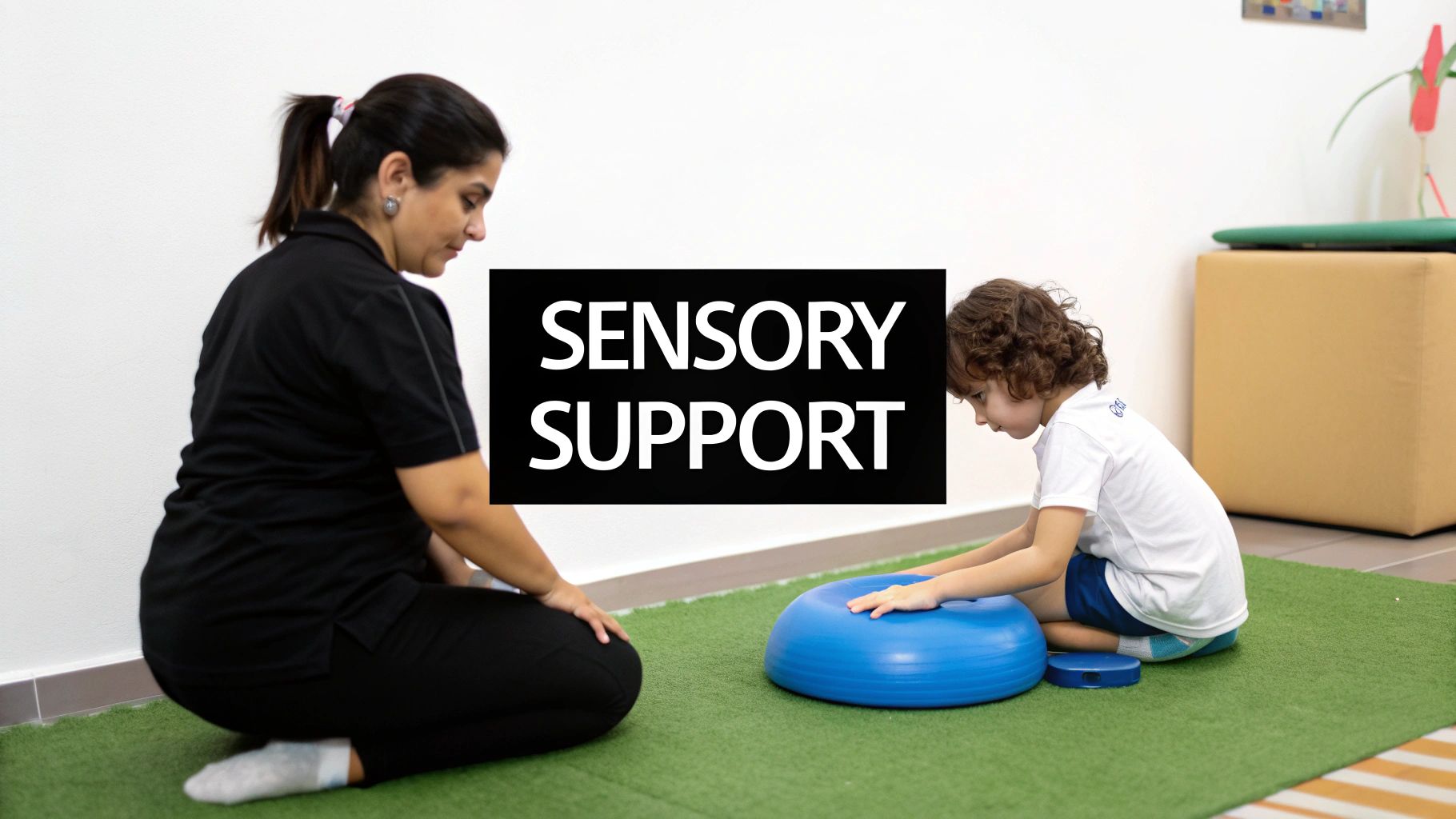
For many children with Autism Spectrum Disorder (ASD) or speech delays, the world can feel like a loud, unpredictable, and overwhelming place. This is often tied to sensory sensitivities, where everyday sights, sounds, or textures can cause real distress. Occupational therapy is a cornerstone of support, helping to bring a sense of order to this sensory chaos.
An occupational therapist in Dubai will first work to understand each child's unique sensory profile. They pinpoint which specific inputs throw the child's system off balance and then create personalized strategies to help them find a state of calm. This regulated state is the essential foundation for learning, communication, and social engagement.
Think of a child's nervous system like a radio that isn't quite tuned to the right station—it's all static and noise. An OT helps them find the clear channel, allowing them to finally hear the music and make sense of their world.
Creating Calm With A Sensory Diet
One of the most powerful tools an OT has is the sensory diet. Don't worry, it has nothing to do with food. Instead, it’s a carefully scheduled series of activities designed to give a child the specific sensory input they need throughout the day. This proactive approach helps them stay regulated, often preventing meltdowns before they even start.
A sensory diet might include things like:
- Heavy work activities, such as pushing a weighted ball or jumping on a trampoline to provide calming deep-pressure input.
- Tactile play with therapy putty or a sensory bin, which can help desensitize a child to different textures.
- Scheduled quiet time in a dimly lit space with gentle music to give their system a much-needed break from overstimulation.
By meeting these sensory needs, a child is far better equipped to focus, engage with others, and participate fully in other therapies.
Building The Foundation For Communication
Occupational therapy and speech therapy are incredible partners in a child's development. Before a child can really benefit from speech therapy, they need foundational physical and regulatory skills. That’s exactly where occupational therapy in Dubai lays the groundwork.
Before a child can even form words, they often need:
- Core Strength: Good posture and core stability are necessary to support the breath control required for speech.
- Attention and Focus: The ability to sit and engage with a speech therapist is built through OT activities that improve regulation.
- Oral Motor Skills: Simple activities like blowing bubbles or chewing on resistive toys can strengthen the muscles around the mouth.
For children receiving these services, their progress and tailored support are often documented within structured frameworks like Individualized Education Plans (IEPs), which help set and track specific goals.
By building these essential skills, OT ensures a child arrives at their speech session ready and able to learn. To explore this partnership further, you can learn more about how speech and occupational therapy work together for children in Dubai. This integrated approach addresses the whole child, unlocking their true potential for communication and connection.
Building the Foundation for School Readiness
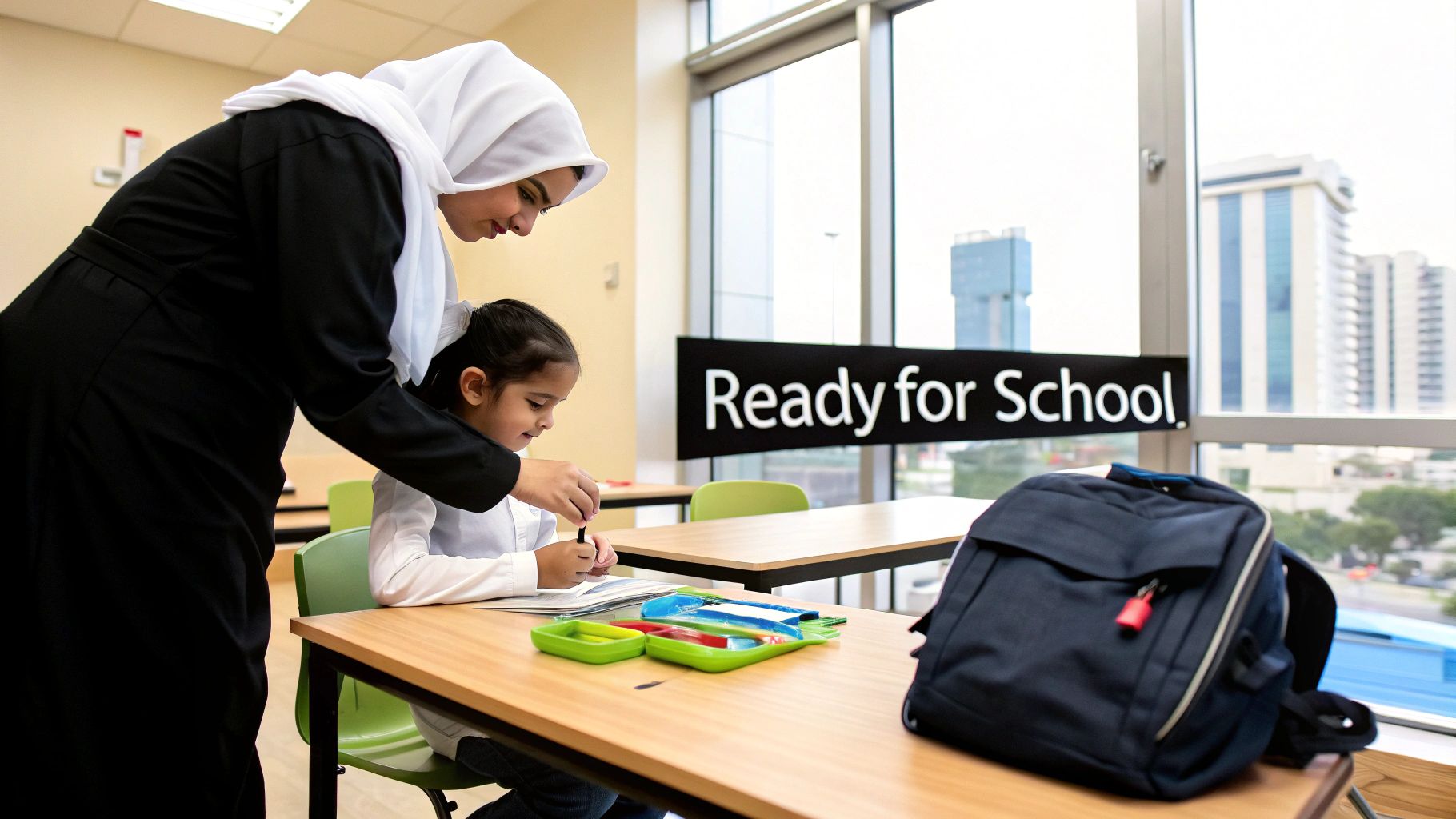
A child’s first day of school is a huge milestone. But their success isn't just built on knowing their ABCs and 123s. Long before they tackle reading or maths, they have to learn the actual "job" of being a student. This is where occupational therapy truly shines.
Just think about all the unspoken rules of a classroom here in Dubai. A child needs to be able to sit still during a lesson, follow a teacher’s multi-step instructions, keep track of their own backpack, and navigate the wonderfully chaotic world of the playground. These are the very skills that occupational therapy in Dubai strengthens, giving children a head start before they even walk through the school gates.
School readiness isn't about rote memorization. It’s about having the physical, social, and self-control tools needed to join in, feel confident, and actually enjoy the learning environment. OT helps build this essential toolkit from the ground up.
Strengthening Core Executive Functions
At the heart of being "school-ready" are executive functions. Think of these as the brain's project manager—the skills responsible for planning, organizing, and staying in control. They are the bedrock of learning, and a major focus for early intervention with an occupational therapist.
Our therapy sessions are designed to build these skills through what looks like simple, purposeful play:
- Planning and Sequencing: Activities like following a diagram to build with LEGOs or helping with a simple recipe teach a child how to think ahead and complete steps in the right order.
- Working Memory: We play games that involve remembering a short sequence of colours or movements. This strengthens their ability to hold onto information and use it right away.
- Self-Control: Structured games are powerful teachers. Learning to wait your turn or manage the frustration when a block tower tumbles over is a huge lesson in emotional regulation.
Building these underlying skills helps a child handle the demands of a classroom with far less stress and much more ease. For parents who want to dive deeper, a dedicated school readiness program in Dubai can provide fantastic, structured support.
Is Your Child Ready for the Classroom?
So, how can you know if your child might benefit from a little extra support? This simple checklist can help you spot areas where OT could build some crucial skills before school starts.
Key School-Ready Skills Checklist:
- Follows Directions: Can your child follow a simple, two-step instruction like, "Please get your shoes and put them by the door"?
- Fine Motor Control: How do they hold a crayon or pencil? Is their grip functional enough to start making marks?
- Attention Span: Can they sit and focus on something they enjoy, like a puzzle or a book, for about 5-10 minutes?
- Social Interaction: Do they show an interest in other children, even if it's just playing alongside them?
- Independence: Can they manage basic self-care, such as pulling up their own trousers or washing their hands?
If you notice consistent struggles in these areas, it’s not a red flag. It’s simply an opportunity—a chance to build a stronger foundation for a happy and successful start to their school journey.
How to Find the Right OT Centre in Dubai
Choosing an occupational therapy provider in Dubai is one of the most significant decisions you'll make for your family. This isn't just about finding a service; it's about finding a partner who truly gets your child's world and fits with your family's values. The right center should feel like an extension of your own team.
The search can feel overwhelming, but breaking it down into a few key areas makes it much more manageable. The real goal is to find a place where your child feels safe, understood, and genuinely excited to grow. That positive connection between your child and their therapist is the bedrock of all future progress.
Start with the Centre’s Philosophy
Every therapy center operates on a core philosophy. Some are heavily play-based, built on the belief that learning happens most naturally when it's fun. Others might concentrate more on specific sensory integration techniques to help a child's nervous system find its balance. One isn't "better" than the other—it's all about what clicks with your child's needs and personality.
Look for a provider whose methods just make sense to you. Do they value a structured, goal-oriented setting, or is their style more flexible and child-led? A great center will be able to explain their philosophy clearly and show you exactly how it plays out in their day-to-day therapy sessions.
Finding the right fit is like choosing the right coach for an athlete. A great coach understands the player's strengths, personality, and learning style, and adapts their strategy to bring out the very best in them. Your child’s therapist should do the same.
Evaluate the Team and Environment
The qualifications and experience of the therapists are, of course, critical. You'll want to see a team of licensed professionals who have a track record of working with children who have needs similar to your child's. In a wonderfully diverse city like Dubai, it's also a huge plus to find therapists who are culturally aware and can communicate easily with your family.
The physical space of the center matters, too. Is it clean, welcoming, and filled with a variety of therapeutic tools? A well-designed therapy space should feel both stimulating and safe, encouraging kids to explore and push their boundaries in a supportive setting. The city’s growing reputation is attracting top talent, making the quality of occupational therapy in Dubai better than ever.
Essential Questions to Ask
When you have your initial meetings, coming prepared with a few specific questions can bring a world of clarity. This is your chance to really understand their process and see if it aligns with what you're looking for. Don't be shy about getting into the details.
Here are a few insightful questions to help guide the conversation:
- Assessment Process: How do you figure out a child's needs? What does the first assessment look like?
- Parental Involvement: How do you collaborate with families? How will we be involved in setting goals and helping with therapy at home?
- Measuring Progress: How do you track a child's progress, and how often will you share updates or reports with us?
- School Coordination: Do you work with a child’s school or other therapists? How do you manage that communication?
- Therapist Matching: How do you match a therapist to my child's specific needs and personality?
Dubai is quickly becoming a major hub for international conferences on occupational therapy, which shows just how serious the city is about professional development. This focus on learning means many local therapists are up-to-date with the latest, most effective practices. You can discover more about the professional development events happening in Dubai to see this commitment to excellence for yourself.
What to Expect in Your First OT Sessions
Stepping into that first occupational therapy session can feel like a big moment, but it's important to know the process is designed to be welcoming and insightful right from the start. Think of it less like a doctor's appointment and more like a guided discovery, where the therapist’s main goal is simply to understand your child’s unique world.
The journey starts with an initial assessment, which, to your child, will probably feel a lot like playtime. They might be invited to build with blocks, draw a picture, or even tackle a small obstacle course. While your child is just having fun, the therapist is skillfully observing their motor skills, how they approach problems, their sensory responses, and the way they interact with everything around them. This play-based approach is a natural, stress-free way to see your child's strengths and pinpoint areas where they could use a little extra support.
Setting Meaningful Goals Together
After the assessment, the therapist will sit down with you to set meaningful, family-centered goals. This is a crucial partnership. You are the absolute expert on your child, and your insights are invaluable for shaping a therapy plan that is not only effective but also truly relevant to your daily life.
The most powerful therapy goals are born from real-life needs. Instead of a clinical target like "improve pincer grasp," a collaborative goal might be "for my child to be able to zip up their own jacket before school." This makes the purpose of therapy clear and motivating for everyone.
The goals we set together will become the roadmap for your child's occupational therapy in Dubai.
What a Typical Session Involves
A typical OT session is a series of fun, purposeful, and carefully chosen activities. Every game or task has a therapeutic reason behind it, designed to build specific skills in a way that feels engaging, not like work. A session might flow from swinging on a therapy swing (to provide calming sensory input) to playing with therapy putty (to build hand strength).
The therapist will often explain the "why" behind each activity, empowering you with that knowledge. You can even find inspiration for your own playtime at home by exploring creative ideas for occupational therapy activities that support development. This helps ensure the progress made in sessions continues to build momentum in your everyday family routines, making you a vital part of your child’s successful journey.
Common Questions About Occupational Therapy in Dubai
When you start exploring the world of occupational therapy in Dubai, it's natural to have a lot of practical questions. As a parent, you want to feel confident you're making the right choices for your child's development. Let's walk through some of the most common queries we hear from families just like yours.
How Do I Know if My Child Needs OT?
A good starting point is to think about your child’s daily life. Are they finding age-appropriate activities a real struggle? This isn't about being perfect, but about persistent challenges.
Maybe you've noticed difficulties with handwriting, extreme reactions to everyday noises, or what seems like constant clumsiness. Perhaps they find it hard to play and interact with other children. If these signs sound familiar, having a chat with a qualified therapist for an assessment is the clearest path forward.
The goal isn't to label a child but to understand their unique needs. OT focuses on building skills for functional independence in everyday life, from the classroom to the playground.
Is OT Covered by Insurance in Dubai?
This is a big question, and the answer really varies from one insurance plan to another here in the UAE. Many of the more comprehensive policies do offer OT coverage, but there are often strings attached, like needing a doctor's referral or having a cap on the number of sessions.
Your best bet is to call your insurance provider directly. Ask them to walk you through your policy details, including any pre-authorization steps you need to take and which therapy centers are in their approved network. For general administrative questions before you even book a consultation, some new tools like AI chatbots for therapists can help you get quick answers.