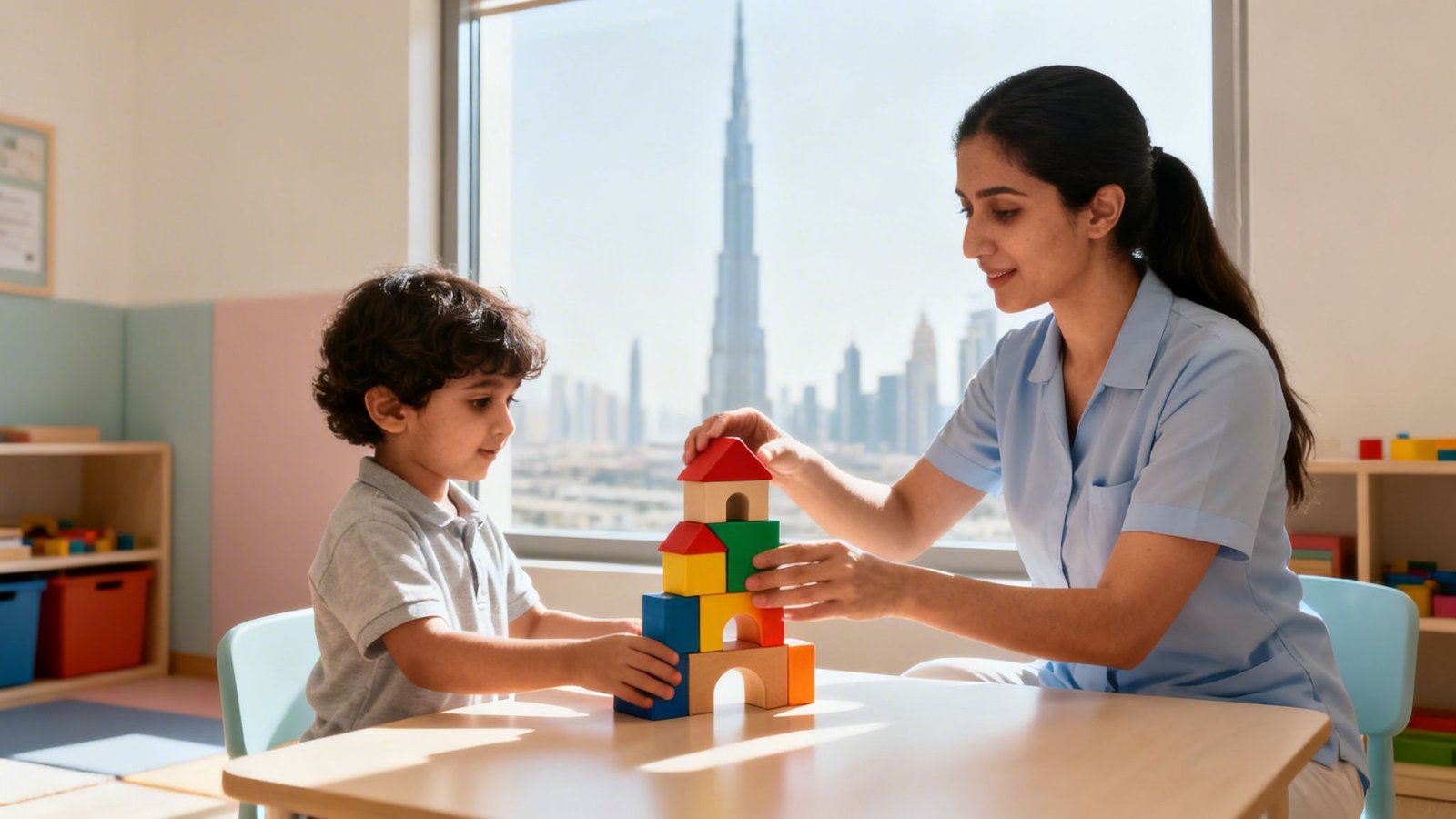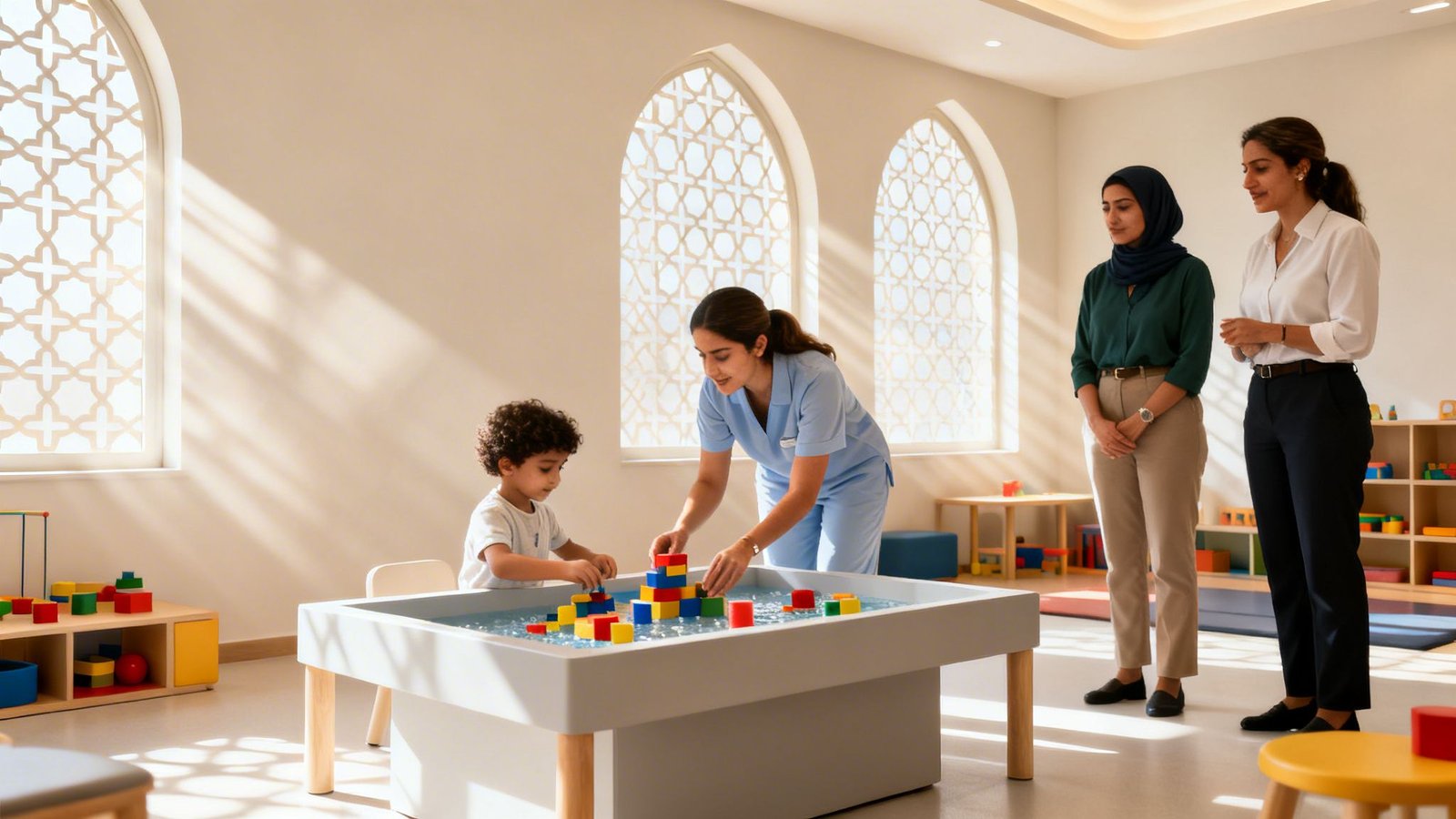

When the weather keeps everyone inside, or a quiet day at home is needed, it’s easy for restlessness to set in. For caregivers of children with unique developmental needs, however, these moments are powerful opportunities in disguise. This comprehensive guide moves beyond simple rainy-day distractions. We will explore 10 therapy-driven indoor activities for kids at home, designed not just to entertain but to actively support crucial developmental milestones.
Each activity is a building block for essential skills, drawing from principles used in occupational therapy, speech therapy, and Applied Behaviour Analysis (ABA). We break down how to create sensory bins, structured play centres, interactive storytelling sessions, and motor skill stations that are both engaging and purposeful. This isn’t just about passing the time; it’s about transforming your living room into a dynamic space for learning and connection.
We provide step-by-step guidance on setup, materials, and-most importantly-how to tailor each activity to your child’s specific profile, whether they have sensory sensitivities, autism, or a speech delay. The goal is to create a supportive environment where your child can thrive. Beyond traditional play, the kitchen can also become a hub for development; explore various fun recipes to make with kids for an engaging and educational experience that targets many of the same skills. Let’s begin creating a purposeful play space that nurtures growth, builds confidence, and strengthens your connection with your child, turning every day at home into a chance for meaningful progress.
1. Sensory Bins and Exploration Activities
Sensory bins are a cornerstone of developmental play, offering a versatile and engaging way to support children with diverse needs. These are simply containers filled with tactile materials like rice, kinetic sand, water beads, or dried pasta, which children explore with their hands and various tools. This type of play is particularly crucial for children with sensory processing differences, autism, or those receiving occupational therapy, as it provides controlled sensory input in a safe, predictable environment.
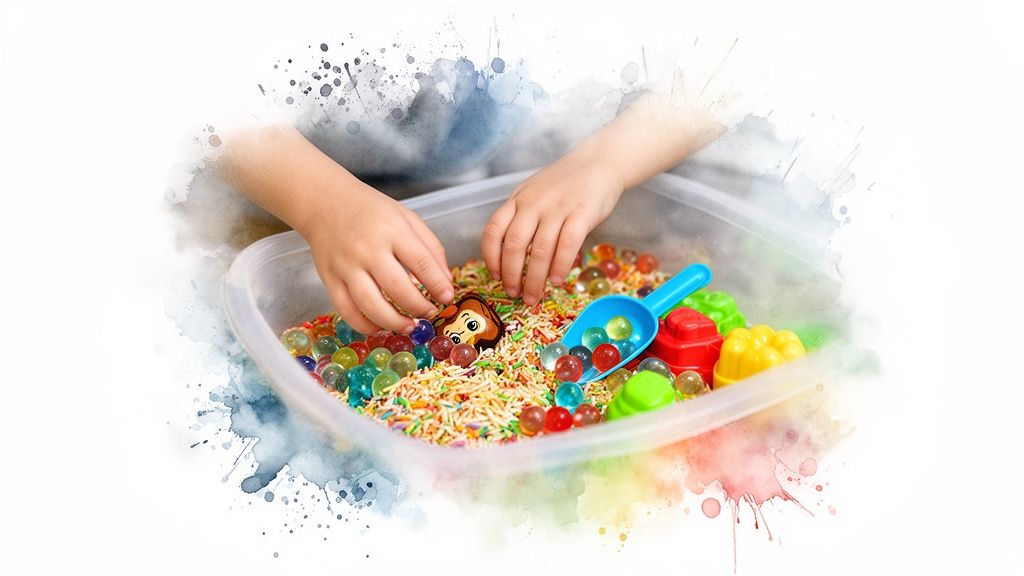
This activity directly targets fine motor skills, hand-eye coordination, and tactile discrimination. As children scoop, pour, and grasp objects, they are strengthening the small muscles in their hands necessary for writing and self-care tasks. The focused nature of this play also enhances concentration and can have a calming, regulating effect on the nervous system, making it an excellent choice for a quiet-time indoor activity for kids at home.
### How to Implement Sensory Bins
Successful sensory play begins with thoughtful preparation and a focus on the child’s individual needs.
- Select a Base: Start with a single, non-threatening texture. Dry rice or beans are often good starting points. For children who are more adventurous, you can try water beads or kinetic sand.
- Add Tools & Objects: Include child-sized scoops, cups, funnels, and tongs. Hide small, motivating toys or letters within the material to encourage exploration and object permanence.
- Create a Theme: Organise bins around specific concepts, such as a “beach” theme with sand and seashells or a “garden” theme with black beans (soil) and toy vegetables. This aligns play with vocabulary and therapy goals.
Therapy Tip: For children with tactile sensitivities, begin with “dry” tools like tongs or scoops, allowing them to engage without full hand immersion. Gradually encourage them to touch the materials with their fingertips, then their whole hand, always respecting their comfort level.
For a deeper dive into how this activity supports developmental milestones, you can find more information about the benefits of sensory play in Dubai. By carefully selecting materials and goals, caregivers can transform a simple bin of rice into a powerful therapeutic tool that supports motor, cognitive, and sensory development.
2. Structured Play-Based Learning Centres
Structured play-based learning centres transform your home into an organised, therapeutic environment by creating designated stations for specific activities. This approach involves setting up distinct areas, like an art station or building corner, where children can engage in play that targets key developmental goals. It is highly effective for children with autism or those in ABA therapy, as it provides predictability and structure, breaking down complex skills into manageable, play-oriented steps.
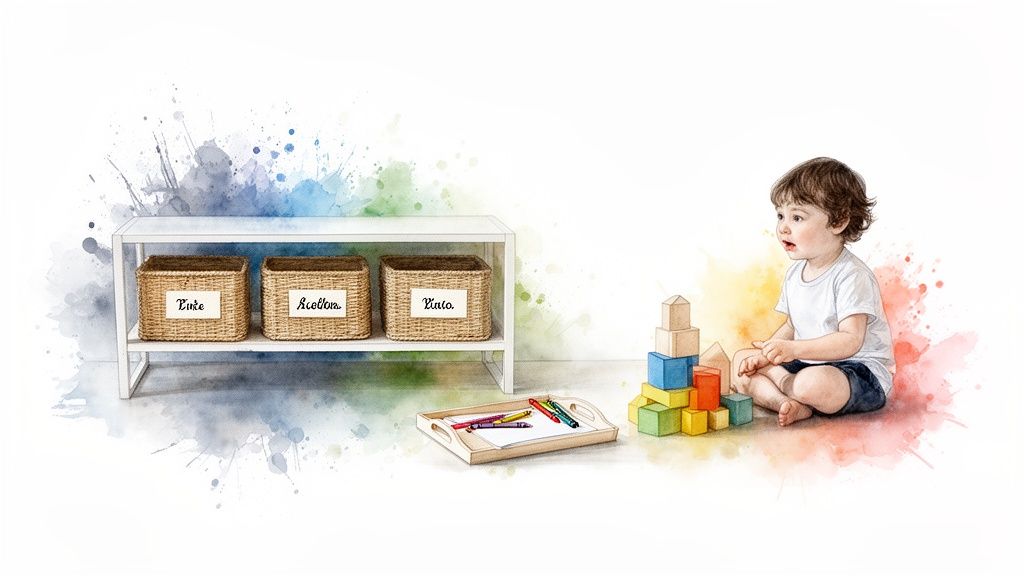
This method directly supports skill generalisation, executive functioning, and independent play. By rotating through different centres, children practise transitioning between tasks, following visual schedules, and initiating activities, all while building skills in domains like fine motor control, language, and social interaction. These purposeful play opportunities make it one of the most effective indoor activities for kids at home, as they seamlessly blend therapeutic objectives with a child’s natural motivation to play.
### How to Implement Learning Centres
Creating effective learning centres requires clear organisation and alignment with your child’s specific therapeutic plan.
- Designate Zones: Start by establishing 2-3 distinct centres. Examples include a “Kitchen Corner” with play food for life skills and vocabulary, a “Building Area” with blocks for spatial awareness, or a “Quiet Corner” with books and puzzles.
- Use Visuals: Employ a visual schedule that clearly shows the child which centre to visit, the activity to complete, and for how long. Timers are excellent tools for supporting smooth transitions between zones.
- Incorporate Interests: Base the centres around your child’s passions. If they love vehicles, create a car-themed sorting activity at the maths centre or use vehicle stamps at the art station to boost engagement.
Therapy Tip: For children who struggle with transitions or unstructured time, learning centres provide essential predictability. Work with your therapist to align the activities at each centre with specific IEP or therapy goals, ensuring that every play session is purposeful and skill-building.
By systematically organising play, caregivers can create a powerful learning landscape within their own home. This approach not only builds foundational skills but also empowers children by giving them a clear, predictable structure in which they can explore, learn, and succeed.
3. Interactive Storytelling and Book-Based Activities
Interactive storytelling transforms reading from a passive activity into a dynamic tool for language development, comprehension, and social-emotional learning. By using picture books and narrative-based play, caregivers can create structured opportunities for communication that are especially beneficial for children with speech delays or autism. This method relies on repetition, predictable sequences, and engaging visuals to make language concepts concrete and accessible.

This approach directly supports expressive and receptive language skills, joint attention, and emotional regulation. When children engage with a story using props or retelling activities, they practise sequencing, vocabulary recall, and narrative skills. For children who struggle with social understanding, personalised “Social Stories” can be used to explain social cues and routines, such as preparing for a haircut or the first day of school, making this a powerful indoor activity for kids at home.
### How to Implement Interactive Storytelling
Effective book-based activities are tailored to a child’s specific communication goals and interests, turning story time into a therapeutic session.
- Choose the Right Book: Select books with simple, repetitive language and clear illustrations. Lift-the-flap or textured books are excellent for maintaining engagement and encouraging interaction.
- Use Visuals and Props: Enhance comprehension by using figurines, puppets, or objects from the story. This helps children connect words to tangible items and act out the narrative.
- Encourage Participation: Pause while reading a familiar book and allow your child to fill in a repetitive word or phrase. Ask open-ended questions like, “What do you think will happen next?” to promote expressive language.
- Create Social Stories: Develop short, personalised stories to address specific challenges your child faces. Use simple language and pictures to describe a situation, the expected behaviour, and a positive outcome.
Therapy Tip: For children working on specific speech sounds (phonemes), select a book where that sound appears frequently. For example, use “Brown Bear, Brown Bear, What Do You See?” for the /b/ sound. Emphasise the target sound as you read, and encourage the child to repeat it in a playful, low-pressure context.
By pairing reading with targeted speech therapy techniques, caregivers can significantly boost a child’s communication skills. This method aligns with evidence-based practices and provides a meaningful context for language acquisition, making it a foundational activity for home-based support.
4. Fine Motor Development Stations (Threading, Cutting, Drawing)
Fine motor development stations are dedicated areas with activities that target hand strength, dexterity, and hand-eye coordination. These skills are foundational for academic tasks like writing and crucial for self-care, including buttoning clothes and using utensils. Stations featuring activities like threading beads, cutting with scissors, and drawing offer focused practice for children needing occupational therapy support or those building school-readiness skills.
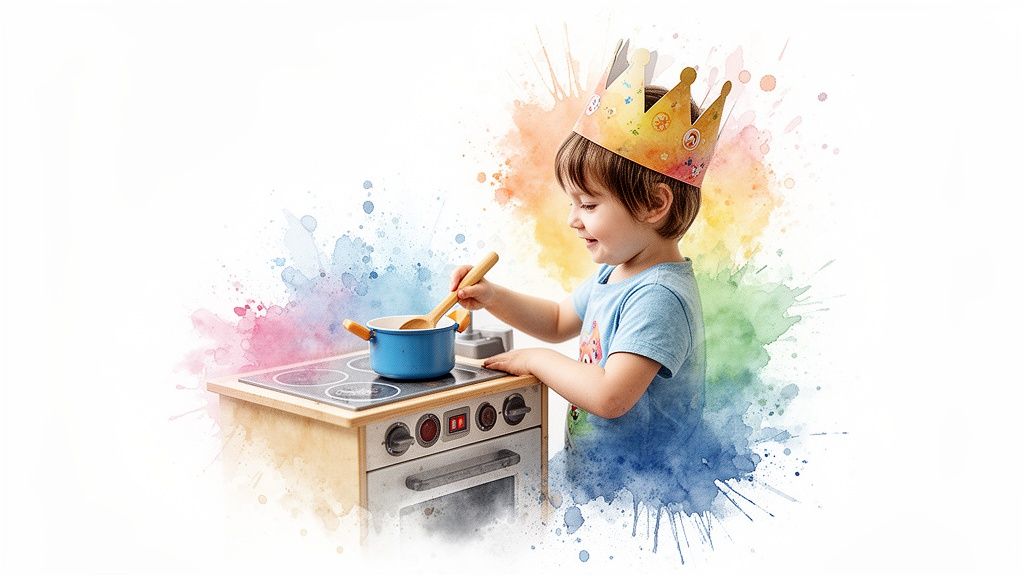
This focused approach helps strengthen the small intrinsic muscles in the hands, improves bilateral coordination (using both hands together), and enhances concentration. For children with motor planning challenges or developmental delays, breaking down complex tasks into manageable stations makes skill acquisition less overwhelming. Organising these indoor activities for kids at home into rotating stations can keep engagement high and provide varied, repetitive practice essential for mastery.
### How to Implement Fine Motor Stations
Creating effective fine motor stations involves starting with a child’s current abilities and gradually increasing the challenge.
- Start with Grasping: Begin with activities that build hand strength, such as squeezing play dough, using spray bottles, or manipulating clothespins. This prepares the hands for more precise tasks.
- Introduce Tools: Provide adaptive tools if needed, like spring-loaded scissors or large-handled crayons. Start with simple tasks, such as cutting strips of paper before moving on to lines and shapes.
- Progress in Complexity: For threading, begin with large beads and stiff laces before introducing smaller beads and flexible string. For drawing, use dot-to-dot activities and tracing before encouraging free drawing.
Therapy Tip: Pair fine motor tasks with a clear goal to boost motivation. For example, instead of just cutting paper, have the child cut “grass” (strips of green paper) to glue onto a farm picture. This provides purpose and a sense of accomplishment.
These activities directly support pre-academic goals and can be tailored to align with an occupational therapist’s recommendations. You can find more targeted fine motor skills activities to build a comprehensive programme at home. By making practice playful and purposeful, caregivers can effectively support a child’s journey toward greater independence.
5. Social Skills and Emotion Regulation Games
Structured games are a powerful, non-threatening way to teach complex social and emotional concepts. These activities use the predictable, rule-based nature of play to help children identify emotions, practise regulation strategies, and navigate social interactions. For children with autism or those who struggle with emotional understanding, game-based learning provides a safe, repeatable context to build these crucial life skills with immediate, positive reinforcement.
These games directly target emotional literacy, perspective-taking, and self-regulation. By engaging with emotion-matching cards or turn-taking board games, children learn to recognise facial expressions and body language cues, wait for their turn, and manage feelings of frustration or excitement. Practising these skills during calm, organised play helps build the neural pathways needed to apply them in more dynamic, real-world situations, making this one of the most foundational indoor activities for kids at home.
### How to Implement Social and Emotional Games
Success with these games relies on creating a supportive environment and tailoring the activity to the child’s specific developmental level.
- Start Simple: Begin with basic emotion recognition using matching games for “happy” and “sad.” As the child gains confidence, gradually introduce more complex emotions like “surprised,” “frustrated,” or “worried.”
- Use Visuals: Incorporate visual supports like emotion cards with clear facial expressions or a visual timer for turn-taking. This reduces verbal load and provides concrete, predictable cues.
- Role-Play Scenarios: Use figurines or puppets to act out common social challenges, such as asking to join a game or disagreeing with a friend. This allows for problem-solving without direct social pressure. For example, you can find valuable strategies to teach the art of sharing that can be easily integrated into these role-playing scenarios.
Therapy Tip: Practise calming strategies when the child is already regulated, not in the middle of a meltdown. Use “Calm-Down Cards” with options like deep breathing, getting a tight hug, or taking a break in a quiet corner. By rehearsing these tools during positive moments, children are more likely to access them when feeling overwhelmed.
By incorporating concepts from frameworks like Zones of Regulation, caregivers can turn simple games into targeted therapeutic interventions. This approach helps children build a robust emotional vocabulary and a toolkit of effective coping strategies, supporting their long-term social and behavioural development.
6. Gross Motor and Movement Activities
Gross motor activities are essential for developing large muscle groups, coordination, and body awareness. These movement-based tasks are more than just burning off energy; they provide vital vestibular and proprioceptive input, which is crucial for children with sensory processing needs, autism, or those in occupational therapy. By engaging in structured movement, children improve balance, motor planning, and overall physical confidence within a safe indoor setting.
This type of play directly supports a child’s ability to navigate their environment, participate in sports, and even sit attentively for learning tasks. Activities like building an obstacle course or having a dance party enhance motor planning, the ability to conceive, plan, and carry out a new action. These engaging indoor activities for kids at home also serve as powerful regulatory tools, helping to organise the nervous system and improve focus for subsequent quiet activities.
### How to Implement Gross Motor Activities
Creating effective movement opportunities indoors is about using your space creatively and safely to meet your child’s needs.
- Create an Obstacle Course: Use pillows to crawl over, chairs to crawl under, and tape on the floor to walk along. This encourages sequencing, problem-solving, and using different muscle groups.
- Host a Dance Party: Put on your child’s favourite music and encourage them to move freely. Incorporate instructions like “freeze,” “jump high,” or “spin around” to work on listening skills and body control.
- Play Movement Games: Classic games like “Simon Says” can be adapted to focus on motor skills (e.g., “Simon says balance on one foot”). Animal walks, such as bear crawls or frog jumps, are another fun way to build strength.
Therapy Tip: For children who need significant sensory input to regulate, incorporate heavy work like pushing a laundry basket full of books or carrying soft, heavy items from one side of the room to the other. This provides deep proprioceptive feedback that can be very calming and organising.
By thoughtfully integrating movement breaks into the daily routine, caregivers can support physical development and provide the necessary sensory input for better regulation. These activities turn any living room into a dynamic space for growth, making them a cornerstone of effective at-home support.
7. Visual Learning and Social Story Development
Visual supports are powerful tools that make abstract concepts concrete, a crucial aid for children with autism, communication delays, or anxiety. These supports, including picture schedules and social stories, use images to communicate expectations, routines, and social cues. By presenting information visually, they bypass the challenges of auditory processing and complex language, reducing anxiety and increasing a child’s independence in a predictable, understandable way.
This activity directly strengthens receptive language, sequencing skills, and emotional regulation. When a child follows a visual schedule for an indoor activity for kids at home, they are learning to understand and follow multi-step directions. Social stories, popularised by Carol Gray, prepare children for challenging situations like a dentist visit by outlining what will happen and what behaviours are expected, which can significantly decrease meltdowns and improve cooperation.
### How to Implement Visual Supports
Creating effective visual aids is about clarity, consistency, and personalisation to meet your child’s specific needs.
- Select a Format: Start with a simple “first-then” board or a morning routine picture schedule. Use real photographs of your child, family, and home for maximum recognition and connection.
- Create a Social Story: Identify a challenging situation. Write a short, simple story from the child’s perspective using descriptive, positive language. Pair each sentence with a clear, uncluttered picture or drawing.
- Place Strategically: Position visuals at the child’s eye level in relevant areas. A morning routine schedule should be in the bedroom or bathroom, while a visual timer is best placed in the play area.
Therapy Tip: For children who are non-verbal or have limited speech, coordinate with a speech therapist to incorporate Picture Exchange Communication System (PECS) principles or a communication board. This empowers them to express wants and needs, reducing frustration and building communication confidence.
By consistently using and referring to these visual tools, caregivers can create a structured environment that fosters understanding, autonomy, and emotional security. Visuals transform confusing expectations into a clear roadmap for success, making them an indispensable part of a therapeutic home toolkit.
8. Pretend Play and Dramatic Role-Playing Activities
Pretend play is a powerful engine for development, where children create narratives, adopt roles, and act out various scenarios. This imaginative play is foundational for social skills, language development, and emotional understanding. It is especially beneficial for children with autism or speech delays, as it offers a motivating and natural context to practise flexible thinking, social communication, and emotional expression.
This activity directly supports expressive and receptive language, problem-solving, and perspective-taking. When a child pretends to be a doctor or a chef, they are experimenting with social scripts, vocabulary, and the emotions of others. This form of play helps bridge the gap between understanding concepts and applying them in real-world interactions, making it a vital indoor activity for kids at home aimed at building functional life skills.
### How to Implement Pretend Play
Effective pretend play often starts with structure and clear guidance, allowing the child to build confidence before moving to more abstract scenarios.
- Start with Familiar Scenarios: Begin with concrete, everyday situations the child understands. Examples include pretend cooking, having a tea party, or playing “shopping” at a make-believe grocery store.
- Provide Simple Props: Gather a few relevant items to set the scene. A toy stethoscope and a blanket for a “doctor” game, or plates and plastic food for a “restaurant” scenario, provide visual cues and structure.
- Model Language and Actions: Demonstrate the expected roles and language. For instance, say, “I am the chef. What would you like to order?” This modelling provides a clear script for the child to follow or adapt.
Therapy Tip: For children who struggle with initiating interaction, start with parallel play. Sit alongside them with your own set of props and play out a similar scenario. This allows them to observe and learn without the pressure of direct interaction, gradually inviting them to join when they feel ready.
By following the child’s lead while gently guiding the narrative, caregivers can turn a simple game into a targeted therapeutic session. Using scenario cards or visual reminders can also help children who need more structure to remember their roles and the sequence of the activity.
9. Sensory Motor Activities and Body Awareness Games
Sensory motor activities are structured physical movements that help children understand where their body is in space, a concept known as proprioception. These games involve “heavy work,” which refers to tasks that push or pull against the body, providing essential feedback to muscles and joints. This type of play is foundational for children with autism and sensory processing differences who may seek or avoid intense sensory input, as it helps organise the nervous system and improve body awareness.
These activities directly support motor planning, balance, and sensory regulation. By engaging in purposeful movements like bear crawls or wall push-ups, children develop a stronger “body schema” or internal map of their body. This enhanced awareness is crucial for coordinating complex movements, maintaining posture, and navigating their environment safely. The organised sensory input from these games can have a significant calming or alerting effect, making them powerful tools for managing energy levels throughout the day.
### How to Implement Body Awareness Games
Effective implementation involves turning therapeutic movements into playful, engaging challenges that meet a child’s specific sensory needs.
- Try Animal Walks: These are a fun way to provide heavy work. Encourage your child to move across the room like a bear (on hands and feet), a crab (scuttling sideways), or a frog (deep squat jumps).
- Introduce Simple Yoga: Use visual cards or videos to guide children through simple, grounding poses like “Downward Dog” or “Child’s Pose.” Focus on holding positions to build strength and body awareness.
- Build an Obstacle Course: Create a simple course using pillows to crawl over, chairs to crawl under, and a line on the floor to balance-walk on. This combines motor planning with proprioceptive input.
Therapy Tip: Use heavy work as a preparatory activity. Five minutes of animal walks or wall push-ups before a seated task like homework can improve focus and decrease fidgeting by providing the nervous system with the organised input it craves.
By integrating these movements into a daily routine, you provide a fun and effective indoor activity for kids at home that supports crucial occupational therapy goals. Consistent practice helps children better understand and control their bodies, leading to greater confidence and physical competence.
10. Communication and Speech Practice Games
Structured, playful activities focused on communication are powerful tools for reinforcing speech and language goals in a natural, engaging context. These are not drills but dynamic, turn-taking games designed to target specific therapy objectives, from articulating certain sounds to building complex sentences. This approach is essential for children with speech delays, language disorders, or those in speech therapy, as it transforms practice from a chore into a rewarding indoor activity for kids at home.
These games directly support articulation, phonological awareness, vocabulary expansion, and social communication skills. When a child plays “I Spy” to find objects starting with the /s/ sound or uses picture cards to build a sentence, they are strengthening oral-motor skills and neural pathways for language. The reciprocal nature of these games also teaches crucial conversational skills like listening, turn-taking, and responding appropriately, which are foundational for social interaction.
### How to Implement Speech Practice Games
Effective speech games are built around the child’s specific goals and interests, ensuring motivation remains high.
- Target Specific Sounds: Use sound-focused games like “I Spy” or a scavenger hunt for items beginning with a target phoneme (e.g., find all the things that start with “b”). Rhyming songs and stories are excellent for building phonological awareness.
- Build Vocabulary: Employ picture cards or real-world objects to play naming games. Categorise items (e.g., “Let’s find all the food items”) or describe them for the child to guess, expanding their expressive and receptive vocabulary.
- Practise Conversation: Use turn-taking board games or question-based activities to work on asking and answering “wh” questions (who, what, where, when, why). Singing songs and reciting nursery rhymes can also improve fluency and articulation.
Therapy Tip: Always model the correct pronunciation clearly and gently, but avoid constant direct correction, which can cause frustration. Instead of saying “That’s wrong,” repeat the word correctly yourself in a natural response. For example, if the child says “I see a ‘tar’,” you can reply, “Yes, what a bright star!”
By incorporating these playful exercises into daily routines, caregivers can create a language-rich environment that supports progress. To better understand how these activities align with professional strategies, you can explore the principles behind child speech therapy. This collaborative approach between home and therapist ensures consistent reinforcement and helps children achieve their communication milestones.
10-Item Comparison: Indoor Activities for Kids
| 🔄 Implementation Complexity | ⚡ Resource Requirements | ⭐ Expected Outcomes / 📊 Impact | Ideal Use Cases | 💡 Key Advantages & Tips |
|---|---|---|---|---|
| Sensory Bins and Exploration Activities — Low to Moderate; simple setup but needs supervision and maintenance | Low ⚡; household materials (sand, rice, beads); small dedicated bin; storage/cleaning | ⭐⭐⭐⭐; improves sensory regulation, fine motor skills, sustained attention | Sensory processing support, OT goals, independent exploration | Start with one texture; customize to tolerance; pair with language; supervise ingestion risk |
| Structured Play-Based Learning Centers — Moderate to High; planning, space, organization required | Medium ⚡; shelving, labeled bins, rotating materials; caregiver time | ⭐⭐⭐⭐; integrates therapy into routines, promotes independence, school readiness | Multi-domain therapy goals, siblings, routine-driven learning | Align with therapy plans; start with 2–3 centers; use visual schedules and timers |
| Interactive Storytelling and Book-Based Activities — Low; caregiver prep and engagement needed | Low ⚡; books, props, visual supports | ⭐⭐⭐⭐⭐; strong for speech/language, comprehension, social-emotional learning | Speech delays, social stories, language-building at home | Choose repetitive texts; pause for child responses; use props and visual supports |
| Fine Motor Development Stations — Moderate; requires materials and safety planning | Medium ⚡; adaptive tools (grips, scissors), organized stations | ⭐⭐⭐⭐; builds hand strength, pre-writing, self-care skills | Pre-writing readiness, OT-targeted interventions | Start with large tasks then progress; use adaptive tools; track progress with photos |
| Social Skills & Emotion Regulation Games — Moderate; adult facilitation and structure needed | Low–Medium ⚡; games, visual emotion supports, timers | ⭐⭐⭐⭐; teaches turn-taking, emotion labeling, coping strategies | Social communication goals, emotion regulation practice, group settings | Begin with 2 emotions; keep sessions short; use reinforcement and visual cues |
| Gross Motor & Movement Activities — Low to Moderate; space prep and safety considerations | Low ⚡; household items, clear safe area, music | ⭐⭐⭐⭐; improves regulation, coordination, reduces behavioral challenges | High-energy regulation, vestibular/proprioceptive needs, pre-learning breaks | Clear hazards, use favorite music, integrate movement breaks with calm-down activities |
| Visual Learning & Social Story Development — Moderate; time investment to create and maintain | Low–Medium ⚡; photos, laminating, boards, portable cards | ⭐⭐⭐⭐⭐; reduces anxiety, supports transitions, increases independence | Autism supports, transition planning, communication delays | Use real photos, simple images, place at child eye level, update regularly |
| Pretend Play & Dramatic Role-Playing — Low to Moderate; modeling and scaffolding helpful | Low ⚡; costumes/props, simple sets, caregiver coaching | ⭐⭐⭐⭐; fosters language, social perspective-taking, emotional expression | Social skills practice, flexible thinking, imaginative language goals | Start with concrete scenarios; model language; use parallel play and role cards |
| Sensory Motor Activities & Body Awareness Games — Low to Moderate; safety and sequencing important | Low ⚡; minimal equipment (mats, cushions), space | ⭐⭐⭐⭐; organizes sensory input, improves motor planning and body awareness | Pre-learning regulation, OT proprioceptive goals, active breaks | Use heavy work before seated tasks; teach effect of activities on mood; coordinate with OT |
| Communication & Speech Practice Games — Moderate; must align with individualized speech goals | Low ⚡; picture cards, songs, game materials, data sheets | ⭐⭐⭐⭐; increases practice, generalization, and engagement for speech targets | Speech therapy carryover, phoneme practice, language expansion | Coordinate with SLP, keep sessions 10–15 min, model correct production and track data |
Building a Foundation for Success, One Playful Moment at a Time
Navigating the world of developmental support can feel overwhelming, but as we have explored, your home is one of the most powerful arenas for fostering growth and connection. This extensive guide to indoor activities for kids at home moves beyond simple entertainment. It reframes playtime as a purposeful, therapy-aligned tool for building crucial life skills. From the tactile exploration of sensory bins to the structured communication practice in social games, each activity serves as a building block for your child’s future.
The true value of these activities lies not in flawless execution, but in consistent, connection-focused engagement. You have seen how a simple threading station can be adapted to enhance fine motor precision, how interactive storytelling can become a vibrant platform for speech and language development, and how a living room obstacle course can improve gross motor planning and body awareness. These are not just ways to pass a rainy afternoon; they are opportunities to reinforce the skills your child is working on in occupational therapy, speech therapy, and behavioural therapy sessions.
Key Takeaways for Lasting Impact
As you integrate these ideas, remember the core principles that magnify their effectiveness:
- Individualisation is Paramount: The most successful activities are those tailored to your child’s unique profile. A child with sensory sensitivities might need a “dry” sensory bin with beans and pasta, while a child working on social skills will benefit most from turn-taking games that are modified to ensure success and build confidence. Always observe your child’s cues and adapt accordingly.
- Process Over Product: The goal is not to create a perfect craft or win the game. The true developmental work happens during the process: the problem-solving, the communication attempts, the sensory exploration, and the emotional regulation required to participate. Celebrate the effort and the small steps of progress along the way.
- Connection is the Catalyst: Your engaged presence is the secret ingredient. When you get on the floor and participate, you are modelling language, social behaviour, and problem-solving skills. More importantly, you are strengthening your bond, creating a secure and loving environment where your child feels safe to learn and take risks.
Your Actionable Next Steps
Feeling inspired but not sure where to begin? Start small. Choose just one or two activities from this list that align with your child’s current therapy goals or personal interests. Gather the materials and schedule a short, 15-minute block of time to try it out. The aim is to create a sustainable routine, not a stressful, packed schedule.
A Note on Consistency: Integrating just one purposeful activity for 15 minutes each day can have a more significant long-term impact than a complex, three-hour session once a week. Consistency reinforces learning and helps skills become second nature.
By embracing this philosophy of playful, purposeful engagement, you are doing more than just keeping your child occupied. You are becoming an active, empowered partner in their developmental journey. The laughter shared over a game of charades, the focus in their eyes while threading beads, and the pride on their face after completing a puzzle are all signs of meaningful progress. You are their first teacher, their safest space, and their most dedicated therapist. These shared moments are where the real, lasting work is done, building a resilient foundation for a lifetime of learning and achievement.
Are you looking for expert guidance to integrate these therapeutic activities into a comprehensive, individualised plan for your child? The team at Georgetown early intervention center specialises in creating customised ABA, speech, and occupational therapy programmes that bridge the gap between clinical support and at-home reinforcement. Visit Georgetown early intervention center to learn how our collaborative approach can empower your family and accelerate your child’s progress.