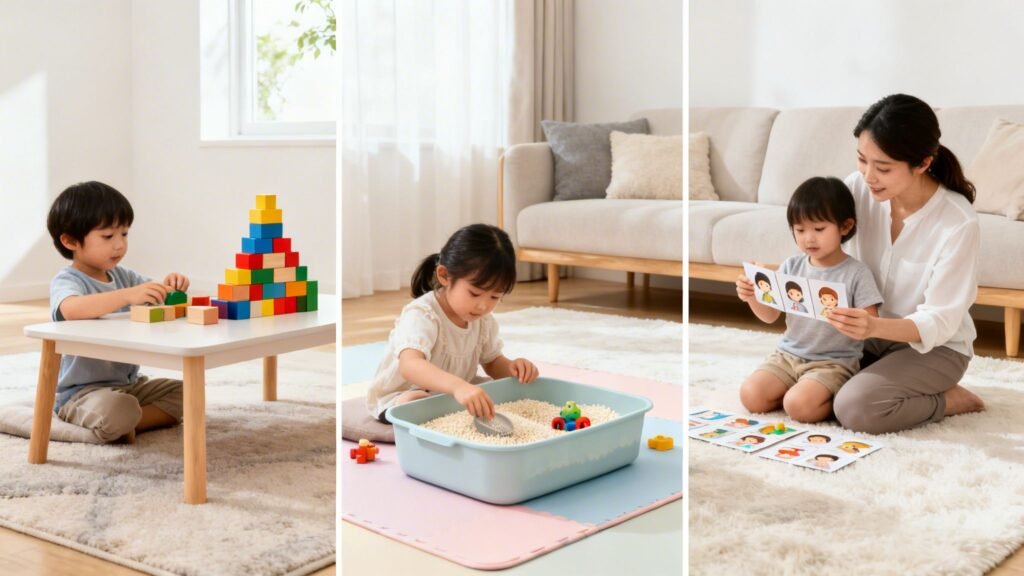
When the weather keeps everyone indoors, it presents a perfect opportunity to engage in meaningful play that supports your child’s unique developmental journey. Forget generic screen time or unstructured chaos; this guide offers a curated collection of therapist-informed, fun kids indoor activities designed to target specific skills. Each activity is a building block for growth, organised to address key developmental goals like speech, sensory integration, fine motor control, and school readiness.
Developed with insights from early intervention specialists, such as those at the Georgetown Early Intervention Centre, these aren't just ways to pass the time. They are purposeful, play-based interventions you can implement at home. We will show you how to turn your living room into a therapeutic playground, providing step-by-step instructions for each activity.
This list is designed for parents, caregivers, and therapists looking for practical and effective strategies. You will find clear outlines, lists of necessary materials, and crucial adaptations for children with autism or speech delays. We focus on turning simple household items and creative ideas into powerful tools for learning and connection. Let’s explore how purposeful play can be both productive and, most importantly, fun.
1. Sensory Play Stations
Sensory play stations are intentionally designed areas that offer a variety of rich sensory experiences, allowing children to explore tactile, visual, and auditory stimuli at their own pace. Far more than just messy play, these structured stations provide a safe and organised way for children to engage their senses, making them a cornerstone of many occupational therapy and play-based learning approaches. This method is especially beneficial for children with sensory processing differences or autism, as it helps them process information, regulate their emotions, and develop crucial developmental skills in a controlled environment.

Why It Works
Sensory exploration is fundamental to how children learn about the world. A well-designed sensory station can be either calming or alerting, helping a child achieve a "just right" state for learning and interaction. This makes it one of the most adaptable and fun kids indoor activities available. By providing targeted sensory input, these stations can support goals related to fine motor skills, body awareness, and emotional regulation. For more details on the therapeutic benefits, you can discover more about sensory play in Dubai and its application in therapy centres.
How to Set Up Sensory Stations
Setting up is straightforward. Designate a few spots in a room and create distinct "stations," each with a different sensory focus. Rotate the materials regularly to maintain interest and introduce new learning opportunities.
- Tactile Station: Use bins filled with kinetic sand, water beads, rice, or pasta. Hide small objects like letters or animal figures to encourage searching. For engaging tactile experiences in your sensory play stations, consider adding resources like Sensory Rollers, which provide varied textures and deep pressure input.
- Visual Station: Create a quiet corner with a small tent, fibre optic lights, or a light-up sensory box. This offers a visually stimulating yet calming space for children who need a break.
- Auditory Station: Include a basket with simple instruments like rainsticks, shakers, or a small xylophone. Focus on exploring sounds, not just making noise.
Therapist Tip: Use a visual schedule with pictures of each station to help children understand the activity and transition smoothly between them. This predictability reduces anxiety and increases participation, especially for autistic children.
2. Structured Play-Based Learning Activities
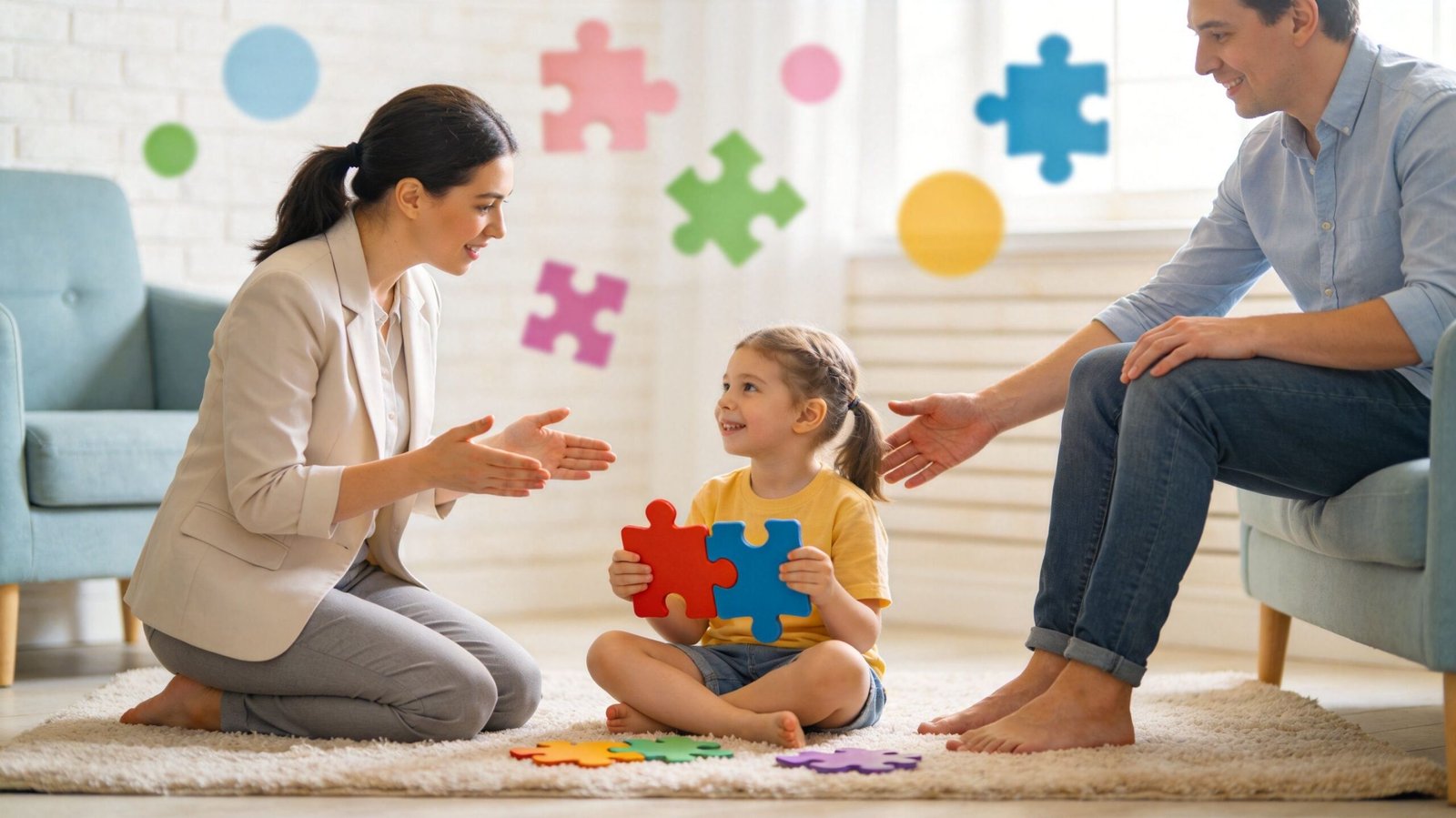
Structured play-based learning involves goal-directed play sessions where therapeutic or educational objectives are intentionally embedded within enjoyable activities. Rather than separating learning from play, this approach integrates them, allowing children to develop critical skills in a naturalistic and highly motivating context. This method is central to leading early intervention models, such as the Early Start Denver Model (ESDM), because it targets specific skills like language, social interaction, and motor planning while ensuring the child remains engaged and happy.

Why It Works
Children learn most effectively when they are active participants in activities they find meaningful. Structured play turns therapy into a fun game, reducing resistance and increasing participation. It allows therapists and caregivers to target specific developmental goals in a dynamic environment, making it one of the most effective and fun kids indoor activities for children with developmental delays. By following the child’s lead and gently guiding the interaction, adults can create countless learning opportunities that feel authentic to the child.
How to Set Up Structured Play
The key is to have a goal in mind but remain flexible. Start by observing the child's interests and then build an activity around them. The structure comes from how you facilitate the play to meet your objectives, not from rigid rules.
- Toy Kitchen Scenarios: Use a play kitchen to work on vocabulary ("pass the apple," "stir the soup") and social turn-taking ("my turn to cook, your turn to eat"). This also builds sequencing and pretend play skills.
- Block Building Activities: Build a tower together to practice motor planning, turn-taking ("my turn, your turn"), and joint attention. You can also target concepts like colours, shapes, and sizes ("let's find a blue block").
- Pretend Play Themes: Create scenarios like visiting a doctor or a grocery shop to practice social communication, problem-solving, and understanding different social roles.
Therapist Tip: Follow the child's lead to maintain motivation, but gently redirect towards the learning goal. Use natural consequences to guide behaviour; for instance, if a child isn't sharing the blocks, the game of building a tower together naturally pauses until cooperation resumes.
3. Visual Support Systems and Social Stories
Visual support systems are a collection of customised picture-based tools that help children understand their environment, communicate their needs, and manage expectations. These aids, which include picture schedules, social stories, and communication boards, translate abstract verbal information into concrete, visual formats. This approach is particularly effective for children with autism and speech delays, as it plays to their visual processing strengths, making it one of the most foundational and fun kids indoor activities for building communication and independence.

Why It Works
Many children, especially those with developmental differences, find it easier to process information they can see rather than just hear. Visuals are permanent and can be referred to repeatedly, which reduces memory load and anxiety associated with uncertainty. By providing a clear sequence of events or social expectations, these tools empower children to navigate their day with more confidence and less frustration. Well-known methods like Carol Gray's Social Stories and the Picture Exchange Communication System (PECS) demonstrate the profound impact of structured visual aids.
How to Set Up Visual Support Systems
Creating effective visual supports involves customising them to your child’s specific needs and comprehension level. Start small with one or two tools and gradually introduce more as your child becomes familiar with them.
- Picture Schedules: Create a simple "first-then" board or a full daily schedule using photos or symbols. Show the sequence of activities (e.g., first brush teeth, then read a book). This makes transitions predictable and less stressful.
- Social Stories: Write short, simple stories to prepare a child for a new or challenging situation, like a visit to the doctor. Use photos of the actual place and people involved to make the story more concrete and relatable.
- Emotion Regulation Charts: Design a chart with pictures of different emotions and corresponding coping strategies (e.g., a picture of an angry face next to a picture of squeezing a stress ball). This helps children identify their feelings and learn self-regulation skills.
Therapist Tip: For durability and versatility, laminate all visual supports and use Velcro dots. This allows you to easily rearrange schedules and reuse components, making the system adaptable to daily changes and your child's growing skills.
4. Fine Motor Skill Development Centres
Fine motor skill development centres are dedicated activity areas designed to strengthen the small muscles in the hands, wrists, and fingers. These organised spaces focus on building hand strength, dexterity, grasp development, and hand-eye coordination through engaging tasks. This approach is fundamental to school readiness, supporting a child's ability to hold a pencil, use scissors, and manage fasteners on clothing. For children receiving occupational therapy, these centres provide a structured way to practise essential life skills in a playful, motivating context.

Why It Works
Developing precise motor control is a complex process that requires repeated practice. By creating inviting, well-equipped centres, we transform challenging work into one of the most productive fun kids indoor activities. These stations allow children to repeatedly engage in movements that build neural pathways and muscle memory. This targeted practice is critical for mastering tasks that require precision, making it a cornerstone of effective occupational therapy in Dubai and around the world.
How to Set Up Fine Motor Centres
Designate a specific table or floor area for these activities. The key is to present materials in an organised, accessible way that encourages independent exploration. Rotate activities to keep them fresh and aligned with the child's developing skills.
- Threading and Lacing: Offer a variety of beads and strings, from large wooden beads with thick laces to smaller ones with thinner thread. This builds pincer grasp and bilateral coordination.
- Playdough Station: Provide playdough along with tools like rollers, plastic knives, and cookie cutters. Hide small items like marbles or buttons inside the dough for the child to find and dig out, which strengthens hand muscles.
- Cutting and Pasting: Create a "cutting box" with different types of paper (construction paper, cardstock, wrapping paper) and child-safe scissors. Start with straight lines, then progress to wavy lines and simple shapes.
- Building and Construction: Use interlocking blocks, magnetic tiles, or nuts and bolts. These activities require precise placement, twisting, and pushing, which enhances dexterity and problem-solving skills.
Therapist Tip: Always begin with activities that promote bilateral coordination (using both hands together), such as rolling playdough or pulling apart blocks, before moving to more precise, one-handed tasks. This helps build a strong foundation for more complex skills.
5. Speech and Language Games
Speech and language games are interactive, turn-taking activities specifically designed to target communication goals in a fun and motivating way. Moving beyond simple flashcards, these games embed learning into the natural rhythm of play, making them an effective tool for developing vocabulary, articulation, grammar, and social communication skills. This structured play approach is ideal for children who may resist more direct instruction, as the focus is on the game itself, with language practice seamlessly integrated into the rules.
Why It Works
Games provide a natural context for communication, requiring players to listen, take turns, ask questions, and use specific vocabulary to participate. This makes them one of the most engaging and fun kids indoor activities for building language. By creating a low-pressure environment, children are more willing to attempt new sounds or words. This method helps build confidence and generalises skills from the therapy room to everyday interactions. For a deeper understanding of how structured play supports communication, you can find more on the principles of speech therapy in Dubai and its application in clinical settings.
How to Set Up Speech and Language Games
The key is to select or adapt a game to fit specific goals. Start with simple, familiar games and add a communication-focused twist.
- Vocabulary Bingo: Create bingo cards with pictures from specific semantic categories (e.g., animals, food, clothes). As you call out a word, the child finds the picture. Ask them to name it or use it in a short phrase before placing their marker.
- "I-Spy" Articulation: Play "I-Spy" but focus on items that start with a target sound (e.g., "I spy something that starts with /s/"). This provides repetitive, enjoyable practice for specific articulation goals.
- Language-Loaded Board Games: Adapt a simple board game like Snakes and Ladders. Before a player can take their turn, they must draw a card and answer a "wh-" question (who, what, where), describe an object, or name three things in a category.
- Rhyming Memory: Use picture cards of rhyming words (e.g., cat/hat, car/star) for a classic memory matching game. When a child makes a match, they say the two rhyming words aloud to strengthen phonological awareness.
Therapist Tip: Always model the target language yourself without pressure. If a child makes a mistake, simply restate their sentence correctly. For example, if they say "Her go store," you can respond with, "Yes, she is going to the store!" This provides a correct model without halting the game's momentum.
6. Gross Motor Movement Activities and Obstacle Courses
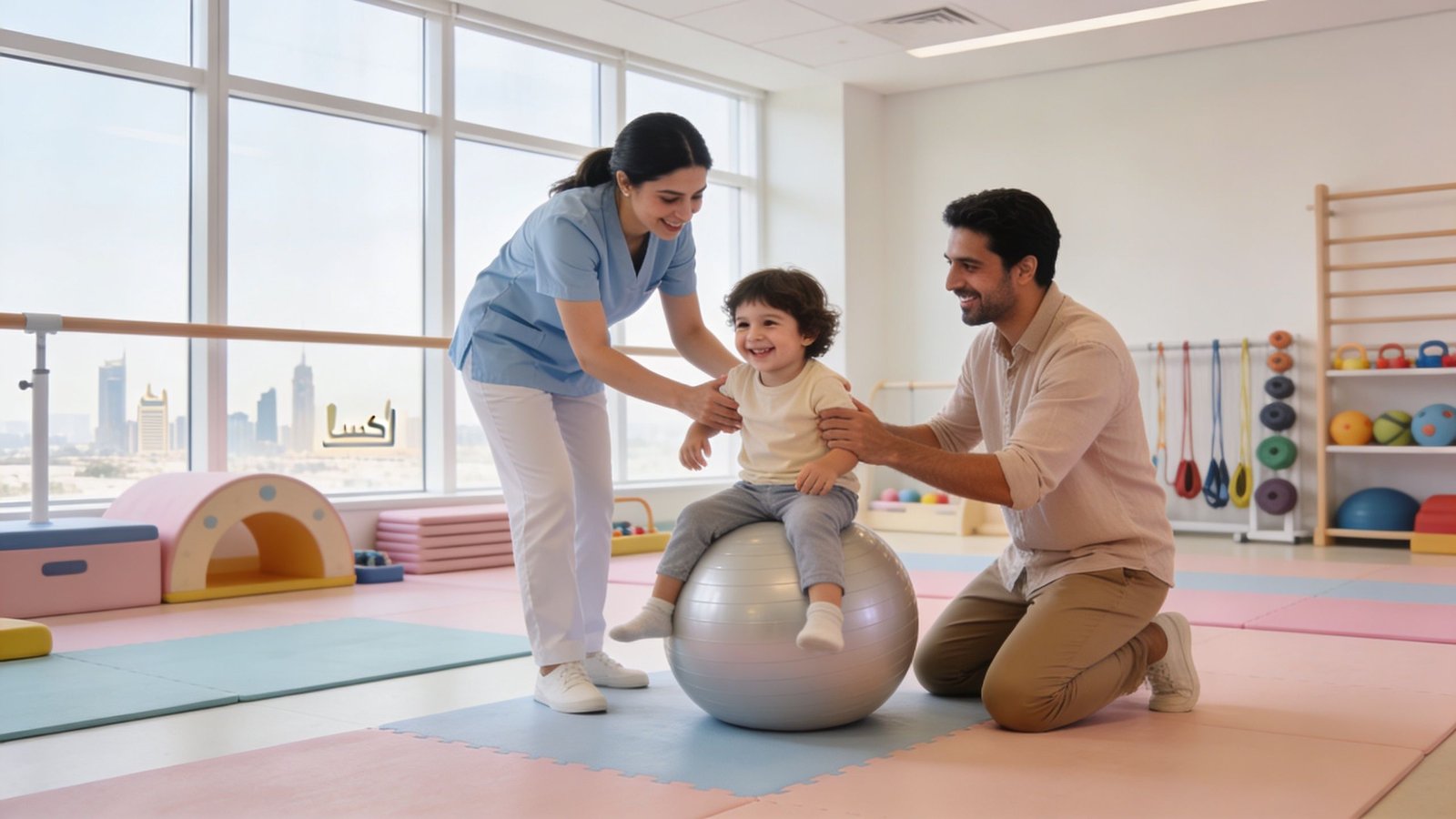
Gross motor activities are structured movement-based challenges that encourage children to use their large muscle groups in a coordinated and purposeful way. More than just burning off energy, these activities, especially indoor obstacle courses, are powerful tools for developing body awareness, balance, motor planning, and strength. They provide a safe, organised environment for children to take physical risks, build confidence, and receive the proprioceptive and vestibular input their bodies need to self-regulate, making them one of the most effective and fun kids indoor activities.
Why It Works
Engaging in planned gross motor tasks helps children integrate sensory information and develop a better understanding of where their body is in space. This is fundamental for everything from sitting still in a chair to playing sports. For children who seek movement or have difficulty with motor skills, an obstacle course can provide the organised, heavy-work input they need to feel calm and focused. These activities are central to paediatric occupational and physical therapy, directly addressing skills needed for daily life.
How to Set Up Gross Motor Activities
The key is to use common household items to create a sequence of challenges that flow from one to the next. Arrange the course in a logical path and demonstrate it first. Keep it simple and focus on a few core movements.
- Obstacle Course: Create a path using cushions to jump over, a tunnel (or a row of chairs with a blanket draped over them) to crawl through, and a line of tape on the floor to walk along like a balance beam.
- Targeted Movement Stations: Designate specific areas for different actions. One spot could be for jumping on a mini-trampoline, another for throwing soft balls into a laundry basket, and a third for animal walks like bear crawls or crab walks.
- Music and Movement: Use songs like "Head, Shoulders, Knees, and Toes" to guide movements or play freeze dance to work on motor control and listening skills.
Therapist Tip: Create and display simple picture cards for each station in your obstacle course. This visual sequence supports independence, reduces verbal instructions, and helps children with motor planning difficulties understand what is expected at each step.
7. Interactive Art and Creative Expression Activities
Interactive art and creative expression activities are open-ended artistic experiences that focus on the process rather than the final product. These activities, which include everything from painting and drawing to sculpting and collage, provide a non-judgmental platform for children to express their thoughts and feelings visually. This approach supports self-expression, fine motor development, and emotional regulation, making it a powerful therapeutic and developmental tool. Because there is no "right" or "wrong" way to create, all children can participate successfully and feel a sense of accomplishment.
Why It Works
Creative expression is a fundamental part of child development, offering an essential outlet for emotions that may be difficult to put into words. This makes art one of the most effective and fun kids indoor activities for building emotional intelligence and self-awareness. For children with speech delays or autism, art can serve as an alternative form of communication, allowing them to share their inner world. The hands-on nature of these activities also directly supports the development of fine motor skills, hand-eye coordination, and sensory processing, all of which are critical for school readiness.
How to Set Up Creative Activities
The key is to offer a variety of materials and maintain a focus on exploration. Set up a dedicated art space where mess is acceptable, and present a few choices to empower the child.
- Process Painting: Lay a large sheet of paper on the floor or a table. Provide different types of paint (e.g., tempera, watercolour) and tools of various sizes, such as wide brushes, sponges, or even finger painting. The goal is to explore colour and movement.
- Collage Creation: Offer a tray with pre-cut paper shapes, fabric scraps, natural materials like leaves and twigs, and safe adhesives like glue sticks. This helps children practise planning, sorting, and fine motor control as they arrange their compositions.
- Sensory Sculpting: Use materials like playdough, air-dry clay, or moulding sand. Add tools like rollers, stamps, and plastic knives to encourage manipulation and experimentation with form and texture.
Therapist Tip: Ask open-ended questions about their creations, such as "Tell me about the colours you chose" or "What is happening in your picture?" This promotes language development and validates their creative choices without imposing judgement. Always display the artwork to build confidence and celebrate their effort.
8. Turn-Taking and Social Skills Practice Games
Social skills games are structured activities specifically designed to teach and practise crucial peer interaction abilities like waiting, sharing, cooperating, and reading social cues. Unlike free play, these games provide predictable rules and clear expectations, creating a safe environment for children to learn complex social dynamics. This guided approach is particularly effective for autistic children or those with social communication delays, as it breaks down abstract social concepts into manageable, repeatable steps.
Why It Works
Developing social skills is essential for building friendships and navigating school environments, making these activities one of the most foundational and fun kids indoor activities. By embedding skills practice within a game, the learning process becomes motivating and less intimidating. The structured nature of games provides the repetition needed to generalise skills like turn-taking and emotional recognition to less predictable real-world situations. This method is a staple in Applied Behaviour Analysis (ABA) and social skills training programmes.
How to Set Up Social Skills Games
Start with simple, highly motivating games and gradually introduce more complexity. The key is to explicitly teach the target skill, model it, and provide positive reinforcement for attempts and successes.
- Simple Turn-Taking: Use classic board games like Candy Land or Chutes and Ladders. The clear progression of "my turn, your turn" is easy to follow. A visual token that is passed to the person whose turn it is can be a helpful support.
- Cooperative Play: Introduce games where players work towards a common goal instead of competing. This shifts the focus from winning to teamwork and shared success.
- Emotional Recognition: Play games that involve identifying feelings. You can use cards with facial expressions and have the child guess the emotion or act it out.
- Structured Partner Activities: Even a simple game of catch can be structured to practise social skills. Add a rule like making eye contact or saying the other person's name before throwing the ball.
Therapist Tip: Use social stories or simple scripts to prepare a child for a game. You can read a short story about what the game is, who will play, and how to take turns. This pre-teaching reduces anxiety and sets the child up for a positive experience.
9. Music and Rhythm-Based Therapy Activities
Music and rhythm-based therapy activities involve the structured use of music, instruments, and movement to support specific developmental goals. This approach taps into the brain's powerful response to melody and rhythm to foster skills in motor planning, language development, emotional regulation, and social engagement. It is a dynamic and engaging method that provides a non-verbal avenue for communication and expression, making it particularly effective for children who struggle with traditional talk-based approaches. This makes it one of the most versatile and fun kids indoor activities with deep therapeutic roots.
Why It Works
Music naturally organises the brain, providing a predictable structure that can help children regulate their bodies and emotions. The inherent patterns in rhythm can improve motor coordination and timing, while the repetitive nature of songs supports language acquisition and memory. Certified professionals in approaches like Nordoff-Robbins or Neurologic Music Therapy use these principles to create targeted interventions that feel like play but are grounded in science.
How to Set Up Music and Rhythm Activities
Creating a musical environment at home doesn't require professional training. The key is to be intentional with the activities, focusing on interaction and specific goals rather than just making noise.
- Rhythm and Turn-Taking: Start a simple drum circle with pots, pans, or actual drums. Create a simple beat and have your child copy it. This teaches listening skills, imitation, and the social skill of turn-taking.
- Sing-alongs with Movement: Use classic songs with built-in actions, like "Head, Shoulders, Knees, and Toes," to work on body awareness and following directions. Match the tempo to your child's motor speed to ensure success.
- Rhythm Stick Patterns: Tapping two sticks together helps with bilateral coordination, which is the ability to use both sides of the body together. You can tap them together, on the floor, or alternate hands to create different patterns.
- Musical Storytelling: Use instruments to represent characters or actions in a story. For example, a high-pitched bell could be a bird, while a low drum beat could be a giant's footsteps.
Therapist Tip: Embed language targets directly into familiar tunes. Change the words of "Twinkle, Twinkle, Little Star" to include target vocabulary like "Twinkle, twinkle, little car, driving oh so very far." This repetition in a musical context helps solidify new words.
10. Individualised Behavioural Reinforcement and Token Economy Systems
Individualised behavioural reinforcement systems use structured rewards and token economies to motivate children and encourage desired behaviours or skill practice. Based on the principles of operant conditioning popularised by B.F. Skinner and central to Applied Behaviour Analysis (ABA), these systems are not about bribery but about systematically teaching cause and effect. A child learns that completing a specific task or demonstrating a target behaviour earns them a token, point, or praise, which can later be exchanged for a meaningful reward. This structure provides clear expectations and positive reinforcement, making it a powerful tool for behavioural support.
Why It Works
These systems make abstract goals concrete and visible for children. Instead of just being told to "be good," a child sees a clear path to a reward by earning tokens for specific actions, like waiting patiently or completing a puzzle. This predictability can reduce anxiety and resistance, especially for autistic children or those with behavioural challenges. A well-designed token economy builds internal motivation over time by pairing tangible rewards with social praise and the intrinsic satisfaction of accomplishment. This approach turns challenging moments into structured learning opportunities, making it a valuable addition to your toolkit of fun kids indoor activities.
How to Set It Up
Success depends on individualisation and consistency. Start by identifying the child's high-interest motivators through a preference assessment.
- Choose a System: Use a visual token board for younger children or a point chart for older ones. The format should be easy for the child to understand. For instance, implementing an individualised behavioural reinforcement system, such as an effective chore chart and reward system, can motivate children to engage in desired behaviours and tasks.
- Define Clear Rules: Be specific. For example, "Putting away three toys earns one token" is better than "Clean up to get a token." Ensure the child knows exactly what is expected.
- Select Reinforcers: Rewards can range from tangible items to preferred activities. Examples include sensory-based reinforcers (five minutes with a fidget toy), activity-based rewards (10 minutes of iPad time), or natural reinforcers (finishing a worksheet means you can play with the blocks).
Therapist Tip: Always pair the delivery of a token with specific verbal praise. Say, "Great job sharing your toy! You earned a token." This helps bridge the gap between the external reward and the development of internal motivation, making the praise itself reinforcing over time.
10-Point Comparison: Fun Kids Indoor Activities
| Approach | Implementation Complexity 🔄 | Resource Requirements ⚡ | Expected Outcomes 📊 | Effectiveness ⭐ | Ideal Use Cases & Tips 💡 |
|---|---|---|---|---|---|
| Sensory Play Stations | High — space, design, customization required | High — multisensory materials, maintenance, sanitation | Improved sensory integration, self-regulation, observable behaviors | ⭐⭐⭐⭐ | Ideal for children with sensory processing differences; tip: individualize stations and use visual schedules. |
| Structured Play-Based Learning Activities | Moderate — therapist planning and creativity needed | Moderate — toys/materials + trained staff | Skill generalization, language, social and motor gains embedded in play | ⭐⭐⭐⭐ | Best for early intervention and goal-driven therapy; tip: follow child's lead while targeting objectives. |
| Visual Support Systems and Social Stories | Moderate — time-intensive to create and individualize | Low–Moderate — printing/lamination, updates, portability | Reduced anxiety, clearer expectations, improved communication and transitions | ⭐⭐⭐⭐ | Use for transitions, AAC support, and routine building; tip: use real photos and laminate/Velcro for durability. |
| Fine Motor Skill Development Centers | Moderate — task progression and supervision required | Moderate — varied fine-motor materials, supervision for safety | Improved grasp, hand strength, visual-motor integration, school readiness | ⭐⭐⭐⭐ | Ideal for OT targets and school prep; tip: begin with bilateral activities and celebrate small gains. |
| Speech and Language Games | Low–Moderate — embed targets into game mechanics | Low — games/cards/apps + clinician guidance | Vocabulary expansion, articulation practice, pragmatic language, turn-taking | ⭐⭐⭐⭐ | Use for articulation and pragmatic goals; tip: embed targets naturally and track responses. |
| Gross Motor Movement & Obstacle Courses | High — space, safety planning, graduated challenges | High — equipment, mats, supervision, hygiene | Motor planning, balance, vestibular/proprioceptive regulation, confidence | ⭐⭐⭐⭐ | Best for regulation and motor deficits; tip: provide visual instructions and supervised graded challenges. |
| Interactive Art & Creative Expression | Low–Moderate — open-ended setup with boundaries | Moderate — art supplies, cleanup, replacement materials | Emotional expression, fine motor practice, creativity and language prompts | ⭐⭐⭐ | Suited for emotional regulation and non‑judgmental expression; tip: offer choices and adaptive grips. |
| Turn-Taking & Social Skills Practice Games | Moderate — structured facilitation and pairing | Low — simple games + skilled facilitator | Improved sharing, waiting, cooperation, pragmatic skills | ⭐⭐⭐⭐ | Ideal for small-group social skills work; tip: use visual supports (turn tokens, timers) and explicit teaching. |
| Music & Rhythm-Based Therapy Activities | Moderate — therapeutic sequencing and sound management | Moderate — instruments, quiet space, trained facilitator | Speech rhythm/prosody, motor planning, emotional regulation, social engagement | ⭐⭐⭐⭐ | Effective for engagement and prosody goals; tip: match tempo to ability and use repetitive songs. |
| Individualized Behavioral Reinforcement & Token Economy | Moderate–High — systematic planning, data and fading strategy | Low–Moderate — token boards, reinforcers, consistent staff | Measurable behavior change, increased task engagement, teach work-reward relationships | ⭐⭐⭐⭐⭐ | Core for ABA and behavior management; tip: conduct regular preference assessments and plan fading from the start. |
Integrating Purposeful Play into Your Daily Routine
As we have explored, the world of fun kids indoor activities extends far beyond simple entertainment. It is a powerful medium for connection, learning, and developmental growth. The activities detailed in this guide, from sensory play stations and fine motor skill centres to structured speech games and social stories, all share a common thread: they embed therapeutic goals within the natural, joyful context of play. The real magic happens not in a single, perfectly executed session, but in the consistent, patient integration of these practices into your everyday life.
The key takeaway is that purposeful play does not need to be complicated or overwhelming. It is about recognising the developmental opportunities hidden in everyday moments. An obstacle course built from sofa cushions becomes a gross motor challenge. A simple game of "I Spy" transforms into a dynamic speech and language exercise. By focusing on connection and following your child's lead, you create an environment where learning feels effortless and fun. This approach shifts the dynamic from a task-oriented "therapy session" to a shared experience of discovery and enjoyment.
Actionable Steps for Lasting Impact
Moving forward, the goal is to make these strategies a sustainable part of your routine. Start small to avoid feeling overwhelmed. Choose just one or two activities from this list that align with your child’s immediate needs and, crucially, their current interests.
Your next steps could include:
- Observe and Identify: Spend a day observing your child's play. What do they naturally gravitate towards? Where are the opportunities to gently introduce a new skill? If they love building with blocks, that is a perfect entry point for practicing turn-taking or introducing new vocabulary.
- Prepare a "Play-Ready" Space: You do not need a dedicated playroom. Simply organise materials for one or two activities in an accessible bin or on a low shelf. Having a sensory bin with rice and scoops or a box of fine motor tools like tweezers and pom-poms ready to go removes the setup barrier and makes spontaneous play easier.
- Schedule "Play Pockets": Look for small, 10 to 15-minute windows in your day. These "play pockets" are perfect for a quick, focused activity without the pressure of a long, structured session. This consistency is often more effective than infrequent, lengthy activities.
Remember, the value of these fun kids indoor activities is multiplied when they are adapted to your child's unique profile. The variations and tips provided for each activity are a starting point. Your role as a parent or therapist is to be a detective, constantly observing, adapting, and celebrating small steps of progress. You are not just keeping a child busy on a rainy day; you are building neural pathways, fostering communication skills, and strengthening your emotional bond. This commitment to purposeful play lays a critical foundation for school readiness, social success, and a lifelong love of learning. Every interaction, every game, and every shared smile is a building block for their future.
If you are looking for expert guidance to create a structured, individualised plan that incorporates these evidence-based strategies, the team at Georgetown early intervention center can help. Their specialists design comprehensive therapeutic programmes that integrate purposeful, fun kids indoor activities to support your child's unique developmental journey. Learn more about their approach at Georgetown early intervention center.