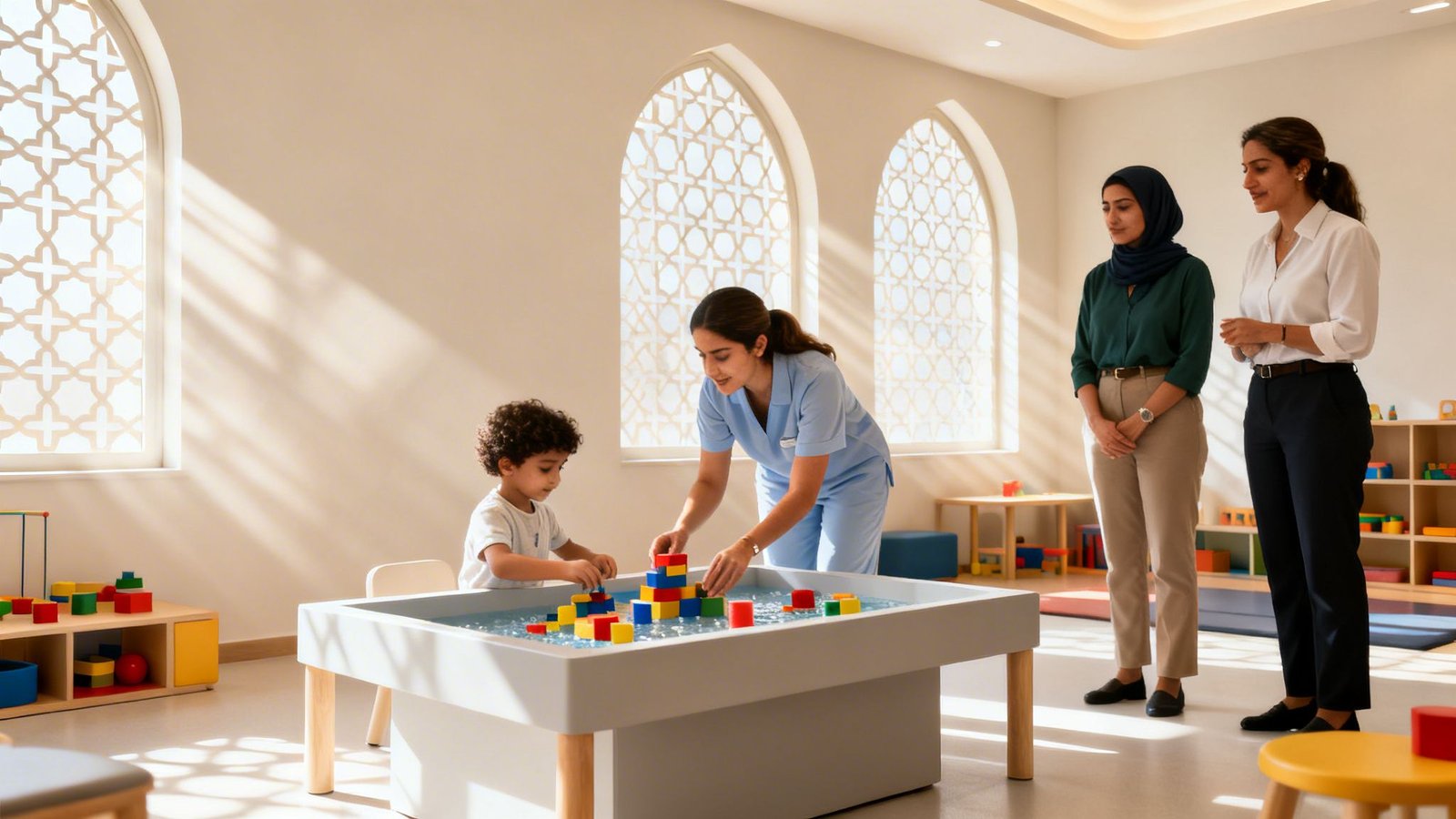

When you hear “early childhood center,” you might picture something like a typical daycare. But it’s so much more than that. Think of it as a specialized hub where a team of dedicated experts comes together, all focused on supporting your child’s individual developmental path. These centers offer integrated therapeutic services designed to help children navigate challenges and build a rock-solid foundation for the future.
What Is a Modern Early Childhood Center

A modern early childhood center is like a mission control for your child’s development. It’s a single place where specialists—from educational psychologists to speech and occupational therapists—work together under one roof. Their common goal? To map out a personalized plan that tackles specific hurdles, whether they’re related to autism, speech delays, or getting ready for school.
This collaborative approach goes far beyond basic childcare. Instead of just watching over kids, these professionals are actively building skills, encouraging independence, and preparing them for what comes next. The entire philosophy is built on a simple but powerful idea: every child is different, and their support should be, too.
Your Child’s Personal Development Team
Imagine a pit crew at a car race. You have the tire specialist, the fuel expert, and the mechanic, all working in perfect sync to make sure the car performs at its peak. That’s exactly how the team at an early childhood center functions—they coordinate their unique skills to fine-tune your child’s abilities.
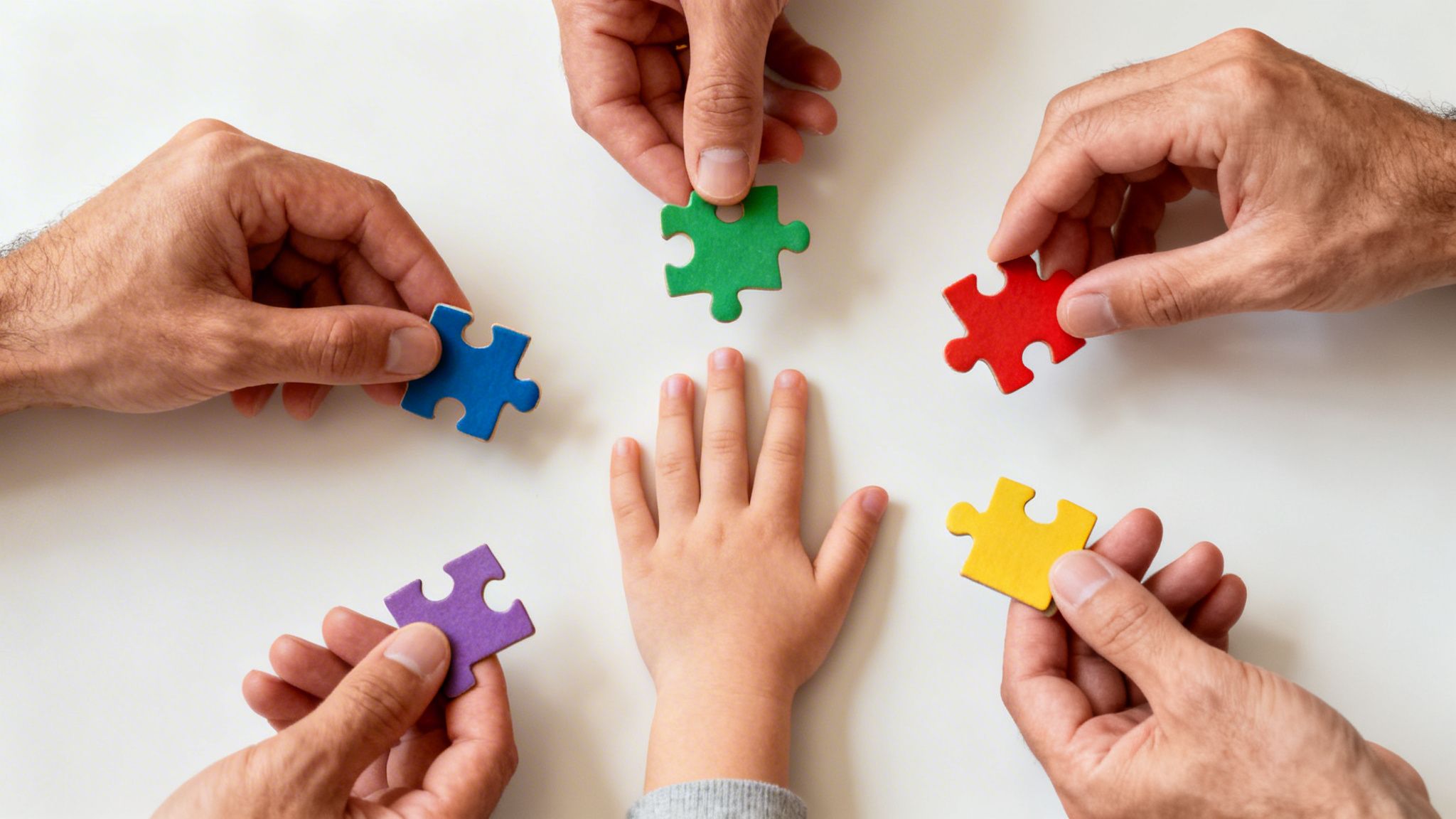
Each specialist brings a crucial piece of the puzzle to the table, creating a complete support system:
- Speech Therapists are the communication builders, helping children find their voice and express themselves clearly.
- Occupational Therapists act as independence coaches, teaching practical skills for everyday life, from getting dressed to holding a pencil.
- Educational Psychologists are the learning strategists, figuring out how your child learns best and addressing behavioral challenges.
- ABA Therapists use play-based methods to encourage positive behaviors and build social confidence.
This kind of coordinated care is especially vital in regions where access is a real problem. Across the Middle East and North Africa (MENA), for instance, the average attendance in early childhood education is only 26%, a figure that lags far behind the global average. This gap underscores a serious need for specialized centers that can step in and support children who might otherwise be left behind.
Fostering a Foundation for Learning
A modern early childhood center is also passionate about sparking a genuine love for learning right from the start. You can complement the work they do by engaging in activities at home; for example, exploring a guide to personalized story books for toddlers is a fantastic way to support your child’s early reading journey.
The ultimate goal isn’t just to fix immediate problems. It’s to give children the confidence and foundational skills they need to flourish in school and in life. This happens by creating a nurturing, expert-led environment focused on one thing: unlocking every child’s full potential.
Meet Your Child’s Personal Development Team
Behind every successful early childhood center is a team of dedicated specialists. But this isn’t just a group of professionals working under one roof; it’s a deeply collaborative unit with one shared mission: helping your child thrive.
It’s helpful to think of them not by their clinical titles, but by the amazing results they help create. They are communication builders, independence coaches, and learning strategists, all working together. By weaving their insights together, they see your child from every angle, creating a truly well-rounded and effective plan for their growth.
This integrated approach is the secret sauce of a great center, offering a level of coordinated support you just can’t get from separate, standalone therapy appointments.
The Educational Psychologist: Your Child’s Learning Strategist
Think of the Educational Psychologist as a detective for your child’s unique learning style. Their main job is to figure out how your child thinks, processes information, and makes sense of the world around them. Through careful assessments, they pinpoint specific learning needs, hidden strengths, and any hurdles that might be getting in the way.
For instance, if a child is having behavioral outbursts or finds it hard to focus, the educational psychologist looks for the “why” behind the “what.” Is it a sensory issue? A frustration with communication? Or a specific learning challenge?
Once they have that clear picture, they design practical strategies to support your child’s cognitive and emotional development. They’re also a key resource for parents and the rest of the therapy team, making sure everyone is on the same page with consistent, helpful techniques.
The Occupational Therapist: Your Child’s Independence Coach
The Occupational Therapist (OT) is your child’s independence coach. Their work is all about developing the skills needed for the “occupations” of childhood—which are really just playing, learning, and taking care of themselves.
The support an OT provides is incredibly hands-on and practical. They help children master everything from fine motor skills, like holding a crayon or buttoning a shirt, to gross motor skills, like balancing and coordination. They also play a huge role in addressing sensory processing difficulties, helping children who might be overwhelmed or under-responsive to certain sounds, textures, or lights.
An Occupational Therapist’s goal is to empower children with the physical and sensory tools they need to navigate their world confidently and independently, turning everyday challenges into opportunities for growth.
By building these fundamental life skills, OTs help boost a child’s self-esteem and reduce frustration, making life at home and at school so much smoother.
The Speech Therapist: Your Child’s Communication Builder
Clear communication is one of the most powerful tools a child can have, and the Speech Therapist is the expert who helps them build it. Their job goes far beyond just correcting a lisp; they work on all the pieces that make up effective communication.
This includes:
- Expressive Language: Helping children find the right words and sentences to share their thoughts, needs, and feelings.
- Receptive Language: Making sure a child can understand what’s being said to them.
- Articulation and Fluency: Improving the clarity of their speech so they can be easily understood.
- Social Communication: Teaching the unwritten rules of conversation, like taking turns and picking up on social cues.
A great speech therapist uses engaging, play-based activities to make learning fun, helping your child find their voice and connect more deeply with the world.
The ABA Therapist: Your Child’s Behavior and Play Expert
An ABA (Applied Behavior Analysis) Therapist focuses on understanding behavior and helping children build positive skills through reinforcement. In modern centers, this is done using natural, play-based methods that feel like fun to the child but are actually highly structured and effective.
The ABA therapist sets clear goals, like encouraging social interaction, improving communication, or reducing challenging behaviors. Then, they design playful activities to teach and reward these new skills. A session might look like a game that encourages sharing or turn-taking, with the therapist providing gentle prompts and positive feedback along the way.
This approach is also data-driven, which means the therapist is constantly tracking progress to see what’s working and fine-tuning the plan as your child grows. You can get a feel for the collaborative spirit of these professionals by getting to know our team of dedicated specialists, who put these principles into practice every single day.
To help you see how all these roles fit together, here’s a quick look at the specialists who make up your child’s support team.
Your Child’s Support Team at a Glance
| Specialist Role | Primary Focus Area | Common Challenges Addressed |
|---|---|---|
| Educational Psychologist | Learning, Behavior, and Cognition | School readiness, attention difficulties, behavioral challenges, learning disabilities |
| Occupational Therapist | Daily Life Skills and Sensory Processing | Fine/gross motor delays, dressing, feeding, sensory sensitivities, handwriting skills |
| Speech Therapist | Verbal and Non-Verbal Communication | Speech sound disorders, language delays, stuttering, social communication difficulties |
| ABA Therapist | Behavior Modification and Skill Building | Social skill deficits, communication challenges, repetitive behaviors, functional routines |
Each specialist brings a vital piece of the puzzle, and together, they create a complete picture of support for your child’s journey.
Building Your Child’s Individualized Success Plan

Every child walks a different path, and their support system should be built just for them. A truly great early childhood center puts an individualized success plan at the very heart of everything it does. This isn’t a generic template; it’s a living, breathing roadmap that guides every single therapeutic decision.
Think of it like commissioning a custom suit. A tailor wouldn’t just grab one off the rack. They take precise measurements, ask about your style, and understand how you’ll use it. In the same way, our specialists first get to know your child’s unique personality, strengths, and challenges before ever suggesting an intervention.
This approach guarantees that every activity and every goal is designed with one purpose: helping your child thrive.
From Initial Assessment to a Custom Roadmap
It all starts with a comprehensive initial assessment. This isn’t a test with a pass or fail grade. It’s a discovery process. Our multidisciplinary team uses a mix of play-based observation, standardized assessments, and deep conversations with you to see the full picture of your child’s world.
To build a truly effective plan, it helps to have a baseline of where your child is in relation to key developmental benchmarks. Knowing the general timeline for skills like sitting up, saying those first words, and interacting with others provides valuable context. For parents wanting to get a clearer picture of these stages, learning about the major baby milestones is an excellent starting point.
This thorough process helps the team pinpoint where your child needs support. Just as importantly, it shines a light on their natural talents and passions, which we can weave into therapy to make it more engaging and effective.
The most effective plans are built on a foundation of collaboration. Parents are the true experts on their children, and their insights, concerns, and goals are an essential ingredient in creating a roadmap that works both at the centre and at home.
When we work together, the strategies we develop are practical, consistent, and perfectly aligned with your family’s daily life.
Setting Meaningful and Achievable Goals
With a clear picture of your child, the team works with you to set goals that are specific, measurable, and achievable. These goals are never one-size-fits-all; they are tailored to what your child needs right now.
For instance, the goals for three different children might look completely different:
- For a child with autism: The plan might focus on building social communication skills, like learning how to ask a friend to play or taking turns with a toy.
- For a child with a speech delay: Goals could zero in on mastering specific sounds to improve clarity or expanding vocabulary to build longer sentences.
- For a child preparing for school: The focus could be on pre-academic skills, such as recognizing letters, following two-step instructions from a teacher, or learning to sit in a group circle.
These goals aren’t set in stone. We constantly track progress, celebrate every win, and adjust the plan as your child grows and develops.
The Importance of Bespoke Interventions
This need for a personalized approach is clear when you look at the bigger picture. In the MENA region, developmental data paints a mixed story. While between 68% and 84% of children aged 36-59 months are considered developmentally on track, significant gaps persist in literacy, numeracy, and social-emotional skills. These are the exact areas where targeted, individualized therapy can make all the difference.
This plan becomes a living document that evolves with your child. Our team continuously monitors their progress, cheers them on, and identifies the next area for growth. This ensures the support your child receives is always relevant and perfectly matched to where they are on their journey.
Ultimately, an individualized success plan is more than a piece of paper. It’s our promise to see, support, and celebrate your child for exactly who they are—and for the incredible person they are becoming.
Understanding Key Therapeutic Approaches

Let’s pull back the curtain on some of the core therapies you’ll find at a modern early childhood center. These terms can sometimes sound a bit clinical or even intimidating, but in reality, they’re all about helping your child learn and grow in a way that feels natural and supportive.
Forget the idea of rigid, one-size-fits-all programs. The best therapies today are dynamic, child-friendly, and woven seamlessly into the fabric of play. Our goal is to demystify these powerful tools, showing you how each one gently builds your child’s confidence, skills, and overall happiness.
Applied Behavior Analysis as Positive Play
When parents first hear Applied Behavior Analysis (ABA), they sometimes imagine a very sterile, structured system. That’s an outdated picture. The modern ABA we use is a world away from that—it’s a positive, play-based approach focused on understanding behavior and encouraging helpful skills in a way that feels like pure fun for your child.
Think of it as positive reinforcement in action. If a child is learning to share, for instance, a therapist might set up an engaging game with another child. When your child successfully shares a toy, they get immediate praise or a chance to play with their absolute favorite item. This positive feedback naturally makes them want to repeat that helpful action next time.
This isn’t about changing who your child is. It’s about equipping them with the tools to navigate social moments, communicate their needs clearly, and reduce behaviors that cause them distress—all while they’re just playing and having a great time.
Speech Therapy Unlocking Communication
Speech therapy is all about unlocking the power of communication. It goes so much deeper than just correcting how a child says certain sounds. It’s really about giving them the ability to express their incredible thoughts, understand others, and build those meaningful connections that make life rich. A speech therapist is a communication builder, creating a bridge between your child’s inner world and the world around them.
For a child struggling to find the right words, a session might look like a storytelling game, where they’re gently encouraged to describe what’s happening in a picture book. For another, the focus could be on understanding social cues, like figuring out what different facial expressions mean or learning the natural back-and-forth of a conversation.
The core of speech therapy is empowerment. By helping a child find their voice, we give them the confidence to participate, ask questions, make friends, and advocate for themselves.
Occupational Therapy Building Independence
Occupational Therapy (OT) is all about building the practical skills kids need for the everyday “occupations” of life. For a child, these occupations are playing, learning, and taking care of themselves. An occupational therapist is like an independence coach, empowering children to master tasks that many of us take for granted. This therapy is incredibly practical and hands-on.
It can cover a huge range of skills, including:
- Fine Motor Skills: Fun activities that strengthen the small muscles needed for using scissors, buttoning a coat, or holding a pencil.
- Gross Motor Skills: Improving balance and coordination for big movements like running, jumping, and climbing on the playground.
- Sensory Processing: Helping a child who feels overwhelmed by loud noises or certain textures learn to manage their environment so it feels safe and calm.
- Self-Care Routines: Building independence in daily tasks like getting dressed, brushing their teeth, or feeding themselves.
A session might involve a playful obstacle course to build coordination or a creative art project with play-doh to strengthen hand muscles. To see more about how this works in practice, you can learn how occupational therapy in Dubai helps children build confidence. Every activity is chosen with a purpose, making everyday challenges feel much more manageable and achievable for your child.
Finding the Right Early Childhood Center for Your Family
Choosing an early childhood center is a huge decision.## Finding the Right Early Childhood Center for Your Family
Choosing an early childhood center is a huge decision. It’s a place where your child will spend a significant amount of time, and the right environment can truly make all the difference in their progress and happiness. While it can feel overwhelming, you can make the process much clearer by knowing exactly what to look for and what to ask.
Think of it like finding the right coach for an athlete. You wouldn’t just pick someone based on their certificate. You’d want to see their coaching style in action, understand their philosophy, and make sure they genuinely connect with the athlete. It’s the same with a center—you need to look past the brochure and get a feel for the real, day-to-day environment where your child will be learning and growing.
Your Essential On-Site Checklist
When you visit a potential center, what you see is just as important as what you hear. Your tour is a fact-finding mission. Use this time to observe the atmosphere and see how the staff and children interact when they’re not “on display.”
Here are a few key things to zero in on during your visit:
The Physical Environment: First, look at the space itself. Is it clean, safe, and well-organized? Does it feel stimulating without being chaotic or overwhelming? Look for dedicated zones for different activities—quiet corners, areas for active play, and private rooms for therapy sessions. A well-designed center should feel welcoming and be set up to support a wide range of sensory needs.
Staff-Child Interactions: This one is critical. Watch how the therapists and teachers talk to the children. Do they get down on the child’s eye level? Are their interactions warm, patient, and encouraging? The quality of these relationships is the absolute bedrock of a nurturing and effective environment.
Key Questions to Ask the Team
Come to your consultation armed with a list of specific questions. This isn’t the time to be shy—a transparent, confident team will welcome your curiosity and be happy to get into the details.
Here are the questions that will give you the most insight:
- What are the qualifications and ongoing training requirements for your staff? This tells you about the level of expertise your child will be surrounded by.
- How do you foster collaboration between different therapists? You’re looking for signs of a truly integrated team, like regular meetings where they discuss each child’s progress and align their goals.
- Can you describe your approach to family involvement? The best centers don’t just treat your child; they partner with you. They see parents as essential members of the therapy team.
- How is my child’s progress tracked, and how often will you communicate it to me? You should expect regular, clear updates that are backed by real data and professional observations.
The most telling sign of a quality early childhood center is its commitment to partnership. A great team won’t just work for your child; they will work with you, valuing your insights and making you an integral part of the journey.
Understanding Their Philosophy
Finally, take some time to dig into the center’s core philosophy. Do they prioritize play-based learning? How do they adapt their approach when a child is having a tough day? Making sure their fundamental methods align with your family’s values and your child’s unique personality is key. A strong program, for example, focuses on building the foundational skills that are so critical for later success. You can learn more about this in our guide on choosing a school readiness program in Dubai.
Asking these targeted questions turns a stressful search into an empowering investigation. It gives you the confidence to make the best possible choice for your child’s future.
What to Expect on Your Journey Together
Stepping into therapy with your child can feel like venturing into a new, uncertain world. It’s a path filled with questions but also immense hope for what your child can achieve. The good news is, at a dedicated early childhood center, you’re never walking that path alone.
From the moment you first reach out, you’ll see that this is a partnership. We start by simply listening—to your story, your concerns, and your dreams for your child. That conversation shapes the initial assessment, which then flows into a collaborative plan. From there, it’s about the steady, day-by-day work of building skills and confidence, with you involved and informed every step of the way.
Celebrating Milestones Big and Small
A child’s development isn’t a race. Progress isn’t always a straight, upward climb; sometimes there are huge leaps forward, and other times there are periods of quiet practice. That’s why we celebrate every single victory. It could be a child with autism initiating play with a friend for the first time, or a child with a speech delay clearly and proudly saying a new word.
The goals we work toward are real, tangible, and designed to make a difference in your daily life:
- Stronger Communication: Your child will find their voice, learning how to express their needs, thoughts, and feelings more easily. This can be a huge relief, cutting down on frustration for everyone.
- Greater Independence: Small wins, like mastering dressing themselves or using a fork and knife, build incredible self-esteem and a powerful sense of “I can do it.”
- Improved Social Skills: We help children learn the give-and-take of friendship—how to share, take turns, and read social cues—so they can build meaningful connections.
- A Smoother School Transition: By building the foundational skills needed to learn in a group and follow instructions, we set them up for a successful start to their school years.
The real goal isn’t just about overcoming today’s challenges. It’s about giving your child and your entire family a toolbox of strategies that will support them for years to come. We’re building a foundation for a lifetime of success.
Bridging a Critical Gap in Early Education
This kind of specialized support is absolutely vital, especially when you look at the bigger picture. In the Arab States, for example, a staggering 40% of children miss out on any form of organized learning before they start primary school. This statistic highlights a huge need for focused, early intervention. No child should be left behind, especially those with developmental challenges who thrive with individualized support. To learn more about these regional trends, you can explore this report on holistic early childhood care and education.
This whole journey is about unlocking the amazing potential that’s already inside your child. Taking that first step—picking up the phone to ask for a consultation—is a powerful act of love and advocacy for their future. It’s the start of a partnership dedicated to helping them shine.
Frequently Asked Questions
When you’re exploring support for your child’s development, it’s natural to have a lot of questions. Feeling a mix of hope and uncertainty is completely normal. We’ve gathered some of the most common questions we hear from parents to give you clear, straightforward answers.
Our aim here is to help you feel confident and informed as you decide what’s best for your family. We truly believe that when parents are well-informed, they become the most powerful advocates for their child’s success.
How Do I Know if My Child Needs an Early Childhood Center?
More often than not, a parent’s gut instinct is right. You know your child better than anyone. If you’ve noticed persistent struggles with communication, see that they’re not quite hitting developmental milestones, or find social situations tricky for them, it might be time to explore your options.
Maybe you’re worried about their progress or feel they just aren’t flourishing in their current daycare or preschool. An assessment at a specialized center can give you real answers and, most importantly, a clear path forward.
What Is the Role of Parents in the Therapy Process?
Parents are the heart of the therapy team—period. Your involvement isn’t just helpful; it’s absolutely crucial for your child’s success. You’re the expert on your child, and your insights are what allow our therapists to design a plan that actually works for your family’s daily life.
Your role really comes down to being a partner. This means:
- Sharing Insights: Giving us the full picture of your child’s strengths, challenges, and unique personality at home.
- Active Participation: Joining in on sessions when it makes sense, so you can learn the same strategies we’re using at the center.
- Consistent Reinforcement: Weaving the skills learned in therapy into your everyday routines at home. This is what makes new skills stick.
A strong partnership between parents and therapists creates a circle of support around the child. This ensures that progress made at the centre is carried over into the home, leading to more lasting and meaningful growth.
How Is My Child’s Progress Measured and Communicated?
We track progress by combining professional observation, data we collect during therapy sessions, and—just as importantly—regular feedback from you. When we create your child’s initial plan, we set specific, measurable goals, and then we constantly monitor how they’re moving toward them.
You can count on open and consistent communication. This includes regular progress reports, scheduled parent-therapist meetings, and even quick, informal check-ins. We want to make sure you’re always in the loop about your child’s achievements and what’s next on their developmental journey. Transparency is everything.
What Makes One Center’s Approach Different?
The biggest difference usually comes down to philosophy and how that philosophy is put into practice. Some centers might use a more rigid, one-size-fits-all model.
A truly top-tier early childhood center, however, will champion a multidisciplinary, individualized approach. This means every single specialist—from the speech therapist to the educational psychologist—works together on your child’s unique plan. It’s a completely coordinated effort designed to provide the best possible support.
At Georgetown early intervention center, we believe every child’s journey is unique and their therapy plan should be too. Our collaborative team is dedicated to creating a personalized roadmap to help your child thrive. Learn more about our individualised approach.