
As a parent, you’re constantly tuned in to your child’s development. But it’s not always easy to tell the difference between a passing phase and a sign that something more is going on. The real turning point is when these challenges aren’t just occasional hiccups but persistent patterns that start to affect their happiness and day-to-day life. That’s often the moment to consider talking to a clinical psychologist in Dubai. Seeking an expert opinion isn’t about finding something wrong; it’s a positive, proactive step toward understanding and supporting your child.
Recognizing When Your Child Needs Professional Support
Let’s start with one of the most powerful tools you have: your gut instinct. You know your child better than anyone. If you have a nagging feeling that something isn’t quite right, that feeling is worth listening to. Deciding to see a specialist isn’t an admission of failure—it’s about giving your child the right tools to thrive. The process starts by noticing those small but consistent struggles that don’t seem to be getting better on their own.

Often, the signs aren’t big, dramatic moments. They’re the quiet struggles that build up over time. Maybe it’s a toddler who isn’t using any single words by 18 months or putting simple two-word sentences together by age two, suggesting a potential communication delay. Or maybe it’s a preschooler whose tantrums feel different—they’re not just frequent, but incredibly intense and almost impossible to soothe. This could point to a deeper struggle with emotional regulation.
Common Areas of Concern
Pinpointing specific patterns can help you organize your thoughts and feel more confident when you do reach out for help. Every child hits milestones at their own pace, of course, but consistent difficulties in these key areas might signal it’s time for a professional chat.
- Emotional Regulation: Are you seeing intense, frequent emotional outbursts that feel completely out of proportion to the situation? Or perhaps persistent sadness, anxiety, or an inability for your child to calm themselves down without a lot of help.
- Social Interaction: This can show up as avoiding eye contact, having a really tough time making or keeping friends, or just not seeming interested in playing with other kids. It can also look like difficulty understanding social rules like sharing and taking turns.
- Behavioral Challenges: Things like persistent defiance, aggression (like hitting or biting), or hyperactivity that gets in the way of learning can be red flags. Restrictive interests can also be an indicator. Many of these behaviors can also be linked to other conditions; for more information, you can explore our detailed guide on ADHD treatment in Dubai.
- Developmental Milestones: Are you noticing significant delays in your child’s speech, motor skills, or learning abilities compared to their friends? This could be a school-aged child who is really struggling with basic reading or math concepts, or having trouble focusing in class.
The bottom line is this: if a child’s behavior is consistently getting in the way of their ability to enjoy family life, do well in nursery or school, or build friendships, it’s a clear sign to seek support.
From Concern to Action
Sometimes, real-world examples make it all click. Think of the child who always hides behind a parent at birthday parties instead of joining in the games. Or the student whose teacher constantly reports that they can’t sit still or follow instructions, even though you know they are bright and capable.
These aren’t just quirks; they are clues. Seeing a clinical psychologist in Dubai is about understanding what’s driving these struggles. They are trained to look past the surface behaviors to find the root cause, whether it’s anxiety, a developmental delay, or a sensory processing issue. Taking that step gives you a clear path forward and empowers both you and your child.
Finding the Right Specialist for Your Child in Dubai
Once you’ve decided to seek professional support, the next big question is: who do you see? You’ll hear a lot of different titles thrown around—clinical psychologist, occupational therapist, educational psychologist—and it can be tough to figure out who does what. Knowing the difference is the first step toward getting your child the precise help they need.
Think of these professionals as a team, each with a unique role to play in supporting your child’s development.
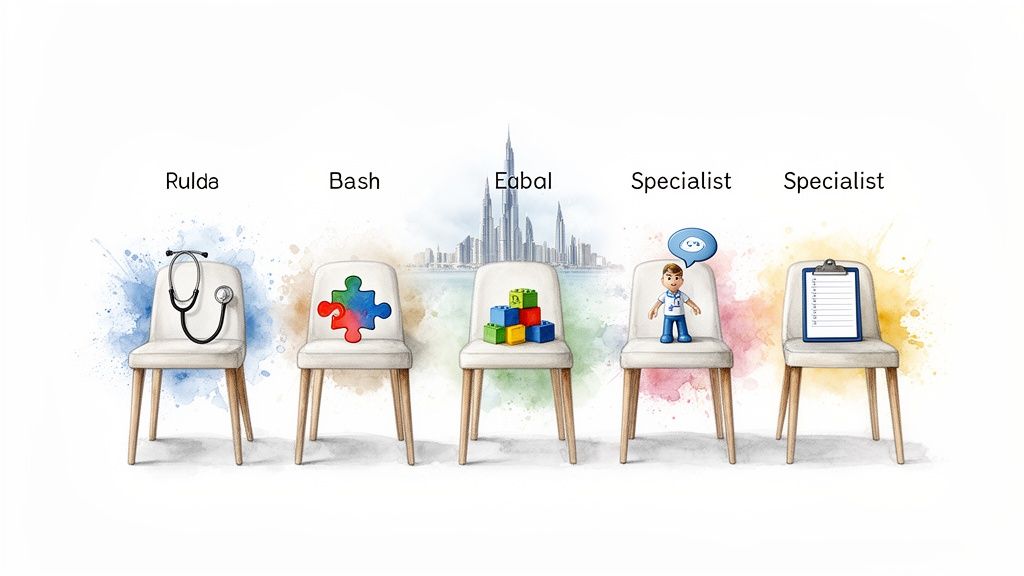
Often, the journey begins with a clinical psychologist in Dubai. They are trained to assess and diagnose mental, emotional, and behavioral disorders, giving you a clear, foundational understanding of your child’s specific challenges. As awareness grows, so does the demand for these skilled professionals. Consider that anxiety and depression are among the top 10 causes of ill health in the UAE, and over 36% of residents reported a spike in stress during recent lockdowns, a trend detailed in this mental health insight report.
Clinical, Educational, Occupational: Who Does What?
While a clinical psychologist often provides the overarching diagnostic framework, other specialists step in with targeted, practical support. Their roles are distinct, but they frequently work together to build a complete circle of care around your child.
To help you tell them apart, here’s a quick guide to what each specialist focuses on.
Who Does What: A Quick Guide to Child Specialists in the UAE
| Specialist | Primary Focus Area | Common Reasons to Consult |
|---|---|---|
| Clinical Psychologist | Assessment, diagnosis, and treatment of mental, emotional, and behavioral disorders. | Concerns about anxiety, depression, autism, ADHD, significant behavioral issues, or developmental delays. |
| Educational Psychologist | Learning and academic challenges within a school setting. | Suspected learning difficulties (like dyslexia), school-related anxiety, or needing classroom accommodations. |
| Occupational Therapist (OT) | Developing skills for daily living (“occupations”). | Difficulties with fine motor skills (writing, dressing), sensory processing, or self-regulation. |
| Speech & Language Therapist (SLT) | All aspects of communication, both verbal and non-verbal. | Speech delays, trouble understanding language, social communication challenges, or stuttering. |
| Behavior Therapist (ABA) | Applying evidence-based strategies to teach new skills and improve behavior. | Often recommended for children with ASD to build communication, social, and daily living skills. |
Understanding these roles helps you direct your concerns to the right person from the start.
Key takeaway: The most powerful support for a child often comes from a multidisciplinary team. When these experts collaborate, they ensure every aspect of your child’s development is addressed in a coordinated way.
Seeing the Team in Action: A Real-World Example
Let’s imagine a four-year-old boy named Omar. His parents are growing concerned. He says very few words, seems overwhelmed and avoids other children at nursery, and has huge meltdowns over seemingly small changes to his daily routine.
Their journey might start with a clinical psychologist in Dubai. After a comprehensive assessment, the psychologist diagnoses Omar with Autism Spectrum Disorder (ASD). This diagnosis is the key that unlocks the right support plan.
From there, the psychologist recommends a collaborative team:
- A Speech and Language Therapist starts working with Omar on his ability to understand and use words.
- An Occupational Therapist helps him manage the sensory sensitivities that are triggering his meltdowns.
- An ABA therapist at a specialized early intervention center begins teaching him positive ways to communicate his needs and build social skills.
Together, this team—guided by the psychologist’s initial findings—forms a unified support system that gives Omar holistic, effective care.
How to Verify a Psychologist’s Credentials in the UAE
Choosing the right clinical psychologist for your child is a huge decision, and frankly, it can feel a little overwhelming. The good news is that Dubai has a very well-regulated healthcare system. This means you have the power to check that you’re partnering with a qualified, licensed professional who is the right fit for your family.
A few minutes spent verifying credentials upfront can give you incredible peace of mind. It’s not just a formality; it’s your confirmation that the person you’re trusting with your child’s care has met a high bar for education, training, and ethical practice.
Who Regulates Psychologists in Dubai?
In Dubai, every legitimate psychologist must be licensed by a government authority. This is your first and most important checkpoint.
Depending on where the psychologist practices, their license will come from one of two main bodies:
- Dubai Health Authority (DHA): This is the big one. The DHA licenses most healthcare professionals working in private clinics, centers, and hospitals across Dubai.
- Community Development Authority (CDA): You’ll often find that professionals in social care settings or specialized centers for People of Determination are licensed through the CDA.
Both the DHA and CDA have online search portals. You can simply type in the professional’s name and instantly see if their license is active and what their official title and specialization are. It’s a quick and powerful tool for parents.
My Advice: Don’t feel awkward about asking for this information. Before you even book, call the clinic’s front desk and ask for the psychologist’s full name and their DHA or CDA license number. A good, transparent center will have this ready for you without any hesitation.
Questions to Ask Before You Book That First Appointment
A license is essential, but it doesn’t tell the whole story. The next step is making sure a psychologist’s specific skills match your child’s needs. After all, the best psychologist for an adult struggling with work stress isn’t necessarily the right person for a toddler showing signs of a developmental delay.
Get on the phone with the clinic and ask some direct questions.
- What’s their experience with my child’s age group? An expert in early childhood development will have a completely different toolkit than someone who primarily works with teenagers. Be specific about your child’s age.
- Do they specialize in our specific concerns? Don’t be vague. Ask them directly: “How much of your practice is focused on developmental delays, ADHD, or autism spectrum disorder?”
- Can you confirm they are licensed by the DHA or CDA? This is a simple yes-or-no question that confirms they are legally allowed to practice here.
Finding a professional with this level of expertise is an investment. The average base salary for a clinical psychologist in Dubai can be around AED 30,000 per month, which speaks to the deep knowledge required. When you do your homework, you ensure that your investment is going toward someone with the proven qualifications to truly help your child.
You can learn more about professional compensation and what it signifies by reviewing salary benchmarks in the UAE. Taking these steps empowers you to walk into that first appointment feeling confident that your child is in capable, trusted hands.
Preparing for Your First Appointment
The first time you meet with a clinical psychologist can feel a little daunting, but it’s really the first step on a positive path forward for your child. Being prepared for this initial consultation helps turn any nervousness into a truly productive conversation. Knowing what to expect and what to ask makes you an active, confident partner in your child’s care right from the start.
So, what happens in that first meeting? It’s usually an in-depth chat—an intake interview where the psychologist will want to understand the full picture. They’ll ask about your child’s developmental milestones, family life, and, of course, the specific worries that led you to their office.
It’s also their chance to connect with your child. The psychologist will often interact with them through play, observing how they communicate and engage in a relaxed, natural way.

Key Questions to Ask Your Psychologist
Having a few questions prepared can make a world of difference. This isn’t about putting the psychologist on the spot; it’s about making sure their expertise and style are the right match for your child and your family.
Here are a few essential things you might want to ask:
- Therapeutic Approach: “What therapy models do you typically use with children, like Play Therapy or CBT? And why do you think that might work for our child’s situation?”
- Relevant Experience: “Have you worked with other children facing similar challenges? What have you learned from those experiences?”
- Team Collaboration: “How do you work with other specialists, like speech or occupational therapists? What does that coordination look like?”
- Assessment Process: “Could you walk me through the assessment process? What’s the general timeline from today until we have a formal plan?”
Remember, a great clinical psychologist in Dubai will welcome your questions. They should see you as a vital member of the therapy team and be eager to build a trusting, transparent relationship with you.
This commitment to partnership and high standards is a big part of the professional culture here in the UAE. For example, local events like the SAKINA Integrated Mental Health Conference (SIMC) ensure clinicians are always learning about the latest evidence-based practices for youth mental health. You can discover more about these professional standards and why they are so important for your child’s progress.
Your preparation is also about the information you bring. Gather any previous reports from teachers, doctors, or other therapists. It’s also incredibly helpful to jot down a few specific examples of the behaviors you’ve noticed at home. The more detail you can provide, the clearer the picture the psychologist can build. This initial teamwork sets the stage for a successful therapy journey.
If you feel ready to take this step, you can easily book an appointment with our team to get started.
Building Your Child’s Individualized Therapy Plan

Once the initial assessments are done, the psychologist will share a diagnostic report with you. It’s easy to see this document as just a label, but it’s so much more—it’s the blueprint for your child’s entire therapeutic journey. A good clinical psychologist uses these findings to create a concrete, goal-oriented strategy called an Individualized Therapy Plan (ITP).
This plan is absolutely critical because no two children are the same. A one-size-fits-all approach just doesn’t cut it in child development. Your child’s plan will be carefully built around their unique strengths, specific challenges, and even their personality.
What Does a Good Therapy Plan Include?
A strong ITP isn’t full of vague statements. It outlines clear, measurable goals and serves as the central playbook for everyone involved in your child’s care. This ensures the whole team—you included—is on the same page and working toward the same outcomes.
I like to think of the clinical psychologist in Dubai as the architect of this plan. They design the overall structure, and then other specialists, like speech or occupational therapists, come in to build out the specific rooms.
A comprehensive plan should always have:
- Specific, Measurable Goals: Instead of a vague goal like “improve social skills,” a great plan would say something like, “will initiate play with a peer at least once during a 30-minute play session.” See the difference?
- Targeted Interventions: The plan will list the exact therapeutic methods to be used. This could be anything from play-based ABA and specific speech therapy techniques to sensory integration activities.
- Clear Timelines: It should set realistic timeframes for checking in on progress, usually every three to six months. This is when you’ll review what’s working and adjust the goals as your child develops new skills.
- Parent and Family Involvement: Your role is non-negotiable. The plan will spell out practical ways you can support these goals at home, turning everyday moments into powerful learning opportunities.
The real magic of an individualized plan is that it creates a cohesive support system. It stops therapists from working in silos and instead creates a powerful, unified strategy for your child’s success.
How the Plan Guides a Multidisciplinary Team
This master plan is the key to getting all the specialists to work together effectively. For example, let’s say a primary goal is to help your child communicate their needs to cut down on frustration-fueled meltdowns. The ITP ensures every therapist is reinforcing this skill from their own angle.
The speech therapist might work on specific phrases and vocabulary. The occupational therapist could focus on self-regulation techniques your child can use when they start feeling overwhelmed. At the same time, the ABA therapist would create structured chances to practice these new communication skills during playtime.
This coordinated effort is what really drives meaningful progress. Each professional builds on the work of the others, creating a consistent and deeply supportive environment for your child. On top of these therapies, weaving in practical social emotional learning activities at home can make a huge difference.
In the end, this personalized roadmap is about more than just what happens in therapy sessions. It’s about building foundational skills for school, nurturing independence, and giving your child the tools to navigate their world with confidence. The plan isn’t set in stone; it’s a living document that evolves as your child grows and hits new milestones, making sure their support always matches where they are right now.
Getting Started: Practical Questions Answered
Once you’ve decided to seek professional support, the practical side of things can feel a bit daunting. Let’s walk through some of the most common questions I hear from parents in Dubai to help you feel more prepared.
What Does Therapy Actually Cost?
This is usually the first question on everyone’s mind. In Dubai, a session with a clinical psychologist typically falls somewhere between AED 600 and AED 1,200 per hour. The exact figure depends on a few things, like the psychologist’s level of experience and their area of specialism. An initial diagnostic assessment, which is much more in-depth than a regular therapy session, will understandably cost more.
Navigating insurance can also be tricky. While we’re seeing better coverage for mental health services across the UAE, it’s definitely not a given. Your first step should always be to call your insurance provider and ask for specific details about your plan’s coverage for psychological services.
Should We Choose a Multidisciplinary Center or a Solo Practitioner?
This is a big decision, and the right answer really comes down to your child’s specific needs.
An independent psychologist can build a wonderfully close, one-on-one relationship with your family. That personal touch is invaluable for many.
On the other hand, a multidisciplinary center offers a huge advantage: teamwork. If your child could benefit from a few different types of therapy—say, speech therapy and occupational therapy in addition to psychology—having everyone under one roof is a game-changer.
The real magic of an integrated center is collaboration. The team can easily meet, share notes on your child’s progress, and make sure their strategies are perfectly aligned. It creates a much more powerful, holistic approach to your child’s care.
How Long Will My Child Be in Therapy?
It’s the question every parent asks, and the most truthful answer is, “it depends.” There’s no magic number or standard timeline. The length of therapy is completely unique to your child and is based on their individual goals, the challenges they’re working through, and how they respond to the support.
Some children might meet their goals in just a few months. Others with more complex needs may benefit from support over a longer period.
Think of it less like a fixed sentence and more like a flexible roadmap. A good therapist will schedule regular reviews with you, usually every few months, to talk about what’s working, celebrate the wins (big and small!), and decide together what the next phase should look like. This keeps the therapy focused and ensures it evolves right alongside your child.
At Georgetown Early Intervention Center, we know every child’s journey is different, which is why we build truly individualized plans. Our multidisciplinary team works hand-in-hand to provide comprehensive support that’s tailored to your child’s specific needs and goals.