
For parents in the Emirates, hearing the words “Autism Spectrum Disorder” can feel like a sudden, overwhelming wave. But it’s important to remember you’re not navigating these waters alone. Understanding autism in UAE means seeing a landscape that is rapidly growing in awareness, building dedicated support systems, and placing a huge emphasis on early intervention—the most powerful first step you can take.
There is a clear, supportive path forward for your family, right here in the UAE.
A Compassionate Guide for Parents in the UAE

When you’re first exploring Autism Spectrum Disorder, it helps to set aside the clinical definitions for a moment. Instead, think of it as a different way of experiencing the world. Your child might communicate, interact, or process sights and sounds in their own unique way. This guide is here to cut through the jargon and focus on what these differences might actually look like in your child’s day-to-day life.
The UAE has made incredible strides in creating a supportive environment for children on the spectrum and their families. This commitment shows up in the world-class therapy centers and in a growing societal understanding of what neurodiversity truly means. For more practical tips, this is a great resource offering advice for parents of children with autism.
The Power of Early Intervention
If there’s one message I want every parent to hear, it’s about the profound impact of early support. Identifying developmental differences as soon as possible means you can connect your child with therapies that build foundational skills during their most crucial learning years. This isn’t about “fixing” them; it’s about empowering them with the tools they need to navigate the world confidently.
Think of an early, individualized plan as a personalized roadmap for your child’s development. It’s designed to nurture their unique strengths while giving them structured support in the areas where they need a little more help, ensuring they can truly flourish.
The strong focus on early action is also a response to local data. Studies have shown autism prevalence in the UAE to be around 112 cases per 10,000 individuals. These numbers highlight why timely and effective support systems are so critical here.
Fostering Acceptance and Understanding
Beyond therapies and school plans, a powerful movement is underway to build a more inclusive community. Greater https://georgetownuae.com/autism-awareness-in-the-uae-breaking-stigmas-and-building-acceptance/ is helping to create a culture where every child is valued for who they are.
Our goal with this guide is to give you the knowledge and confidence to be your child’s best advocate. By understanding the resources available and embracing a proactive mindset, you can build a positive, nurturing future for your child right here in the Emirates.
The Diagnostic Journey: Recognizing Early Signs in the UAE

Starting the diagnostic journey can feel overwhelming, but it’s really the first step toward understanding your child’s unique way of seeing the world. Recognizing the early signs of autism in UAE isn’t about looking for flaws. It’s about being a careful, loving observer so you can give your child the right support exactly when they need it most.
Think of it like being a gardener. You watch each plant, noticing which ones might need a bit more sun, a little less water, or different soil to truly thrive. In the same way, observing your child’s communication style, social interactions, and sensory responses helps you understand precisely what they need to blossom.
This journey doesn’t start with a label. It starts with your observations and the courage to ask questions. After all, you are your child’s greatest expert.
What to Look For: Communication and Social Cues
In toddlers and young children, the earliest hints of autism often show up in the subtle ways they connect—or don’t connect—with the people and world around them. Every child hits milestones at their own pace, of course, but certain patterns might signal it’s time for a chat with a professional.
For example, you might notice that by their first birthday, your child doesn’t consistently turn when you call their name. Maybe they don’t point at things to share their excitement with you or seem to prefer playing alone instead of interacting with you or other kids. For a more detailed look, our guide on the common signs of autism in toddlers can offer deeper insights.
Non-verbal cues are just as important. Pay attention to eye contact—is it brief or avoided altogether? Notice if your child uses gestures like waving “bye-bye” or if they struggle to read your facial expressions or understand the tone of your voice.
Repetitive Behaviours and Sensory Sensitivities
Beyond social interactions, the way a child engages with their physical environment can also provide important clues. Many children on the spectrum find a deep sense of comfort in predictability, which can lead to repetitive behaviors.
This might look like:
- Repetitive Motor Movements: Things like hand-flapping, rocking, or spinning.
- Insistence on Sameness: A powerful need for routines to be followed perfectly, with even small changes causing real distress.
- Focused Interests: An incredibly intense interest in specific topics or objects, such as lining up toys in a precise order rather than playing with them in a more typical way.
Sensory sensitivities are also a huge part of the picture. Your child might be over-sensitive to everyday stimuli, covering their ears at loud noises or refusing certain clothing because of the texture. On the flip side, they could be under-sensitive, constantly seeking out intense sensory experiences by crashing into furniture or seeming almost indifferent to pain.
“It’s so important to see these behaviors as a form of communication. A child’s meltdown in a busy mall isn’t a ‘tantrum’—it’s their only way of shouting, ‘This is too much for my senses!’ Realizing that changes everything.”
To help you track your child’s development, here is a table outlining key milestones and what to watch for.
Early Developmental Milestones and Potential Autism Indicators
| Age Range | Typical Milestone | Potential Red Flag for Autism | What to Observe |
|---|---|---|---|
| 6-9 Months | Smiles back at you, engages in back-and-forth sounds and expressions. | Limited or no big smiles or other joyful expressions. | Does your baby share warm, engaging expressions with you? |
| 12 Months | Uses gestures like waving or pointing; responds to their name. | Little or no babbling, pointing, or other gestures. | Is your child trying to get your attention non-verbally? |
| 16 Months | Says single words. | No single words spoken. | How is your child’s vocabulary developing? |
| 18-24 Months | Plays “pretend” (e.g., feeding a doll); says two-word phrases. | Doesn’t engage in pretend play; no meaningful two-word phrases. | Does your child imitate actions or use their imagination during play? |
| Any Age | Shows interest in other children; makes eye contact. | Avoids eye contact; seems to prefer being alone; loss of previously acquired speech or social skills. | How does your child interact with peers and family members? |
This table is just a guide. If you notice any of these red flags, it doesn’t automatically mean your child has autism, but it does mean a conversation with a professional is a good next step.
Your First Steps in the UAE
If your gut tells you something is off, the path forward is clear and filled with support. The most important first step is to trust your instincts and schedule a visit with your child’s pediatrician. Go to the appointment ready to share specific examples of what you’ve observed.
Your doctor can perform an initial developmental screening. If they share your concerns, they will refer you to a specialist, like a developmental pediatrician or an educational psychologist, who is equipped to carry out a comprehensive assessment.
This evaluation isn’t a quick test. It’s a thorough process involving observation of your child’s behavior, play, and social interactions, as well as in-depth interviews with you. The goal is to get a complete picture of your child’s unique strengths and challenges to create a support plan that is just right for them.
Building Your Child’s Multidisciplinary Support Team

After an autism diagnosis, the next step isn’t just about scheduling appointments; it’s about assembling your child’s personal support crew. Think of it like putting together a dedicated coaching staff, where each expert brings something unique to the table. They all share one goal: to help your child find their confidence, build new skills, and truly thrive.
This collaborative, multidisciplinary approach is the gold standard for autism in the UAE. Just like a sports team has specialists for strength, skills, and strategy, your child’s team will have different experts focused on specific areas of their development. It ensures every piece of the puzzle is addressed in a connected, thoughtful way.
The Core Players on Your Child’s Team
The UAE has some world-class professionals ready to partner with your family. While every child’s team looks a little different, there are a few key specialists who typically form the core of an early intervention plan. Understanding what each one does helps you see how their roles fit together to create a powerful support system.
The need for these coordinated teams has never been more apparent. The prevalence of autism in the MENA region has seen a tenfold increase over the last decade. This jump is largely due to better awareness and improved diagnostics, which shines a light on just how vital early, evidence-based support really is.
Let’s meet the key members of this essential team.
- The Educational Psychologist: This professional is your team’s strategist. They conduct deep-dive assessments to map out your child’s unique cognitive profile—pinpointing their learning strengths, challenges, and how they process information. They are instrumental in creating the master plan, often an Individualized Education Plan (IEP), that guides the entire team.
- The Speech and Language Therapist: Far more than just a “speech teacher,” this specialist is the communication coach. They work on the entire spectrum of communication—from understanding language and expressing needs (verbally or not) to picking up on the subtle social cues of a conversation.
- The Occupational Therapist (OT): The OT is the team’s expert on daily living skills and sensory processing. If the speech therapist helps your child ask for a snack, the OT helps them develop the fine motor skills to open the container and the sensory regulation to stay calm in a noisy kitchen.
- The ABA Therapist: Working under a Board Certified Behavior Analyst (BCBA), the ABA therapist is the on-the-ground skills coach. Using modern, play-based Applied Behavior Analysis (ABA), they tap into your child’s natural interests to teach positive behaviors and life skills in a way that feels like fun, not work.
How the Team Works Together in Harmony
The real magic happens not in what each specialist does alone, but how they work together. It’s all about collaboration.
Imagine your child is learning to ask for their favorite toy car. The Speech Therapist works on the specific words, “I want the car.” At the same time, the ABA Therapist sets up fun, motivating playtime scenarios where your child genuinely wants to practice that exact phrase. And in the background, the Occupational Therapist might be helping your child manage the sensory excitement of playtime so they can focus enough to communicate their request.
This coordinated effort ensures that skills learned in one session are carried over and strengthened in others. It creates a consistent, supportive loop that helps your child take what they’ve learned from the therapy room out into the real world—the classroom, the playground, and your home.
This integrated model is a world away from the old, fragmented approaches. It’s a living, breathing plan that adapts to your child’s progress, week by week.
Finding Your Team in the UAE
The great news for parents navigating autism in the UAE is that more and more top-tier early intervention centers are bringing these multidisciplinary teams together under one roof. This model makes life easier for you and, more importantly, allows for seamless collaboration between therapists. They can have quick daily huddles, share insights, and adjust goals in real time.
When searching for support, finding a center that lives and breathes this integrated approach is key. Our guide to finding the best autism centres near you provides practical advice on what to look for and what to ask. By choosing a unified team, you’re not just hiring therapists—you’re building a powerful alliance dedicated to your child’s success.
Why an Individualized Plan Is a Game Changer for Your Child
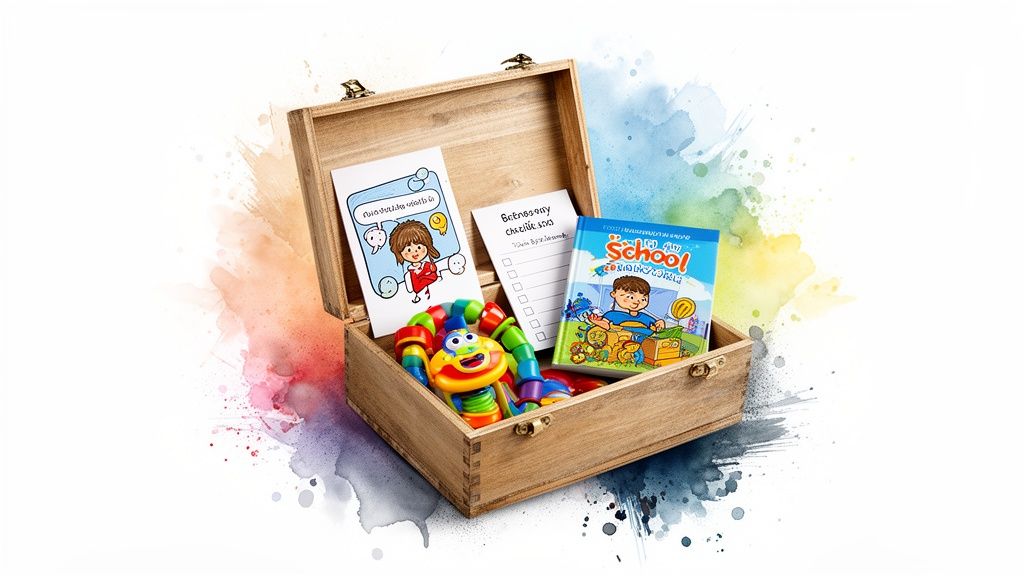
When you’re supporting a child on the spectrum, a cookie-cutter approach just won’t cut it. Every child with autism in the UAE brings their own unique mix of strengths, interests, and challenges to the table. This is why a personalized, individualized plan isn’t just a nice-to-have—it’s the single most powerful tool for unlocking their potential.
Think of it this way. Giving every child the same set of LEGO instructions will only ever produce the same, single result, regardless of what they actually dream of building. An individualized plan, on the other hand, is like giving your child an infinite box of bricks and a master builder to help them construct whatever they can imagine, one piece at a time.
This tailored strategy means therapy is never about forcing a child into a predetermined box. It’s about understanding their unique world and building a bridge from where they are today to where they can go tomorrow, celebrating every small win along the way.
What Is an Individualized Plan?
An Individualized Education Plan (IEP) or therapy plan is a formal document that serves as the blueprint for your child’s development. It’s a collaborative masterpiece, co-created by the team of experts you’ve gathered, with you—the parent—as the most vital contributor. Crucially, this plan is a living document, designed to grow and adapt right alongside your child.
It goes so much deeper than a simple list of activities. A truly effective plan sets out specific, measurable goals and maps the exact evidence-based strategies that will be used to reach them. For example, a vague goal like “improve communication” becomes something concrete: “The child will use a two-word phrase to request a desired item in three out of five opportunities.” Now that’s a target we can work towards.
The Power of Collaboration
Putting this plan together is a team sport, and you are the team captain. The process unites everyone invested in your child’s success, allowing them to share insights and agree on a clear, unified path forward.
This team effort typically involves key players like:
- Parents and Caregivers: You offer the deep, invaluable insight into your child’s personality, history, and what truly motivates them at home.
- Therapists: Speech, Occupational, and ABA therapists bring their specialized expertise to set functional, skill-based goals.
- Educators: Teachers and school staff help ensure that therapy goals are relevant to the demands and opportunities of the classroom.
This synergy means everyone is working from the same playbook, reinforcing skills consistently across every part of your child’s life—from the therapy center to the classroom to your own living room. It cuts through confusion and creates a predictable, supportive world where your child can truly thrive.
The core principle of an individualized plan is simple but profound: We meet your child exactly where they are, not where we think they should be. It’s about honoring their unique profile and building on their strengths to foster genuine confidence and growth.
Making Goals Meaningful and Functional
The ultimate aim of any therapy is to help your child navigate the real world with more confidence, independence, and joy. That’s why every single objective in an individualized plan has to be functional and meaningful to your child’s daily life.
We don’t just teach skills in a vacuum. We tie them directly to real-world situations, ensuring that what a child learns in a session actually translates into practical abilities at home, at school, and out in the community.
Here’s what functional goals look like in action:
- Instead of: Identifying colors on flashcards.
- Functional Goal: Using color words to ask for the right crayon (“I want the blue one”) during art time with a friend.
- Instead of: Aimlessly stacking blocks.
- Functional Goal: Learning to take turns building a tower with a sibling, which teaches cooperation and shared attention.
By keeping the focus on these practical outcomes, you become your child’s most effective advocate. You ensure their plan isn’t just about checking off boxes, but about truly unlocking a future filled with possibility. Every step forward becomes a meaningful one.
Navigating Schools and Support Systems in the UAE
Finding the right educational path for your child is one of the most important decisions you’ll make. Here in the UAE, the options are growing, but figuring out the system can feel overwhelming. It’s about more than just academics; it’s about finding a place where your child feels safe, understood, and truly has a chance to thrive.
Think of it like finding the perfect garden for a unique flower. Some flowers do brilliantly in a big, diverse garden with a bit of extra care, while others need the controlled, nurturing environment of a specialized greenhouse. The goal is the same: find the right conditions for your child to bloom.
Choosing the Right Educational Environment
When it comes to education for autistic children in the UAE, you’ll generally find two main paths. The best choice really comes down to your child’s specific needs, personality, and what feels right for your family.
- Mainstream Schools with Inclusion Support: Many private schools, particularly in Dubai and Abu Dhabi, are stepping up with strong inclusion programs. They welcome students of determination and provide support through dedicated Learning Support Assistants (LSAs) or shadow teachers. This model lets your child learn alongside their peers in a standard classroom, with one-on-one help to get through the social and academic hurdles.
- Specialized Centers and Schools: For children who need more intensive, focused support, specialized centers are a fantastic option. Their entire curriculum is built for students with developmental differences. You’ll find smaller class sizes, therapies integrated right into the school day, and staff who live and breathe special education. It’s a setting where every part of the day is designed to support growth.
As you weigh these options, learning about strategies for creating inclusive learning environments can give you a great framework for what to look for and how to advocate for your child, no matter the setting.
Understanding the Role of Regulatory Bodies
You’re not on this journey alone. Educational authorities across the Emirates are actively pushing for inclusive education, setting the standards that schools must follow.
In Dubai, the Knowledge and Human Development Authority (KHDA) is a powerful ally. The KHDA requires schools to have clear, actionable inclusion policies and provides the framework for them. In Abu Dhabi, the Department of Education and Knowledge (ADEK) does much the same, ensuring schools are properly equipped to support all students. Think of these organizations as your partners in accountability, making sure schools live up to their promises.
A school’s commitment to inclusion isn’t just about a policy tucked away in a binder. It’s a culture you can feel the moment you walk in—a genuine belief from the staff that every single child belongs and has the potential to succeed.
Managing Health Insurance and Therapy Claims
Getting the right support means tackling the financial side, which can be a real challenge. The cost of care is a major factor for families, with monthly expenses for school fees, a shadow teacher, and therapies adding up quickly.
This is why getting to know your health insurance policy inside and out is non-negotiable. Here’s a quick checklist of what to dig into:
- Coverage for Therapies: Does your plan cover ABA, speech, and occupational therapy? Be sure to check for limits on the number of sessions or an annual cap on the total amount.
- Diagnostic Coverage: Ask if the policy covers the initial assessments and diagnostic services from developmental pediatricians or educational psychologists.
- Direct Billing vs. Reimbursement: This is a big one. Find out if your preferred therapy centers can bill the insurance company directly. If they can’t, you’ll have to pay out-of-pocket and claim it back, so make sure you know exactly what paperwork is needed.
To manage this well, you have to become an expert on your own policy. Don’t be shy about calling your insurance provider and asking pointed questions. Being proactive is the best way to maximize your benefits and make sure your child’s access to therapy is consistent and uninterrupted.
Your Questions About Autism in the UAE Answered
As a parent, navigating the world of autism support naturally comes with a lot of questions. Getting clear, straightforward answers is one of the most important things you can do as you move forward. We’ve put together this section to tackle some of the most common questions we hear from families across the UAE, offering practical advice to help you feel confident and prepared.
Think of it as your quick reference guide, here to reinforce the key takeaways from our overview and bring you a little extra clarity.
How Soon Should I Seek an Assessment if I Suspect Autism?
If you have even the slightest concern about your child’s development, the best time to act is right now. The evidence we have is overwhelming: early intervention leads to the best possible outcomes for children with autism in the UAE. It’s also important to remember that you don’t need a formal diagnosis to start getting support.
Your first step is simply to share what you’ve been seeing. Talk to your pediatrician or get in touch with an early intervention center. An initial screening can quickly highlight whether a full assessment is the right next step and, more importantly, can give you immediate strategies to start helping your child at home.
What Is the Difference Between Modern ABA and Play Therapy?
This is a fantastic and very common question. It’s helpful to know that today’s Applied Behavior Analysis (ABA) therapy for young children looks very different from the rigid, drill-based methods of the past. It’s delivered through a positive, play-based model.
Modern ABA therapists cleverly use your child’s favorite toys, games, and activities to teach new skills in a way that feels natural and motivating. While traditional play therapy is often less structured, today’s ABA masterfully weaves the joy of play together with proven, evidence-based strategies. This approach helps your child reach the specific developmental goals in their individual plan, all while they’re simply having fun.
How Do I Choose the Right Early Intervention Center in the UAE?
Choosing a center is one of the biggest decisions you’ll make, and it’s worth taking your time. The key is to find a place that has a multidisciplinary team—meaning Speech, Occupational, and ABA therapists—all working together under one roof. This integrated setup ensures your child gets coordinated, holistic care.
A truly great center sees the parent as the most important member of the therapy team. They should actively seek your input, value your insights, and work collaboratively with you to set meaningful goals for your child.
When you visit potential centers, ask them about how they create individualized plans. The environment should feel warm, professional, and engaging. But most importantly, look for a team that really listens to you and makes you feel like an essential partner in the entire process.
At Georgetown early intervention center, we believe every child’s therapy plan should be as unique as they are. Our multidisciplinary team of educational psychologists, occupational therapists, speech therapists, and play-based ABA therapists collaborates with you to create a truly individualized plan that helps your child thrive. Learn more about our approach.