
You may be here because your child seems bright, curious, and engaged, yet something about movement doesn't feel quite right. Maybe your baby strongly prefers looking to one side. Maybe your toddler avoids climbing, falls often, or tires quickly on the playground. Maybe preschool has raised questions about posture, balance, or coordination, and now you're trying to make sense of what support helps.
That uncertainty is hard. Parents often tell me the most stressful part isn't only the delay itself. It's trying to piece together separate appointments, separate opinions, and separate goals into one clear plan for their child.
Your Guide to Integrated Child Development in Dubai
A common pattern goes like this. A parent first notices a small movement difference at home. Their child may be late to crawl, dislike tummy time, walk on their toes, or struggle to sit upright during play. Then other concerns appear around communication, sensory regulation, behaviour, or school readiness. The family starts searching for answers and quickly finds that services are often described one by one, as if movement, attention, speech, and learning happen in separate boxes.

Many parents feel stuck during this process. They often coordinate between a physiotherapist, an occupational therapist, and a speech therapist, yet still find themselves wondering who is evaluating the child as a whole. Movement influences far more than just walking or running. It impacts sitting for learning, participating in play, utilizing both hands, managing transitions, and developing confidence.
In Dubai, that gap in coordination is real. A 2025 Dubai Health Authority report noted that only 35% of early intervention centres offer integrated physio-ABA programmes, and team-based models can lead to 80% faster gains in school readiness compared with siloed therapy, according to Anatomy Rehab's discussion of paediatric physiotherapy in Dubai.
Why parents often notice movement first
Movement is visible. You can see when your child avoids rolling, climbs awkwardly, sits in a W-position, or struggles to keep up with peers. That's often the first clue that development needs a closer look.
For infants, even everyday routines can raise questions. If you're trying to understand early movement foundations, this Hiccapop tummy time resource gives practical guidance in simple language.
Important: Physiotherapy works best when it isn't isolated from the rest of a child's development.
Families looking for a broader developmental pathway often explore a coordinated early intervention programme because it connects movement goals with communication, play, behaviour, and learning, instead of treating each area separately.
What Is Pediatric Physiotherapy
Pediatric physiotherapy is best understood as movement support for children in the context of development. I often describe it to parents as having a skilled movement coach for kids. The therapist studies how your child moves, why certain movements are difficult, and how to build stronger, more efficient patterns through play and guided activity.
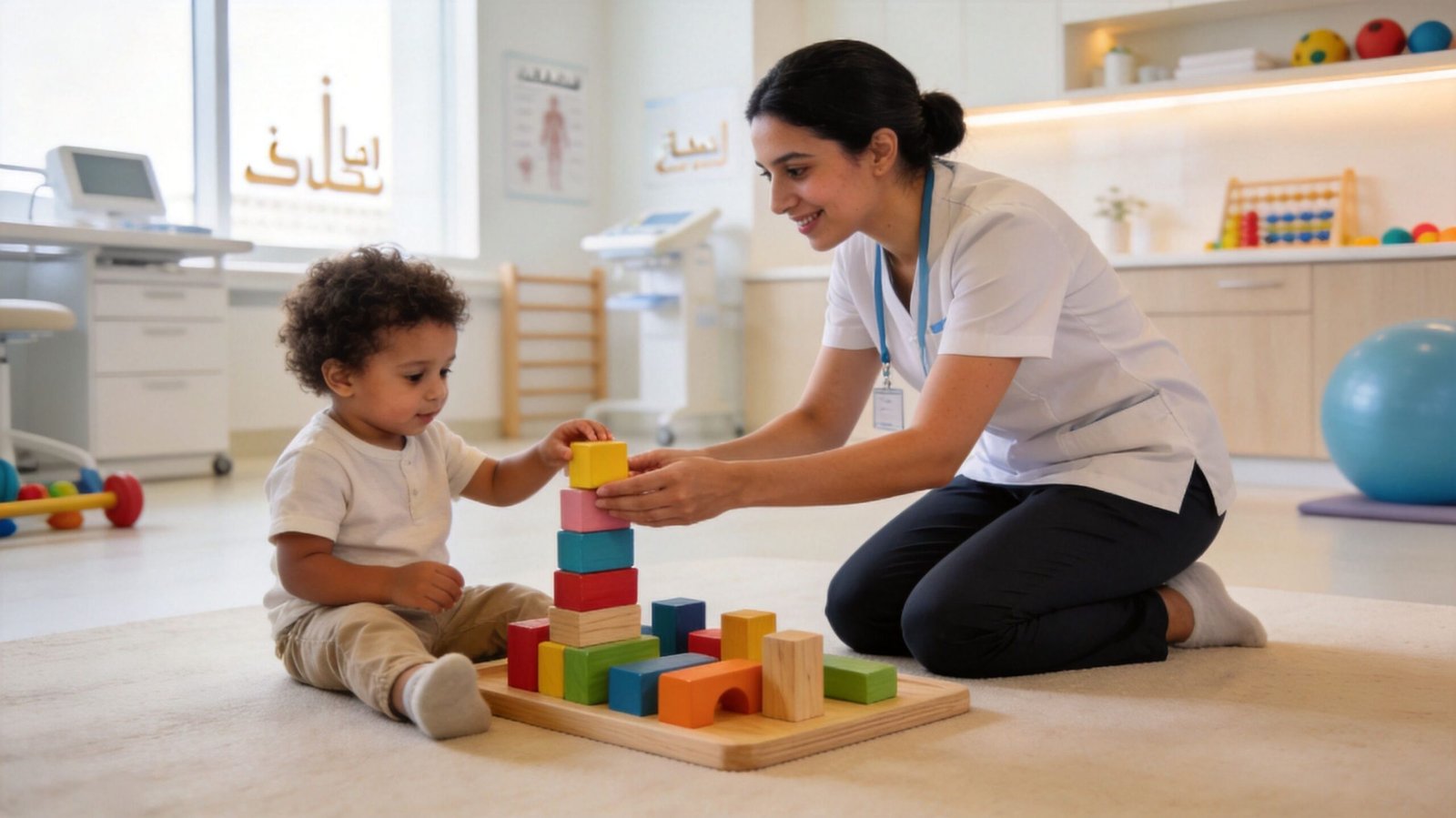
Adults usually come to physiotherapy because something hurts or because they're recovering from an injury. Children are different. A child may need help learning to roll, sit, crawl, run, jump, balance, coordinate both sides of the body, or keep up with daily routines at home and school. The aim isn't only to correct a movement pattern. It's to help the child participate more fully in life.
What makes it different from adult physiotherapy
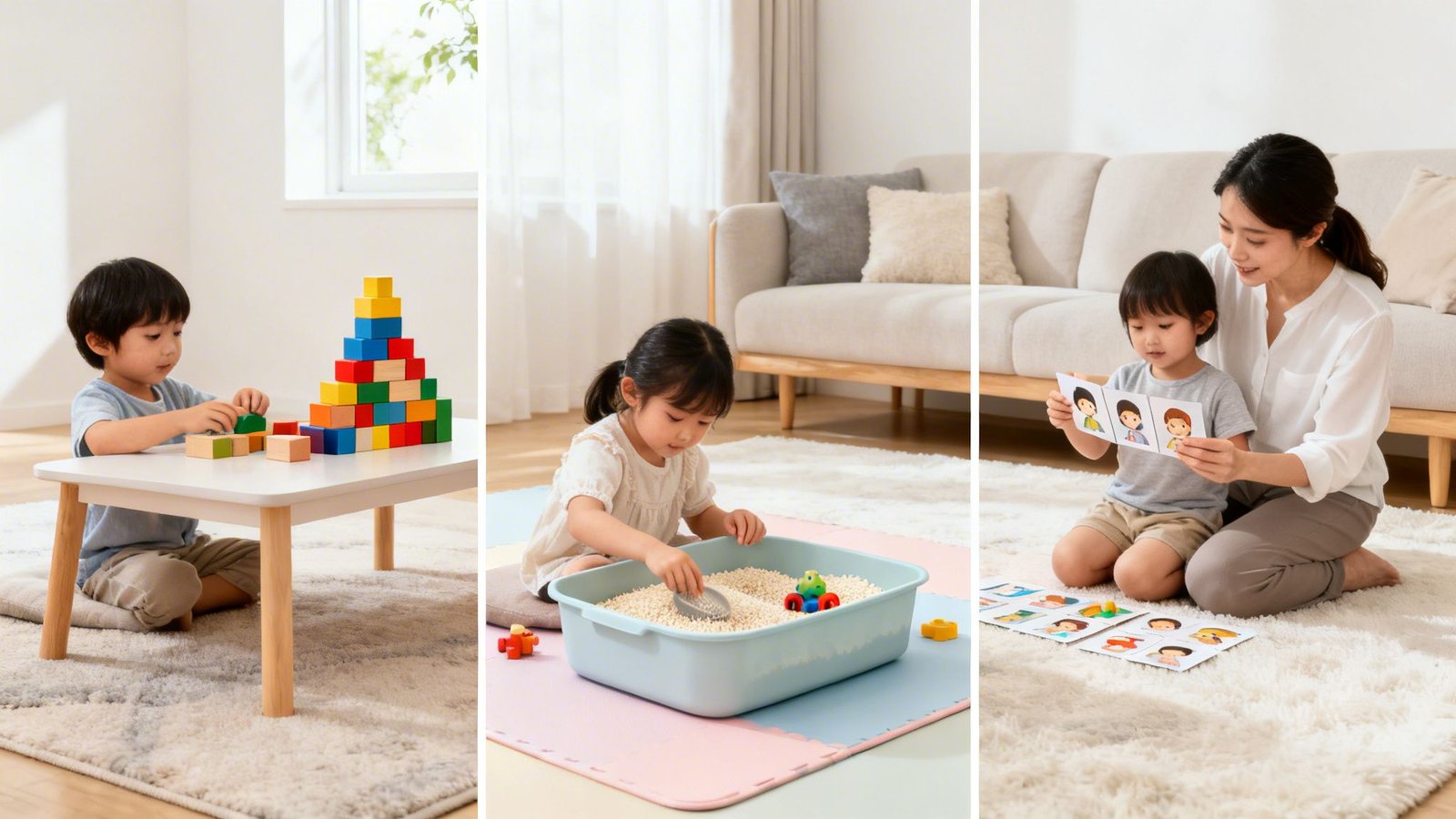
Children don't learn best through repetition that feels clinical and dry. They learn through relationships, routines, and play. So a pediatric physiotherapist may use tunnels, blocks, swings, stepping stones, therapy balls, songs, obstacle courses, and floor games to work on very serious goals in a child-friendly way.
A session might look playful from the outside, but each activity is chosen with purpose.
- Balance practice: standing on a soft surface while reaching for toys
- Core strength work: climbing over cushions and crawling through tunnels
- Postural control: sitting on a therapy ball during a game
- Coordination: stepping, kicking, catching, and changing direction
What parents are really hoping for
Most parents aren't coming in because they want a perfect squat pattern or textbook posture. They want daily life to feel easier for their child.
That usually means goals like these:
- Greater independence: getting on and off the floor, using stairs, dressing, sitting well for meals
- Better participation: joining nursery activities, playground games, and circle time
- More confidence: trying movement without fear, frustration, or avoidance
- Improved comfort: reducing strain from poor alignment, weakness, or awkward movement habits
Pediatric physiotherapy isn't about making a child move like every other child. It's about helping that child move more comfortably, effectively, and confidently in their own world.
Signs Your Child Might Need a Physiotherapist
Parents often ask, “Am I overthinking this?” Sometimes yes, but often your instincts are picking up something important. You don't need to diagnose the problem yourself. You only need to notice patterns.
Infants from birth to 12 months
Watch for movement habits that stay one-sided or seem difficult to change.
- Head preference: your baby strongly turns to one side most of the time
- Tummy time distress: they struggle to lift the head or bear weight through the arms
- Flattening on one side of the head: especially if it appears with a head-turn preference
- Stiffness or floppiness: they feel unusually rigid or unusually loose when handled
- Delayed floor skills: rolling, pushing up, sitting, or transitioning between positions seems hard
Toddlers from 1 to 3 years
At this stage, physiotherapy concerns often show up during movement exploration.
- Late walking or unstable walking: they seem hesitant, wide-based, or unusually wobbly
- Frequent falls: more than you'd expect for their stage, especially on flat ground
- Toe walking: persistent toe walking after age 2 can be worth assessing
- Avoiding climbing: they resist stairs, soft play, or playground equipment
- Asymmetry: one leg, arm, or side of the body seems favoured
Practical rule: If a movement issue affects daily routines, play, or confidence, it's worth asking for an assessment.
Preschoolers from 3 to 5 years
By preschool age, concerns may become clearer in group settings.
Some children look noticeably more clumsy than peers. Others tire quickly, sit in awkward positions, struggle to hop or jump, or avoid physical games. Teachers may mention poor posture on the carpet, difficulty with ball skills, or trouble keeping up during outdoor play.
A child doesn't need to have a formal diagnosis to benefit from support. If movement seems to limit learning, play, independence, or comfort, a pediatric physiotherapy assessment can help clarify what's going on.
Common Conditions Addressed by Pediatric Physiotherapy
Pediatric physiotherapy dubai services support a much wider range of needs than many parents expect. It isn't only for sports injuries or severe physical disability. Good pediatric physiotherapists work with babies, toddlers, children, and teens across orthopedic, neurological, developmental, and respiratory presentations.
Leading Dubai hospitals such as Mediclinic City Hospital treat children from 0 to 16 years across a broad range of conditions, including torticollis, cerebral palsy, developmental delays, genetic conditions such as Down syndrome, and respiratory issues including cystic fibrosis, as outlined on Mediclinic City Hospital's paediatric physiotherapy page.
How physiotherapy helps in everyday terms
Some conditions are diagnosed early. Others become clear gradually as motor milestones unfold. What matters is not only the label, but the child's functional picture. How do they move? What do they avoid? What becomes tiring, frustrating, or limiting?
Here are a few common examples:
- Developmental delays: The child may need support with strength, balance, transitions, crawling, walking, or coordination. Therapy builds the underlying motor foundations for daily participation.
- Cerebral palsy: Physiotherapy works on posture, mobility, muscle control, positioning, transfers, and practical movement skills that matter at home and school.
- Torticollis: Treatment usually focuses on improving neck movement, encouraging symmetrical positioning, and helping the baby develop balanced head and trunk control.
- Hypotonia: A child with low muscle tone may appear floppy, tire easily, or struggle with posture. Therapy strengthens stability and functional movement.
- Genetic syndromes: Children may need support for delayed gross motor skills, endurance, alignment, and movement planning.
- Coordination difficulties: Physiotherapy can help children who seem awkward, trip often, avoid physical play, or find motor planning hard.
Pediatric physiotherapy goals for common conditions
| Condition | Primary Physiotherapy Focus |
|---|---|
| Developmental delay | Building milestone skills such as sitting, crawling, standing, walking, and jumping |
| Cerebral palsy | Improving posture, mobility, balance, transfers, and functional independence |
| Torticollis | Restoring neck range, promoting symmetry, and improving head control |
| Hypotonia | Strengthening postural stability, endurance, and movement confidence |
| Genetic conditions | Supporting gross motor development, alignment, and participation |
| Coordination disorder | Improving planning, balance, timing, and body awareness |
When another specialist should be involved
Sometimes movement concerns are part of a bigger neurological or developmental picture. That's when collaborative care becomes especially valuable. A child with muscle weakness, unusual tone, asymmetry, regression, or complex motor delay may also need medical input from a paediatric neurologist in Dubai.
If the movement problem is the first thing you see, it may still be only one part of the story.
That's why the strongest therapy plans don't stop at “What exercise should we do?” They ask, “What does this child need to function better across the whole day?”
The Therapy Journey Assessment and Techniques
The first appointment usually feels easier once parents know what to expect. Most children aren't being “tested” in a harsh or formal way. They're being observed, guided, and understood through play, movement, and parent conversation.
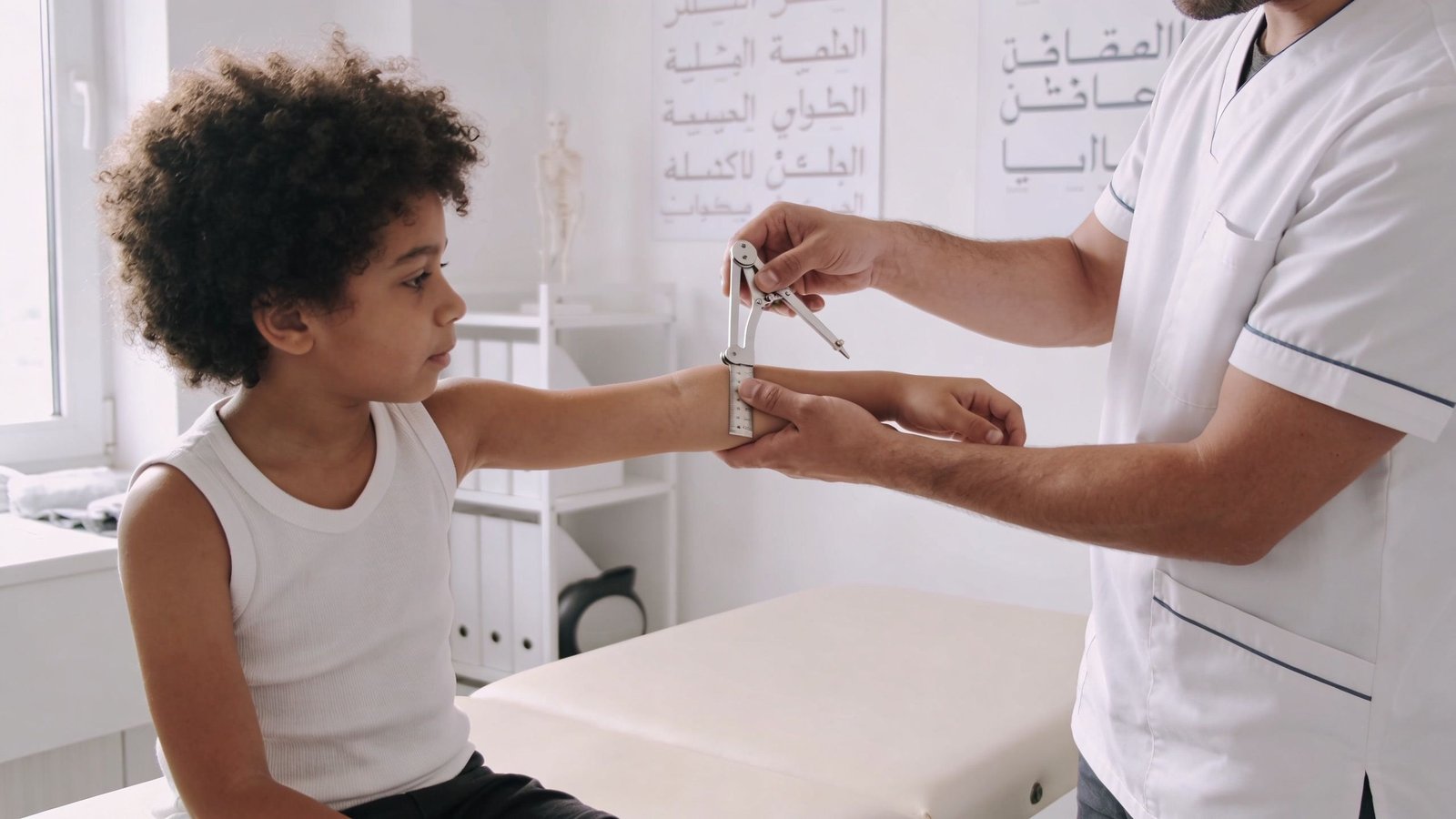
What happens during the assessment
A good pediatric physiotherapy assessment starts with listening. Parents describe what they've noticed, what worries them, what routines are difficult, and what they hope will improve. That history matters because the same diagnosis can look very different from one child to another.
Then the therapist watches how your child moves. Depending on age, that may include floor play, sitting, transitions, standing, walking, climbing, reaching, balance tasks, or ball play. The therapist is looking at more than one skill at a time. They're noticing muscle tone, joint alignment, symmetry, coordination, endurance, postural control, and how your child solves movement problems.
What the therapist is trying to answer
The assessment usually leads to a few practical questions:
- What can the child do now?
- What movements are difficult or inefficient?
- What may be contributing to that difficulty?
- Which goals matter most to the child and family?
- Which other professionals should work alongside physiotherapy?
For many children, physiotherapy doesn't stand alone. If a child has sensory challenges, hand function difficulties, or self-care delays, collaboration with an occupational therapist in Dubai can make the plan much more functional and realistic.
What treatment looks like in real life
Once goals are clear, therapy becomes active and purposeful. The therapist chooses activities that match the child's stage and needs.
A session may include:
- Hands-on facilitation: guiding the body into a better movement pattern
- Therapy balls: building trunk control, balance reactions, and body awareness
- Obstacle courses: practising sequencing, coordination, stepping, crawling, and climbing
- Balance equipment: training postural control in a playful way
- Home strategies: adapting everyday routines so practice continues outside the clinic
Children often don't realise how much work they're doing because the tasks feel like games. That's not a trick. It's good pediatric practice.
Neurodevelopmental Therapy and autism
For children with autism spectrum disorder, movement challenges are common and often under-recognised. According to American Center for Psychiatry and Neurology's discussion of physiotherapy for children with autism, up to 80% of children with ASD have motor delays, and Neurodevelopmental Therapy (NDT) is a key technique used to support them. The same source notes 25 to 40% improvements in balance scores after 12 to 24 weeks of consistent therapy.
NDT is a hands-on approach. In plain language, the therapist helps the child experience a more organised way of moving. Instead of telling a child to “stand straight” or “balance better,” the therapist uses touch, positioning, and carefully chosen tasks to make the movement easier to feel and repeat.
A child might practise stepping over low obstacles, holding balance in supported standing, reaching while seated on a therapy ball, or walking across a balance beam with guidance. For some children, this work also reduces frustration because their bodies start responding in a way that feels more predictable and successful.
Better movement can support more than mobility. It can improve participation, attention during seated tasks, and confidence in play.
Navigating Pediatric Physiotherapy Services in Dubai
Finding pediatric physiotherapy dubai services often starts with one practical question. Do you go through the public system, a hospital, or a private therapy centre? The answer depends on your child's age, your goals, your insurance, and whether you need multidisciplinary support.
Public and private routes
The Dubai Physiotherapy & Rehabilitation Centre under the Dubai Health Authority offers pediatric physiotherapy for children aged 2 years and older, with 60-minute sessions for expatriates priced at 48.75 AED, according to the Dubai Health Authority service document. That makes it a valuable public option for many families, especially when cost is a major factor.
Private settings are different in focus. They may offer more flexibility in scheduling, more individual tailoring, and easier coordination across disciplines when a child also needs support for communication, sensory regulation, behaviour, or school readiness.
What to ask before you book
A few practical questions can save time:
- Access: Do you need a paediatrician's referral, or can you book directly?
- Age fit: Does the centre see your child's age group and diagnosis profile?
- Session style: Is treatment one-to-one and family-centred?
- Coordination: Can the physiotherapist communicate with your child's other therapists?
- Home programme: Will you be shown what to do between visits?
Insurance and planning
Insurance cover varies by policy, so it's worth checking early. Ask whether pediatric physiotherapy is included, whether a referral is needed, whether pre-authorisation applies, and whether there are limits on approved sessions. If your child needs several types of therapy, coordinated scheduling can make a major difference to family life.
For some families, the most effective setup is blended. They may use a cost-effective public option for selected needs while using a private team for more integrated developmental planning.
How to Choose the Right Physiotherapy Center
Parents often feel pressure to pick quickly, but this decision is worth slowing down for. The right centre doesn't just provide exercises. It provides clarity, coordination, and a plan that fits your child.
Questions worth asking
- Does every child get an individualised therapy plan? A strong centre should explain how goals are chosen for your child, not for a generic diagnosis.
- How do your physiotherapists work with speech, OT, and ABA teams? If the answer is vague, therapy may stay fragmented.
- How is progress measured and shared with parents? You want more than “they're doing better.” You want examples tied to function.
- What does parent involvement look like? Families should leave with practical strategies, not confusion.
- How do you adapt sessions for children who are anxious, sensory-seeking, or easily overwhelmed? This matters more than many parents realise.
Signs of a thoughtful centre
Look for a place that can explain movement in plain language, connect therapy goals to real life, and welcome your observations as part of the plan. The best clinicians don't make parents feel passive. They help you understand what your child is working on and why it matters.
A centre is also more likely to be a good fit if it can answer both clinical and practical questions calmly. You shouldn't feel rushed when asking how your child's posture affects sitting for learning, or whether a movement issue may affect dressing, feeding, handwriting, or playground confidence later on.
Your Child's Partner in Progress FAQs
When pediatric physiotherapy is done well, it becomes more than a weekly session. It becomes part of a coordinated developmental plan. The child builds movement skills. The family understands what to practise. Other professionals work toward shared goals. That's where progress usually becomes more meaningful and easier to sustain.
Parents don't need to know all the clinical language to advocate well. You only need to keep asking the right questions, noticing your child's daily patterns, and choosing support that looks at the whole child rather than one isolated skill.
FAQs
How does physiotherapy fit with speech, OT, and ABA?
These services often overlap in daily function. A child needs postural control to sit and attend, body awareness to imitate actions, coordination to join play, and regulation to participate in learning. When therapists collaborate, they can work toward shared goals instead of pulling the child in separate directions.
How is progress measured in an integrated model?
Progress should be visible in real life, not only during sessions. That might include better transitions, improved balance on stairs, longer sitting tolerance, more confident playground play, easier dressing, or better participation in nursery routines. A good team also adjusts goals as the child changes.
What is the parent's role?
Parents are central. You know your child's routines, motivators, stress points, and small wins. The most useful therapy plans include home ideas that fit real family life, rather than adding unrealistic pressure.
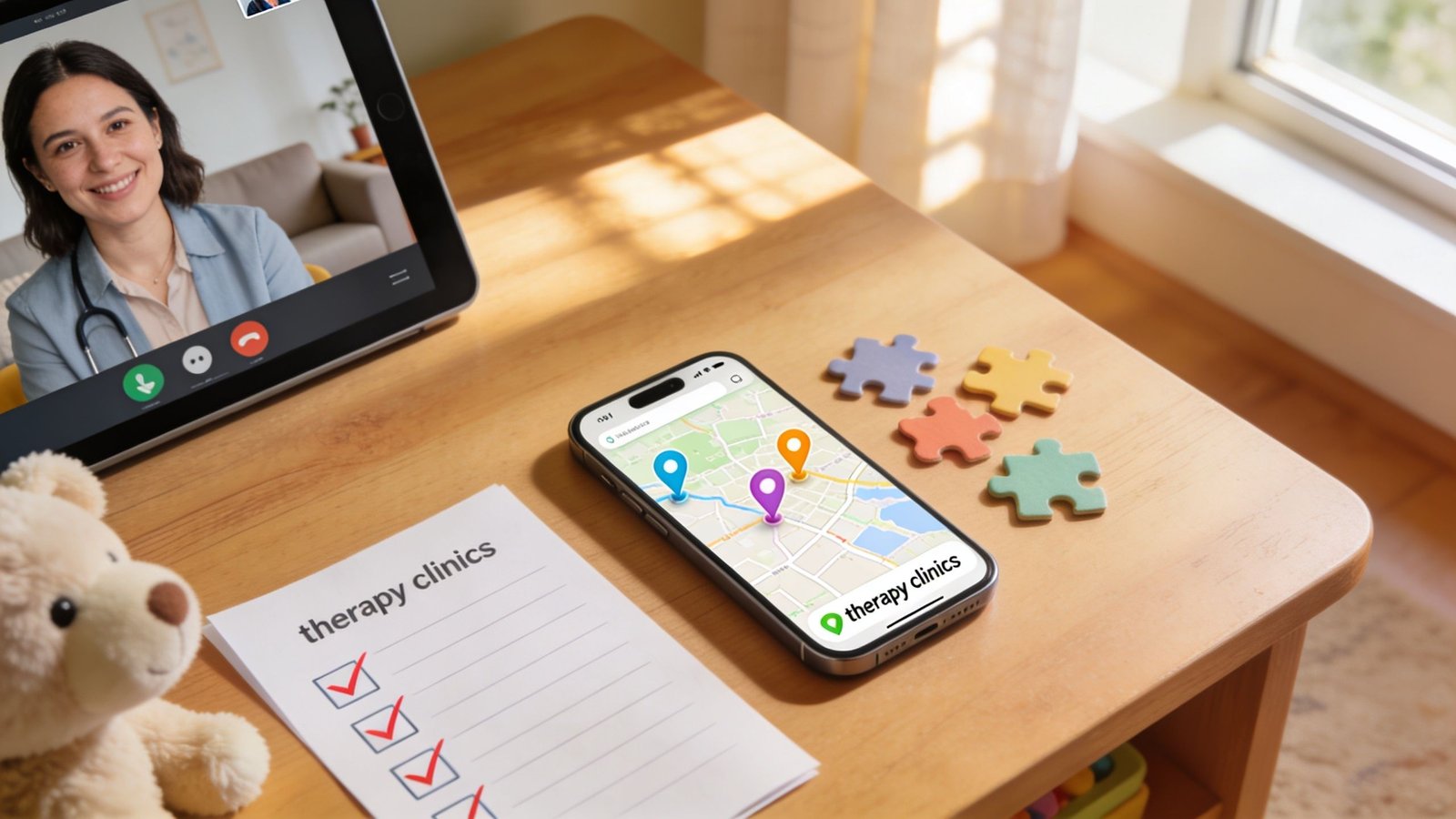
Can tele-physio or hybrid care help?
For some families, yes. In the UAE, 62% of parents of children needing therapy cite transport as a barrier, and hybrid models that combine in-person sessions with AI-assisted tele-physio have shown 40% better adherence and 55% improved parental involvement in AE trials, according to Bridges Speech Center's discussion of developmental delay treatment in Dubai.
Does every child need long-term physiotherapy?
Not always. Some children need short-term support with a focused home programme. Others benefit from longer care because their needs are ongoing or part of a broader developmental profile. The right timeline depends on the child's function, goals, and response to therapy.
If you're looking for coordinated support rather than isolated appointments, Georgetown early intervention center offers a multidisciplinary environment with educational psychology, occupational therapy, speech therapy, and play-based ABA, with individual plans built around each child's unique developmental needs.