

Welcome to the world of sensory play, a powerful tool for your child’s growth right here in the heart of Dubai. At its core, sensory play is any activity that lets your child explore the world through their senses—touch, sight, sound, and even movement. It’s how children naturally learn, and it’s a cornerstone of early development.
What Is Sensory Play and Why Does It Matter in Dubai

Think of sensory play as learning by doing. When a child squishes play-doh, listens to different musical instruments, or sorts colorful blocks, they are doing so much more than just having fun. They are literally building critical neural pathways in their brain, laying the groundwork for all future learning and complex thinking.
This hands-on approach is especially important in a dynamic, stimulating city like Dubai. It gives children a focused way to process the countless sights, sounds, and textures of their environment, helping them feel grounded and secure. Every interaction becomes a small experiment, teaching them about cause and effect, problem-solving, and the world around them.
Building Foundational Skills Through Play
Sensory play is far more than just a way to pass the time; it’s a crucial engine for development. These experiences are intentionally designed to support a child’s growth in several key areas, making them an essential part of early childhood education and therapy.
The benefits are incredibly wide-ranging:
- Cognitive Growth: Simple activities like sorting objects by texture or color help children develop classification skills and begin to grasp abstract concepts.
- Language Development: As children describe what they’re experiencing—”The sand is gritty,” or “The water feels cold”—they are actively building their vocabulary and communication skills.
- Motor Skills: Scooping, pouring, and manipulating small objects are fantastic for enhancing fine motor control, which is essential for learning to write and performing self-care tasks.
- Emotional Regulation: Calming activities, like playing with water or a quiet sensory bin, can help a child learn to manage their emotions and self-soothe.
The Connection to Learning and Therapy
Sensory play is a fantastic way to engage children in kinesthetic learning, which is all about processing information through movement and tactile experiences. This is precisely why it’s a cornerstone for school readiness, giving children the physical and cognitive tools they need to thrive in a classroom setting.
For children with specific developmental needs, like autism or sensory processing challenges, structured sensory play takes on even greater importance. It offers a predictable and safe way for them to explore sensory input that might otherwise feel overwhelming.
In a therapeutic setting, this kind of play is both purposeful and goal-oriented. Therapists across Dubai use these activities to help children meet specific developmental milestones, from improving social interaction to better managing sensory sensitivities. This is just the beginning of understanding how this powerful approach can be tailored to your child’s unique journey.
How Sensory Activities Build a Stronger Brain

When you see a child deep in sensory play, you’re watching a little neuroscientist at work. It might look like simple fun, but what’s happening on the inside is incredibly complex. Every new texture they feel, every sound they hear, and every movement they make fires up their brain, building and reinforcing its internal architecture.
Think of it like building a city’s road network. A single path gets you from point A to point B, but a dense, interconnected web of highways and side streets allows for much faster and more efficient travel. Sensory play does the same for the brain, weaving a rich network of neural pathways that underpin everything from problem-solving and memory to emotional control.
These connections are the literal foundation for all future learning. A toddler carefully stacking blocks isn’t just learning about balance; they’re getting a hands-on lesson in physics and spatial awareness. This process is what strengthens the brain’s ability to take in information, make sense of it, and act on it.
Forging Pathways for Lifelong Skills
This brain-building isn’t just an abstract concept—it translates directly into the real-world skills children need to navigate their world successfully. It’s a practical tool for developing core abilities, especially in motor skills, language, and emotional regulation.
Sensory activities give the brain the exact input it needs to get organized. A well-organized brain can filter out distracting noise, stay focused on a task, and manage big feelings more effectively. For a child with sensory sensitivities, this can be an absolute game-changer.
This organized state helps children build a much stronger mind-body connection. They start to understand the signals their body is sending them and learn how to respond, whether that means finding a quiet corner when overwhelmed or seeking out movement when they need to focus.
From Motor Skills to School Readiness
A child’s independence and success in school rely heavily on their fine and gross motor skills. And what’s the most natural and engaging way to develop them? Sensory play, of course.
- Fine Motor Skills: Think about activities like threading beads, squeezing play-doh, or pinching tiny grains of rice. These actions strengthen the small muscles in the hands and fingers—the very same ones needed to hold a pencil, button a shirt, or use a fork.
- Gross Motor Skills: When kids are running, jumping, and swinging, they’re getting vital vestibular and proprioceptive input. This helps them develop balance, coordination, and a sense of where their body is in space, preparing them for everything from the playground to sports.
When these skills are strong, children walk into the classroom with a quiet confidence. They can sit still for story time, hold a crayon correctly, and join in group activities, setting the stage for a positive start to their academic journey. It’s worth noting that beyond sensory play, other brain-based approaches like neurotherapy can also offer unique ways to enhance cognitive function and overall well-being.
The Growing Recognition of Sensory Play in Dubai
Here in Dubai, the secret is out. We’ve seen a massive surge in the popularity of sensory play, both in nurseries and specialized centers. This isn’t just a feeling; the numbers back it up. The market for toddler and kids’ toys in the UAE is projected to hit AED 1.2 billion by 2025, largely driven by parents seeking out sensory-specific items that support brain development.
In fact, one local nursery recently shared that 92% of parents now make sensory activities a regular part of their weekly routine. This shows a real shift in understanding—parents and educators get it. This isn’t just another trend. It’s a fundamental part of early childhood development that builds stronger, more resilient brains.
How Therapists Turn Sensory Play into a Powerful Tool
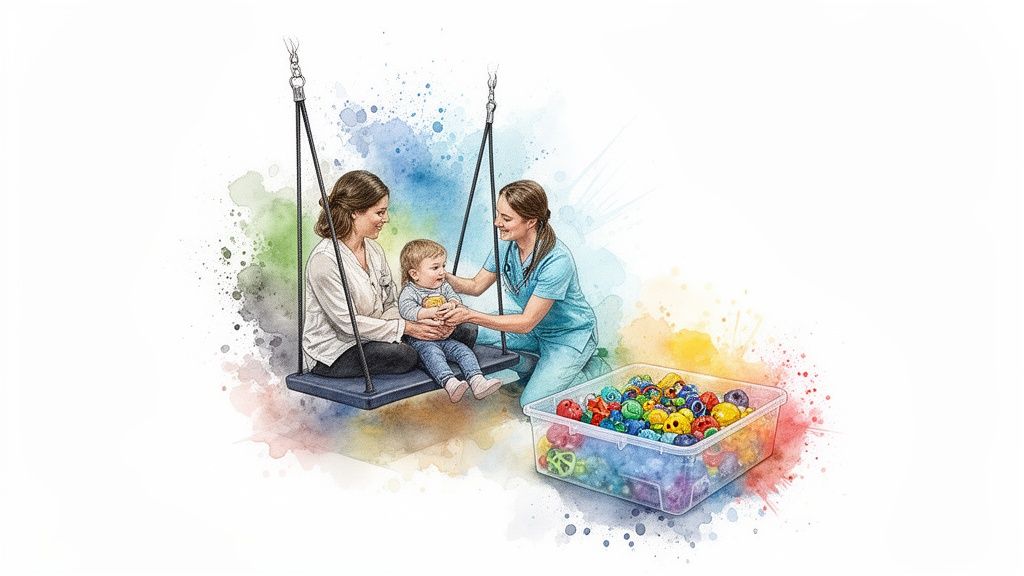
While sensory play at home is all about fun and exploration, in a therapeutic setting, it becomes something more. It’s a highly structured, goal-oriented tool where every activity is chosen for a specific reason—to help a child build critical skills and navigate developmental hurdles. It stops being just play and starts being a targeted intervention.
Think of a therapist’s toolkit. It’s not filled with medical instruments, but with textures, movements, and sounds. Each element is carefully selected to give a child the exact sensory input they need to help reorganize their nervous system, sharpen their focus, or engage more effectively with the world. This is where play becomes a real pathway to progress.
Here in Dubai, where over 85% of the population comes from diverse expatriate backgrounds, sensory play has become a cornerstone of early intervention. Local clinics and therapists use play-based sensory integration to help children manage the often overwhelming stimuli of our fast-paced city. The results are compelling. Local centers report that after just 12 weeks of this kind of therapy, 78% of children show marked improvement in sensory processing, with major gains in behavior regulation and fine motor skills.
Occupational Therapy and Sensory Integration
For an Occupational Therapist (OT), sensory play is the main event. It’s the primary way they deliver sensory integration therapy, a method designed to help a child’s brain better process and respond to the information it receives from the senses. An OT doesn’t just see a child who dislikes loud noises; they see a child with an over-responsive auditory system that needs support to calm down and regulate.
Here’s what that looks like in action:
- The Goal: Help a child who gets easily overwhelmed in a busy Dubai mall.
- The Activity: The OT might start with a weighted blanket for calming deep pressure, then move to gentle swinging for organizing vestibular input.
- The Outcome: These activities help the child’s nervous system find its center, making it easier for them to filter out excessive noise and movement next time they’re in a crowd.
Through this kind of carefully guided play, the therapist helps a child build tolerance and develop coping strategies, turning what was once a source of distress into a manageable experience. You can learn more about the world of occupational therapy in Dubai and its role in child development.
Speech Therapy and Tactile Exploration
A Speech and Language Therapist (SLT) can use sensory play to unlock communication. For a child with a speech delay, the motivation to talk often comes from wanting to share an exciting discovery. What better way to create that excitement than through a hands-on sensory activity?
Picture this:
- The Goal: Encourage a non-verbal child to try new words.
- The Activity: The SLT sets up a “treasure bin” filled with cool, smooth water beads and hides small animal toys inside.
- The Outcome: As the child digs their hands in and pulls out a “frog,” the therapist models the word. The sheer joy of the tactile experience motivates the child to imitate the sound, forging a strong link between a physical sensation and a new piece of language.
Applied Behavior Analysis and Play-Based Learning
Applied Behavior Analysis (ABA) has come a long way, and modern approaches are all about natural, play-based methods. An ABA therapist taps into a child’s interests to teach essential skills in a way that feels positive and motivating. Sensory play is the perfect stage for this.
An ABA therapist might see that a child loves the feeling of kinetic sand. They’ll use this preferred activity to weave in learning opportunities, like asking for “more sand” or practicing taking turns with a friend. The simple sensory experience becomes a structured lesson in communication and social skills.
By meeting children where they are, therapists can build complex behaviors—from social interaction to following directions—all within the fun and engaging context of play. It’s an approach that ensures learning is not only effective but also genuinely joyful.
How to Find the Right Sensory Program in Dubai
Choosing professional support for your child is a big decision, and thankfully, Dubai has some wonderful options. But what separates a great center from just a colorful playroom? It’s all about finding a structured, supportive environment where your child’s unique needs are understood and met with genuine expertise.
Think of your search as looking for a partner in your child’s development. You want a team with qualified and licensed therapists, a deep commitment to creating truly individualized plans, and a safe, engaging space that just begs to be explored. A one-size-fits-all approach just doesn’t cut it when it comes to something as personal as sensory processing.
Ultimately, the best programs see parents as the true experts on their own children. Look for a team that listens to your insights and actively includes you in the process. This collaboration is what helps the progress made in therapy sessions stick and show up in the real world—at home, at school, and on the playground.
Key Qualities of a Top-Tier Centre
When you start looking at different options for sensory play in Dubai, a few hallmarks of quality will quickly become apparent. These aren’t just nice-to-haves; they are the foundation of a professional therapeutic environment that can make a real difference for your child.
Here’s what should be on your checklist:
- Qualified and Licensed Therapists: Is the team made up of certified professionals? You should see Occupational Therapists (OTs), Speech and Language Therapists (SLTs), and Board Certified Behavior Analysts (BCBAs) on staff. Their expertise is non-negotiable.
- Personalized Therapy Plans: A top-notch center will start with a thorough assessment to really dig into your child’s specific sensory profile and developmental goals. The plan they create should feel like it was made just for your child—because it was.
- Safe and Purpose-Built Environment: Take a good look around. The space should be clean, well-maintained, and filled with specialized equipment like therapeutic swings, ball pits, and tactile walls. The goal is to provide both calming and alerting sensory input in a controlled, safe way.
- Parent Collaboration and Training: The best centers don’t just work with your child; they empower you. They should offer regular check-ins, give you practical strategies to use at home, and make you feel like an essential part of the team.
Dubai’s commitment to inclusive education is making a tangible impact, guided by the UAE’s National Policy for People of Determination. Since 2018, this policy has driven the integration of sensory support into 95% of public schools, benefiting thousands of children each year. In specialized hubs, the results speak for themselves. Therapists have reported a 68% improvement in communication skills after just three months of OT and speech therapy that incorporates sensory play.
What to Expect During Your First Visit
That first visit to a center is more than just a tour; it’s your chance to observe, ask tough questions, and get a feel for the place. While a warm welcome is great, you need to look a little deeper at their process. It all starts with the initial consultation and assessment.
Think of this first meeting as a two-way interview. You’ll share your observations, your concerns, and your hopes for your child. In turn, the clinical team should clearly explain their philosophy and approach. This is usually followed by a formal assessment where a therapist engages your child in play-based activities to see their strengths and challenges firsthand.
A key takeaway from this assessment should be clarity. You should leave with a clear understanding of your child’s sensory needs and a proposed therapy plan that outlines specific, measurable goals. Vague promises are a red flag; look for a centre that provides a concrete roadmap for progress.
A Glimpse into a Typical Therapy Session
So, what really happens in a sensory therapy session? It’s nothing like a stiff, clinical appointment. It’s a dynamic, fun experience that is carefully guided by a therapist’s expert hand, but led by your child’s interests. Most sessions take place in a sensory gym—a room that looks like the ultimate playground but is actually kitted out with equipment designed to provide targeted sensory input.
For example, imagine a session for a child who is constantly on the move. The therapist might start with gentle swinging to provide calming vestibular input, helping organize their brain and body. From there, they might move to a “heavy work” activity, like pushing a weighted cart across the room. This delivers powerful proprioceptive input that can improve body awareness and focus.
To your child, it all just feels like a fantastic time. But each activity flows purposefully into the next, with the therapist constantly observing, adapting, and encouraging your child to hit their goals in a way that feels motivating and joyful. For a closer look at how these specialized environments are designed, you might find our guide on choosing an early learning centre in Dubai helpful.
Simple Sensory Activities for Home and Outings in Dubai

You don’t need a room overflowing with specialized equipment to bring sensory play into your daily life. Honestly, the most powerful sensory experiences often come from simple, everyday items you probably already have at home.
The trick is to weave these sensory moments right into your day. Think of it as creating a safe and predictable foundation for your child to learn and grow. When you build these skills in a familiar setting, you’re giving them the tools to cope with the more unpredictable sensory world outside your front door.
These at-home activities are so much more than just a bit of fun. They’re actively strengthening the brain’s ability to process information, refining motor skills, and offering a healthy outlet for all those big emotions.
Creating a Sensory Haven at Home
Your home is the perfect laboratory for sensory experiments. With a dash of creativity, you can turn ordinary objects and spaces into engaging activities that truly support your child’s development. The real secret? Keep it simple and follow your child’s lead.
- The Classic Sensory Bin: There’s a reason this is a staple. Fill a shallow plastic tub with a base like dry rice, pasta, or sand. Toss in some scoops, small cups, and little toys to hide. This simple setup encourages scooping and pouring, which are fantastic for building hand-eye coordination.
- A Soothing Calm-Down Corner: Find a quiet spot and make it cozy with soft pillows, a weighted blanket, and a few favorite gentle toys. This gives your child a safe retreat to go to when they feel overwhelmed, teaching them an invaluable skill: how to regulate their own emotions.
- Water Play in the Bath or Sink: Never underestimate the power of water! A sink filled with bubbly water, a few sponges, and some floating toys can provide wonderful tactile and visual input. It’s an incredibly calming and engaging activity.
Remember, the goal isn’t to create a Pinterest-perfect setup. It’s about offering consistent opportunities for your child to engage their senses in a way that feels good to them. Consistency trumps complexity every time.
For more hands-on ideas, our guide on fine motor skills activities has plenty of inspiration you can easily adapt for home.
Navigating the Vibrant World of Dubai
Dubai is an incredible city, but its buzzing environments—from busy malls to lively community events—can be a lot for a child with sensory sensitivities. A little bit of planning can turn a potentially stressful outing into a successful adventure for everyone.
The key is to have a strategy and a toolkit ready to go. When you know your child’s triggers and have calming tools on hand, you empower both of you to navigate public spaces with much more confidence. It’s all about helping your child feel secure, even when the world around them feels a bit chaotic.
Build Your Portable Sensory Toolkit
Think of this as your go-to bag for any outing. A portable sensory kit is just a small collection of items that can provide immediate comfort when your child starts to feel overwhelmed.
Here’s what to pack in your Dubai-ready toolkit:
- Noise-Canceling Headphones: An absolute must-have for loud places like malls, fireworks displays, or indoor play areas. They instantly dial down the auditory input and can stop a sensory overload in its tracks.
- Fidget Toys: Small, quiet toys like a pop-it, a squishy ball, or a piece of textured fabric give your child’s hands something to do. This helps them focus and stay calm, whether you’re in a long queue or at a restaurant.
- Chewable Jewelry: For kids who find oral input calming, a safe, silicone chew necklace or bracelet is a discreet and effective way to self-regulate.
- A Weighted Lap Pad: A small, portable lap pad can provide that grounding deep pressure during a car ride or while sitting in a busy café.
With these simple tools in your bag, you can explore all the amazing things Dubai has to offer, feeling confident that you’re ready to support your child’s sensory needs on the go.
When Should You Talk to a Professional?
As a parent, you have an incredible intuition about your child. While playing at home is fantastic for every kid, sometimes that little voice in your head suggests that something more might be needed. Listening to that feeling is one of the most powerful things you can do.
Reaching out for professional guidance isn’t about admitting defeat; it’s about being your child’s best advocate. It’s about making sure they have every possible tool to succeed, right when they need it most.
It can be tough to know if what you’re seeing is just a normal part of your child’s unique development or a sign they could use some extra help. The trick is to look for consistent patterns, not just one-off behaviours.
Signs It Might Be Time for a Chat
If you’re noticing a few of these things happening regularly, it could be a good idea to book an initial chat with a specialist. These behaviours can sometimes point to underlying difficulties with how a child processes sensory information or communicates, which a therapist is expertly trained to address.
- Over-the-top reactions to sensations: Does your child have an extreme dislike of loud sounds, bright lights, or the feeling of certain clothes or foods? On the flip side, maybe they seem to be constantly searching for more sensation, like crashing into things on purpose or needing to touch every single texture they see.
- Lagging behind on milestones: Are they a bit behind their peers in developing speech, fine motor skills (like gripping a pencil), or gross motor skills (like confidently running and jumping)?
- Big feelings and meltdowns: Frequent, intense meltdowns that feel much bigger than the situation that caused them can be a signal that a child is overwhelmed by their sensory environment and struggling to cope.
- Social stumbles: Difficulty making eye contact, seeming uninterested in playing with other kids, or struggling with the simple give-and-take of a conversation can also be clues.
Think of an assessment as simply gathering information. It’s a way to get a clear, expert opinion on your child’s specific strengths and challenges, giving you a practical roadmap to help them move forward.
How to Take the Next Step in Dubai
If any of this sounds familiar, the path forward is clear and supportive. The best first move is to contact an early intervention center in Dubai to schedule a consultation. It’s a no-pressure opportunity to speak with a professional, share what you’ve been observing, and get a better understanding of the assessment process.
That initial conversation is all about getting clarity. It’s the first step toward understanding your child’s world a little better and seeing how a well-designed sensory play Dubai program could help them truly shine.
Your Sensory Play Questions, Answered
If you’re just starting to explore sensory play, it’s completely normal to have a few questions. I hear from parents all over Dubai who are curious about when to begin, who it’s for, and—of course—how to handle the mess! Here are some straightforward answers to the questions we hear most often.
At What Age Should My Child Start Sensory Play?
Honestly, sensory exploration starts from day one. Even tiny babies benefit from gentle activities like feeling soft fabrics or listening to soothing sounds. It’s how they naturally start to make sense of the world.
When we talk about more structured, goal-focused sensory activities at a therapy center in Dubai, an assessment can help us figure out the perfect time to start. This is often around the 18-month mark or whenever a parent or doctor notices a potential delay. The golden rule is always the earlier, the better—it helps build a solid foundation for all other learning.
Is Sensory Play Only for Children with Autism?
Not at all! While sensory play is a vital tool for children on the autism spectrum, its benefits are for everyone. Every single child builds brain connections through their senses.
For neurotypical children, it’s a brilliant way to supercharge their motor skills, language development, and problem-solving abilities. And for any child who needs a bit of extra help with things like speech delays, ADHD, or getting ready for school, sensory play is a powerful and fun way to build those essential skills.
How Can I Manage the Mess?
Let’s be real: mess is part of the magic! But you can definitely keep it under control. Try setting up a dedicated “messy zone”—a tiled floor with a mat or a spot on the balcony works great. Using large, shallow bins is also a lifesaver for containing things like sand, water, or rice.
Putting your child in an old t-shirt or an art smock can lower your stress levels, too. My favorite pro-tip? Make cleanup part of the game. Having your child help pack everything away teaches responsibility and makes the transition out of playtime much smoother. A little sweeping is a small price to pay for all those amazing developmental leaps.
What Is the Difference Between Home and Therapy-Based Sensory Play?
Doing sensory activities at home is wonderful for bonding, having fun, and general skill-building. It’s usually led by your child’s own curiosity and doesn’t need much structure.
Sensory play at a therapy center is different. It’s structured, goal-oriented, and guided by a trained professional. A therapist will design specific activities to work on your child’s unique goals—whether that’s building finger strength, learning to tolerate new textures, or practicing certain words. They use specialized equipment in a purpose-built environment and are constantly tracking progress to tweak the plan. It’s a key component of a formal early intervention strategy.
At Georgetown early intervention center, we know that every child’s therapy plan should be as unique as they are. Our team of educational psychologists, occupational therapists, speech therapists, and ABA specialists collaborates with you to create an individualized plan that helps your child thrive. Find out how our play-based approach can support your child’s journey by visiting us at https://www.georgetownuae.com.