
Stepping into the world of specialized support can feel like a huge, maybe even overwhelming, step. But it’s a hopeful one. A center for special needs is a place built from the ground up to support your child’s unique way of seeing and interacting with the world. It’s where experts come together to create a warm, nurturing space for your child to build skills, grow in confidence, and truly flourish.
What a Center for Special Needs Really Does
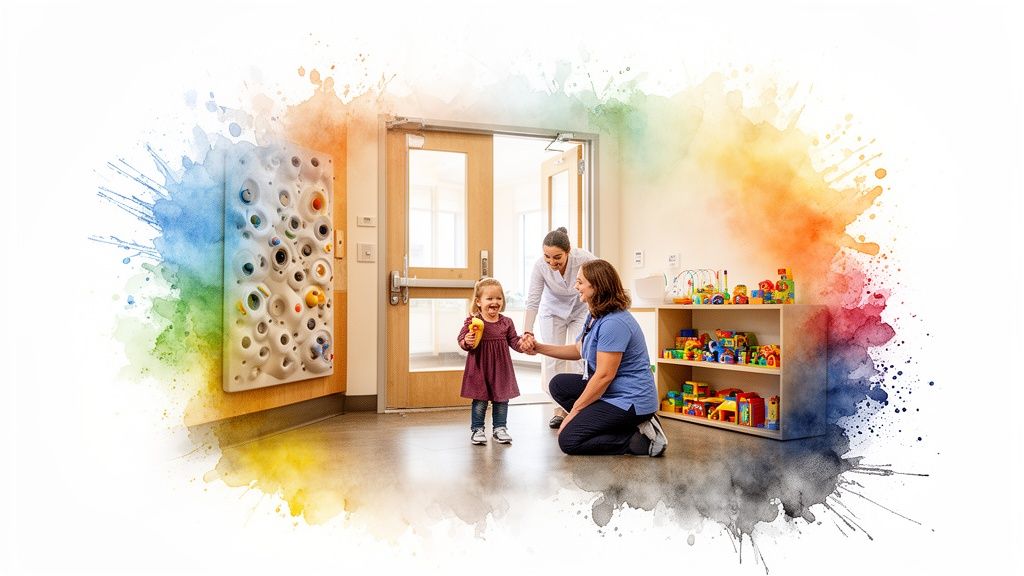
It helps to think of a center less like a clinic and more like a hub of expertise and encouragement. The main goal is to offer focused, proven therapies and educational support for children who might be navigating developmental, behavioral, or communication challenges. The guiding principle is simple: every child can learn and grow, but some just need a different set of tools and strategies to unlock their potential.
These centers throw the “one-size-fits-all” model out the window. They operate on a foundation of truly individualized care, understanding that every child’s brain is wired uniquely. The goal isn’t to “fix” a child, but to understand their specific strengths and give them the support they need to shine.
At its core, a high-quality center is dedicated to creating inclusive learning environments where every single child feels seen, valued, and capable. This philosophy is everything—it ensures support is delivered with dignity and a deep respect for who your child is.
A Collaborative Team Approach
One of the things that makes a modern center for special needs so effective is its multidisciplinary team. You aren’t just working with one professional in isolation. Instead, you’re partnering with an entire team of specialists who are constantly talking to each other and aligning their strategies. This integrated approach ensures that every piece of your child’s development puzzle is being looked at together.
This team of experts usually includes:
- Educational Psychologists: They figure out how your child learns best and assess their cognitive development.
- Speech Therapists: They work on all aspects of communication—not just spoken words, but understanding non-verbal cues, too.
- Occupational Therapists: They help with sensory processing, fine motor skills (like holding a pencil), and the practical activities of daily life.
- Behavior Therapists: They use engaging, play-based methods to build positive social skills and help manage challenging behaviors.
This guide is here to walk you through exactly what these centers do, the kinds of support they offer, and how they partner with you to help your child reach their full potential. We’ll demystify the entire process, from figuring out if your child might need support to navigating your first steps with confidence.
What Kinds of Support Will My Child Receive?

At the very heart of a center for special needs is a team of specialists dedicated to helping your child thrive. These core services are the foundation for building new skills, boosting confidence, and paving the way for greater independence.
It’s helpful to think of these therapies not as separate treatments, but as interconnected pieces of a puzzle. They are designed to work together, creating a comprehensive support system that addresses your child’s unique needs from every angle. Let’s walk through what these core therapies actually look like in practice.
Occupational Therapy: Building the Skills for Everyday Life
When you first hear “occupational therapy,” you might picture someone recovering from a workplace injury. But for a child, their “occupation” is to play, learn, and grow. OT is all about helping them master the practical skills needed for these childhood jobs.
An occupational therapist’s work is hands-on and often looks just like purposeful play. Their goal is to empower children to participate fully in the activities that fill their days.
This might involve:
- Fine Motor Skills: Activities like stringing beads or using tweezers to pick up small objects to build the hand strength needed for writing and buttoning a coat.
- Sensory Processing: Helping a child who is easily overwhelmed by loud noises or certain textures learn coping strategies to feel more comfortable in a busy classroom or at a birthday party.
- Daily Living Activities: Practicing self-care routines like getting dressed, brushing teeth, and using a fork and knife, breaking them down into manageable steps.
- Play and Social Skills: Using games to teach turn-taking, sharing, and how to join in with peers on the playground.
An OT session could look like an obstacle course that improves balance and coordination, or it might involve using therapeutic putty to strengthen hand muscles. It’s all about building functional skills that make a real, tangible difference at home and at school.
Speech and Language Therapy: Finding Their Voice
Communication is so much more than just saying words correctly. Speech and language therapy is a critical service that unlocks a child’s ability to understand the world around them and, just as importantly, to express their own ideas, wants, and feelings.
A speech therapist works on both sides of the communication coin: expressive language (how your child gets their message across) and receptive language (how they understand what others are saying). To learn more about this, our guide on child speech therapy in Georgetown is a great resource.
A therapist might use picture cards to help a non-verbal child point to what they want for a snack, or use a storybook to practice the natural back-and-forth of a conversation. It’s about giving every child the tools to communicate, whatever that may look like for them.
Behavioral Therapy: Nurturing Positive Habits
Behavioral therapy, particularly modern, play-based approaches like Applied Behavior Analysis (ABA), is a cornerstone of support in most special needs centers. Forget any outdated ideas of rigid drills; today’s ABA is about understanding why a child does what they do and teaching them positive, effective new skills in a way that feels like fun.
This approach is incredibly helpful for children who find social situations, communication, or managing big emotions challenging. The need for these services is clear. Research shows that Autism Spectrum Disorder (ASD) affects over 1,105,582 children across North Africa and the Middle East, with 911,505 of those cases needing early intervention services.
A behavior therapist acts as a coach, breaking down complex skills—like making a friend or waiting your turn—into small, achievable steps. They use positive reinforcement, like a high-five or earning a favorite sticker, to motivate the child and celebrate their progress. The entire focus is on building a child up, not just managing difficult behaviors.
Here’s a snapshot of the core therapies and what they focus on.
Core Therapies and Their Impact
| Therapy Type | Focus Area | Example Skills Developed |
|---|---|---|
| Occupational Therapy | Daily living, motor skills, sensory processing | Writing, dressing, self-feeding, managing sensory input |
| Speech & Language Therapy | Communication (understanding and expressing) | Articulation, vocabulary, conversation, non-verbal cues |
| Behavioral Therapy (ABA) | Social skills, behavior, communication | Turn-taking, emotional regulation, following routines |
Ultimately, the goal of behavioral therapy is to empower children with the social and emotional tools they need to build meaningful relationships and navigate their world with confidence. By tapping into a child’s natural interests, therapists make learning a positive and rewarding adventure.
Why a One-Size-Fits-All Plan Just Doesn’t Work

Every child is a universe of their own—with a unique way of thinking, learning, and seeing the world. Because of this, a generic, cookie-cutter approach to therapy and education doesn’t just fall short; it can be deeply discouraging for a child who needs specialized support.
Think about it like this: you wouldn’t give every student in a class the same pair of shoes. For a few, the fit might be perfect. But for most, they’d be uncomfortable, pinching their feet and holding them back from running and playing freely. A standardized plan works the same way. It fails to honor the distinct strengths, challenges, and personal goals that make your child them.
A high-quality center for special needs is built on the understanding that effective support has to be as unique as the child receiving it. This belief is put into practice through truly individualized plans.
Crafting a Custom Roadmap for Your Child
An Individualized Education Plan (IEP) or therapy plan is so much more than a document. It’s a custom-tailored roadmap designed specifically for your child’s journey. Instead of being pulled from a template, it’s built from the ground up, starting with a deep dive into your child’s world.
Creating this plan is a collaborative and careful process. It starts long before the first therapy session with a comprehensive assessment.
This foundational stage includes:
- Detailed Observations: Therapists will spend time with your child, often in a natural play setting, to see their skills, personality, and interaction style in action.
- Standardized Assessments: These tools give the team objective data on where your child is developmentally in key areas like communication, motor skills, and social engagement.
- Parental Input: This is crucial. The team listens to you. No one knows your child better, and your insights into their history, what makes them light up, and their daily routines are invaluable.
All this information is then pieced together to create a complete picture of your child—not just their challenges, but also their incredible strengths and passions. This balanced view is the secret to creating a plan that truly motivates and engages them.
An individualized plan is a commitment. It says, “We see your child for exactly who they are, and we are building a support system around them, not trying to fit them into a pre-existing box.”
The Power of Goals You Can See and Adjust
Once that baseline is established, the team works with you to set clear, measurable, and achievable goals. Vague objectives like “improve communication” are replaced with specific, meaningful targets, such as “will use three-word phrases to ask for a snack in four out of five opportunities.”
This kind of specificity is vital. It allows everyone—therapists, educators, and you—to see progress clearly and celebrate every single win along the way.
More importantly, a great plan is a living document. Kids grow and change constantly, and their support plan has to evolve right alongside them. A dedicated center for special needs will schedule regular meetings to review progress, talk about what’s working, and adjust strategies as needed. This flexibility ensures the therapeutic journey stays perfectly tuned to your child’s development, always providing the right support at the right time. Your role isn’t just to watch from the sidelines; you are a key partner in this dynamic process, ensuring the goals stay relevant to your family’s life.
Recognizing When Your Child Might Need Support
As a parent, your intuition is your superpower. You know your child inside and out, and that nagging feeling that something might be a little different is always worth paying attention to. This isn’t about searching for issues; it’s about being in tune with your child’s unique journey and knowing when a bit of extra help could unlock their world.
Trusting that gut feeling is always the right first step. It usually starts with small observations—things you notice during playtime, in how they interact with family, or as they go through their daily routines. Reaching out for a professional opinion isn’t admitting defeat; it’s a powerful act of love and a way to become your child’s best advocate.
Many families first connect with a center for special needs when they spot differences in a few key developmental areas. The goal is never to stick a label on a child, but to truly understand their needs so we can give them the right tools to flourish.
Observing Communication and Social Cues
Communication is so much more than just words. It’s about connection—the give-and-take of understanding and being understood. The earliest signs that a child might benefit from support often show up in how they engage with the people and world around them.
You might be seeing things like:
- A limited vocabulary compared to other kids their age, or not yet stringing words into short sentences.
- Trouble following simple, one- or two-step directions, even when they seem to be paying attention.
- Rarely using gestures to communicate, like pointing to something they want or waving hello and goodbye.
- Finding it hard to make or hold eye contact when someone is talking to them.
- Almost always preferring to play alone and showing little interest in joining other children.
These observations alone aren’t a diagnosis, of course. But they are incredibly valuable starting points for a conversation with a specialist. A clinical psychologist can offer the clarity and guidance you’re looking for. You can learn more about finding a trusted clinical psychologist near you in Georgetown to get that conversation started.
Understanding Sensory Responses and Behaviours
Every child has their own little quirks and preferences—that’s what makes them unique! But sometimes, a child’s reaction to their environment is so intense that it gets in the way of their ability to learn, play, or just feel calm and settled. These sensory sensitivities are another area where a center for special needs can provide fantastic support.
This might look like a child who:
- Has extreme reactions to everyday sensations like sounds, textures, or lights—maybe they cover their ears in a bustling room or refuse to wear certain clothes.
- Shows an unusually high or low tolerance for pain, either overreacting or barely noticing bumps and scrapes.
- Is constantly on the move, finding it almost impossible to sit still, even for a few minutes.
- Engages in repetitive movements or behaviors, such as flapping their hands, spinning in circles, or lining up their toys in a very precise way.
These actions are often a child’s way of coping with a world that feels overwhelming to their senses. It’s so important for parents to be aware of the different signs of mental health problems in children and teenagers to better understand what these behaviors might mean.
The earlier a child gets the right kind of support, the more profound the impact. Early intervention helps build foundational skills during the most critical window of brain development, setting them up for more success and confidence down the road.
This need is a global reality. Here in the Middle East and North Africa (MENA) region, estimates suggest that nearly 21 million children are living with disabilities. That’s one in seven kids facing significant hurdles. This number has likely been underestimated for years due to gaps in data, meaning far too many children have gone without the support they need to thrive. If you’re seeing some of these signs in your child, please know you are not alone, and taking the next step is the best thing you can do for their future.
How to Choose the Right Center for Your Family

Choosing a center for special needs is a deeply personal decision, and it’s one of the most important you’ll make on this journey. This place will become a second home, where your child builds foundational skills and your family finds a true community of support. The right center feels like a genuine partnership—a place where you are heard, respected, and involved every step of the way.
To find that perfect fit, you have to look beyond the glossy brochures and get a real feel for the center’s heart and soul. Think of yourself as a detective, gathering clues to ensure the environment, the people, and the philosophy align with your family’s values. This is all about asking the right questions and, just as importantly, noticing the small details that reveal a center’s true character.
Your goal isn’t just to find excellent therapists. It’s to find a warm, collaborative culture that makes both you and your child feel safe, understood, and supported.
Evaluating Staff Credentials and Experience
At the end of the day, the quality of any center rests on the expertise and passion of its team. You have every right to understand the qualifications of the professionals who will be guiding your child’s development, so don’t hesitate to ask direct questions about their credentials.
A reputable center will be proud to share this information. They’ll ensure their team is not only certified but also actively engaged in ongoing training to stay current with the latest evidence-based practices.
Here are a few key things to ask:
- What are the specific qualifications of your therapists? Look for titles like Board Certified Behavior Analyst (BCBA) or licensed Speech-Language Pathologist.
- What is your staff-to-child ratio in different settings? This gives you a clear idea of how much individual attention your child will receive.
- How do you support your staff’s professional development to make sure they’re using the most effective methods?
The answers will tell you a lot about the center’s commitment to excellence.
A truly supportive environment is one where professionals are not just qualified on paper but are also genuinely passionate about what they do. Watch how they interact with the children—do you see warmth, patience, and real connection? That’s often the most telling sign of a great team.
Understanding the Therapeutic Approach
Not all therapy models are created equal. A crucial part of your decision will be understanding the center’s core philosophy. Some centers follow a very structured, table-based approach, while others, like Georgetown, champion a play-based model that feels more natural and engaging for young children.
There is no single “best” approach for every child. What’s vital is that the model resonates with you and seems like the right fit for your child’s personality and learning style. For instance, a play-based approach cleverly uses a child’s natural curiosity to teach skills in a fun, motivating way, which can be incredibly effective.
During your visit, get specific about their methods:
- Do you primarily use Applied Behavior Analysis (ABA) in a play-based format?
- How do you integrate different therapies, like speech and OT, into one cohesive plan?
- Can you give me an example of how you’d tailor your approach for a child with needs similar to my own?
Understanding their methodology will help you envision what a typical day will actually look and feel like for your child.
Observing the Center’s Environment and Culture
Finally, trust your gut. During your tour, pay close attention to the atmosphere. Does it feel energetic and happy, or is it quiet and sterile? The physical space and the interactions you witness speak volumes about the center’s culture. The environment should feel like a safe, welcoming place where children are truly encouraged to explore and just be themselves.
Look for signs of a family-focused partnership:
- Family Involvement: How are parents included? Look for parent training sessions, regular and clear communication, and a genuine open-door policy.
- Child Engagement: Take a moment to observe the other children. Do they seem happy, engaged, and comfortable with the staff?
- Communication Style: How does the team talk about progress? They should be able to clearly explain how they set measurable goals and how they’ll share updates with you.
A strong center for special needs sees you as a vital member of the therapy team and will want to equip you with strategies to continue the learning and growth at home. For more on this, you might find our guide on choosing an early learning centre in Dubai helpful. Taking the time to evaluate these key areas will empower you to make an informed, confident choice that sets your child up for success.
Navigating Your Next Steps with Confidence
Deciding to work with a center for special needs is a major step forward. So, what happens now? The next phase is all about making the transition into therapy as smooth and worry-free as possible for both your child and your family.
Think of it as building a strong foundation. The first thing we’ll do is gather all the existing pieces of your child’s story. This means pulling together any past assessments, diagnostic reports, or notes from teachers. This isn’t just paperwork; it’s a roadmap that gives the therapy team a head start in understanding your child’s unique journey.
Preparing for Your First Meeting
Your first official meeting is really a kick-off conversation. This is your time to share your biggest hopes, your deepest concerns, and what you most want for your child. It helps to jot down questions and any specific things you’ve noticed at home beforehand. This dialogue ensures your family’s voice is at the center of the therapy plan from day one.
The first few weeks are all about connection. Your child’s therapists will focus on creating a welcoming and fun atmosphere where your child feels safe and understood. They’ll get to know your child’s unique personality, what makes them light up, and how they communicate best—usually through play, which just feels like fun. This gentle start helps build the trust needed for real progress.
Taking this first step is a powerful act of advocacy for your child. Remember, this journey is a partnership. Your involvement, insights, and support are the essential ingredients that help your child thrive.
Building a Foundation for Success
It’s natural to want to see immediate results, but it’s important to remember that progress is a marathon, not a sprint. These initial weeks are crucial for building the strong, trusting relationships that are the bedrock of effective therapy.
This is especially critical when you look at the bigger picture. For example, a study in Jeddah involving 550 stakeholders revealed that while inclusive education is the goal, challenges in funding and coordination often get in the way. This highlights just how vital a dedicated center for special needs is in bridging that gap and giving children the focused support they need to succeed in school later on. You can read the full research to get a clearer view of these educational hurdles.
Your role now is to lean into the process, celebrate every small win, and keep the lines of communication with your therapy team wide open. You’ve made a thoughtful, loving decision to give your child the best possible support. Together, you are paving the way for a brighter, more confident future.
Your Questions, Answered
Starting this journey naturally brings up a lot of questions. We get it. Below, we’ve answered some of the most common things we hear from families just like yours when they’re first exploring a center for special needs.
How Long Will My Child Need Therapy?
This is probably the most common—and most important—question we hear. The honest answer is, there’s no set timeline. Every child’s journey is unique, so the duration of therapy depends entirely on their specific goals and the pace of their progress.
Think of it less like a school semester with a fixed end date and more like a personalized roadmap. We’re constantly checking in, celebrating every win, and adjusting our route as your child grows and their needs change. For some, it might be a few months; for others, it’s a longer-term partnership.
How Involved Will I Be as a Parent?
You are the single most important person on your child’s team. Your involvement isn’t just a nice-to-have; it’s the key to making real, lasting progress. We consider you our core partner in this process.
Here’s what that partnership looks like in action:
- Parent Training: We’ll give you the tools and confidence to carry over what we do here into your home life.
- Home-Based Strategies: You’ll get simple, practical tips to weave therapy goals into your daily routines, from playtime to bedtime.
- Constant Communication: We keep the lines of communication wide open. You’ll always be in the loop and a part of every decision.
What Makes Play-Based Therapy Different?
The philosophy behind play-based therapy is simple but profound: kids learn best when they’re simply playing. It harnesses a child’s natural desire to explore, create, and have fun to teach essential skills without them even realizing they’re in “therapy.”
Instead of rigid drills, learning unfolds naturally through games and engaging activities. This transforms therapy from something a child has to do into something they genuinely look forward to.
How Do You Prepare a Child for Mainstream School?
From the very first day, one of our main goals is to build school readiness. We want to give your child the tools and confidence they need to step into a mainstream classroom and feel successful.
This means we focus on the practical skills that matter in a school setting. We work on things like following a teacher’s directions, waiting their turn, playing well with classmates, and handling the daily routines of a classroom. It’s all about building the independence needed to thrive.
At Georgetown, we know this is a journey you take as a family, and we’re here to walk it with you. To see how our personalized approach works, we invite you to learn more at https://www.georgetownuae.com.