
You’re eagerly watching for that first big, independent move, and you’re wondering—When Do Babies Start Rolling Over? The big answer is that most babies start rolling over sometime between 4 and 6 months old.
This isn’t just a cute new trick; it’s a huge leap in your baby’s physical development and the first real step on their journey toward independence.
Your Baby’s First Big Move: The Rolling Over Milestone

There’s nothing quite like seeing your baby intentionally roll over for the first time. It’s a moment of pure parental joy and a clear sign that all those little wiggles and kicks are building some serious strength.
Think of rolling as the foundation for everything to come—sitting up, crawling, and eventually, walking. It all starts here.
This milestone usually unfolds in two parts:
- The Tummy-to-Back Roll: This is often the easier, first roll your baby will conquer. It takes less muscle power and can sometimes happen by accident during tummy time when they push up with their arms and topple over.
- The Back-to-Tummy Roll: Now this is the main event. It’s a much more deliberate and complex move that requires a ton of core strength, coordination, and momentum to pull off.
Understanding the Typical Timeline
While most babies hit this milestone between 4 and 6 months, some early movers might surprise you as soon as 3 months old. By the time they reach 7 months, the majority of babies are pros, rolling confidently in both directions.
This timeline is one of the key indicators we look at here at Georgetown Early Intervention Centre. It helps us understand a child’s motor development, which is especially important for the kids we support through occupational therapy, ABA therapy, and other services for speech delays or autism.
Rolling over is a complex sequence of movements that builds crucial connections between your baby’s brain and muscles. It’s the first time they truly experience navigating their environment with purpose.
Of course, every baby follows their own unique schedule, but knowing the general timeline helps you cheer them on effectively. For a deeper dive into this exciting stage, the guide on When Do Babies Start Rolling: A Parent’s Guide offers some great insights.
Watching them progress, from that first little head lift to the final, triumphant roll, is what makes this journey so incredible.
The Rolling Over Timeline: What To Expect Month By Month
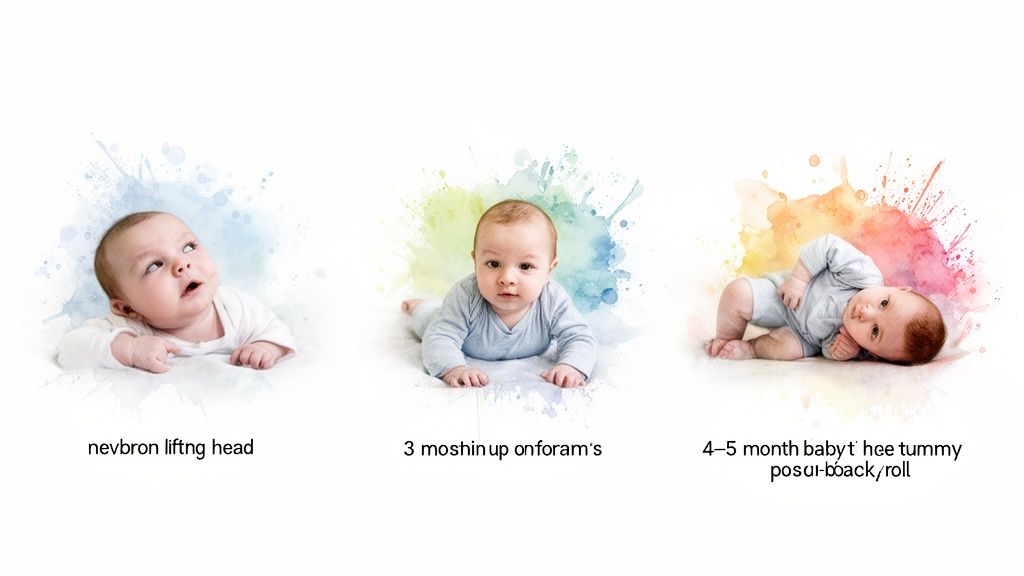
Watching your baby figure out how to roll over is like watching a little dancer master their first big move. It doesn’t just happen overnight. Instead, it’s a beautiful progression of tiny, seemingly random movements that slowly build into a coordinated, intentional flip.
Seeing this journey unfold month by month helps you appreciate all the hard work your baby is putting in. Let’s walk through the typical timeline so you know what to look for as they get ready for their big debut.
Birth to 2 Months: Laying the Foundation
In those first couple of months, your newborn’s wiggles and kicks are mostly reflexive. When you place them on their tummy, you’ll see them instinctively turn their head from side to side. While they aren’t trying to roll just yet, these are the critical first steps.
Think of this stage as the warm-up before the main event. Every little push with their feet and every head turn is building the foundational strength in their neck, back, and shoulders—the exact muscles they’ll need to master rolling.
2 to 4 Months: The First Real Signs
This is when things start to get interesting. Around 2 to 3 months, you’ll notice your baby pushing up on their forearms during tummy time, lifting their head and chest with more purpose. They might even start rocking from side to side or kicking their legs with surprising force.
These aren’t just random movements anymore. They’re the first true hints that your baby is gearing up to roll. You might even see an accidental roll from tummy to back, often happening when they push up with so much gusto that they simply topple over.
At this age, a baby’s movements become more deliberate. Each push-up and side-to-side rock is a mini workout, strengthening the core and back muscles that are essential for mastering the art of rolling over.
To give you an idea of how quickly things progress, parentdata.org offers some great insights on when babies start rolling over. In regions like the AE, for instance, data shows about 50% of babies are showing signs of rolling by 3 months. That number jumps to 75% by 4 months old.
4 to 6 Months: The Main Event
Welcome to primetime for rolling over. Most babies will achieve their first intentional roll, usually from tummy to back, somewhere between 4 and 5 months. It’s a huge moment and definitely one for the baby book!
Soon after mastering that first flip, they’ll start working on the more challenging back-to-tummy roll. This move requires a lot more core strength and coordination. By the time they hit 6 months old, most babies are rolling confidently in both directions. For nearly 90% of babies, this milestone is well underway, turning their play mat into a whole new world to explore.
Here’s a quick summary of what you can expect to see as your baby works their way toward rolling.
Baby’s Rolling Over Milestone Timeline
| Age Range | Typical Developments and Signs of Readiness |
|---|---|
| 0-2 months | Head turns from side to side during tummy time. Kicks legs and makes reflexive movements. |
| 2-4 months | Begins pushing up on forearms. Lifts head and chest higher. May rock from side to side or have an "accidental" first roll. |
| 4-5 months | Masters the intentional tummy-to-back roll. Movements become much more purposeful. |
| 5-6 months | Starts working on the more difficult back-to-tummy roll. By 6 months, most are rolling confidently both ways. |
Remember, every baby develops at their own unique pace. This timeline is just a guide to help you celebrate each small victory along the way.
Decoding The Signs Your Baby Is Ready To Roll

Long before your baby makes that first incredible flip, they’ll start dropping little hints. Think of these as the previews before the main event. When you learn to spot these signals, you’ll be able to follow their progress and feel that much more connected to their amazing journey.
These aren’t just cute new wiggles; they’re the literal building blocks of coordination and strength. Every little push and rock is a mini-workout, prepping their muscles for the big show. Seeing the method behind their movements is one of the most rewarding parts of being a parent.
Key Physical Cues to Watch For
You’ll start to notice some big changes during playtime, especially on their tummy time mat. This is where most of the “training” goes down. A surge in upper body strength is usually the first and clearest sign that a roll is just around the corner.
Keep an eye out for these classic signs that your baby is gearing up to roll:
- Excellent Head and Neck Control: They’re no longer a bobblehead! They can hold their head up steadily and lift it high off the floor during tummy time. This strength is absolutely essential for starting the roll.
- Pushing Up on Arms: You’ll see them graduate from resting on their forearms to pushing up on straight arms, lifting their chest clear off the ground. These little “mini push-ups” are amazing for their back and shoulder muscles.
- Rocking and Pivoting: A baby who rocks side-to-side on their tummy or pivots in a circle is learning a critical skill: how to shift their weight. This is a huge piece of the rolling puzzle.
These movements are proof that their muscles are developing right on track. This whole prep phase is just as important as the milestone itself, as it lays the foundation for moving safely and confidently.
The Core Connection
It’s not all about the arms and neck, though. Your baby’s core muscles are getting a serious workout, too. Strong abs are the engine that powers the twisting motion needed to flip their little body over. It’s truly fascinating to watch how everyday play builds this crucial strength.
When a baby brings their feet to their mouth, it’s more than just adorable. This “happy baby” pose is a fantastic core exercise that engages their abdominal muscles and helps them find their center of gravity.
You’ll see it in other ways, too. When they’re on their back, kicking their legs in the air or reaching for a toy, they’re constantly firing up that core. These playful moments are their version of hitting the gym, building all the power they’ll need for that thrilling first roll.
How To Safely Encourage Your Baby’s First Roll
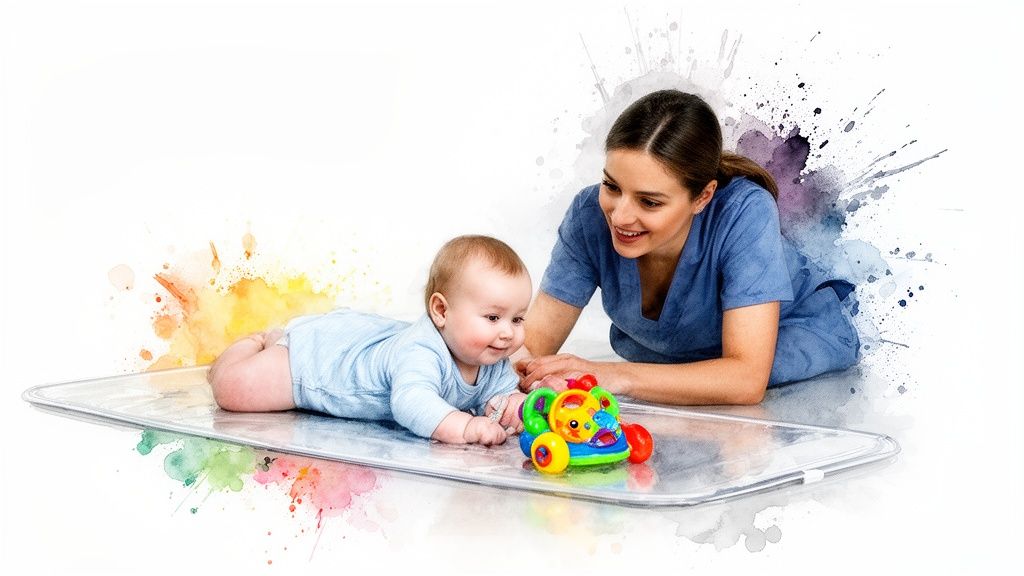
You’re your baby’s first and best coach. While every baby hits this milestone on their own schedule, you can absolutely play a huge supporting role by creating a safe and fun environment for them to practice. The goal isn’t to rush them, but to help them build the strength and confidence they need to figure it all out.
Think of it as setting up a little baby gym where every play session doubles as a workout. These gentle activities aren’t just about killing time; they’re the building blocks for all the physical achievements to come. By weaving a few simple techniques into your day, you can help get them ready for that first big flip.
Supervised Tummy Time Is Essential
When it comes to rolling, tummy time is the MVP. It’s the number one way babies build strength in their neck, back, shoulders, and core—all the muscles they need to power that roll. Placing them on their tummy while they’re awake and you’re watching helps them practice lifting their head and pushing up with their arms.
Of course, a lot of babies aren’t huge fans of tummy time right away. That’s okay! The trick is to start small and make it a game:
- Start with Short Bursts: Aim for just a couple of minutes at a time, but do it several times throughout the day. You can slowly add more time as they get stronger and more used to it.
- Get Down on Their Level: Lie on the floor with them. Making eye contact and chatting makes it feel like playtime instead of a chore.
- Use Engaging Toys: Place a colorful or noisy toy just out of reach. This encourages them to look up, pivot, and eventually reach for it.
These moments are also fantastic for developing fine motor skills activities. As they start reaching for objects, they’re building that all-important hand-eye coordination.
Gentle Exercises and Playful Motivation
Beyond tummy time, you can use other gentle movements to help your baby get the feel for rolling. A favorite toy can be the perfect motivation to guide them through the motions, teaching their body how it feels to shift weight and turn over.
For instance, when your baby is on their back, dangle a fun toy just to one side. As they turn their head to look, you can gently guide their hips over to help them complete the roll. This little bit of playful help builds the muscle memory and mind-body connection they need to do it on their own.
Every time you encourage your baby to reach, turn, and shift their weight, you are helping them build the muscle memory and coordination that makes rolling possible. It turns a challenging task into an exciting game.
Creating A Safe Space For Rolling
Once your baby starts showing signs of rolling, safety becomes a top priority. Their new mobility means they can get into unexpected spots in the blink of an eye. You’ll want to create a hazard-free zone where they can explore without you worrying. Always place them on a blanket or play mat on the floor, well away from stairs or furniture.
Most importantly, you must stop swaddling for all sleep as soon as your baby shows any signs of trying to roll. A baby who rolls onto their stomach while swaddled is at a much higher risk of suffocation because their arms are trapped and can’t be used to push up. It’s crucial to understand when to stop swaddling your baby for safe sleep. Switching to a sleep sack is a great alternative that keeps them warm and cozy without restricting their arms.
When To Seek Support for Developmental Milestones
It’s completely natural to watch your baby’s development with a mix of excitement and a few questions. While every child hits their milestones on a unique timeline, these little achievements give us a helpful map of their progress. The key is knowing when to relax and trust the process versus when it might be time to seek a little extra guidance.
Think of it like this: most babies figure out how to roll over in their own time, but some might need a bit of coaching to get all those muscles working together. Learning to spot the signs that your baby could benefit from a professional’s perspective is an empowering part of being a parent. It’s not about looking for problems—it’s about proactively supporting your child’s success.
Recognizing Potential Red Flags
Even though there’s a wide range of “normal,” a few signs might suggest that a professional evaluation is a good idea. These aren’t reasons to panic, but gentle nudges to check in with your pediatrician or a specialist. It’s always better to be proactive than to wait and worry.
Here are a few specific things to keep an eye on:
- Not showing any signs of rolling by 7 months: If your baby isn’t even trying to roll or showing interest by this age, it’s worth bringing up.
- Appearing very stiff or very floppy: A baby who feels unusually rigid or, on the other hand, struggles with muscle tone might need some help building strength.
- Only rolling to one side: Consistently favoring one direction could point to muscle tightness or weakness that can often be addressed with simple exercises.
- Arching their back frequently: Babies sometimes do this when they’re upset, but if it happens a lot during play, it can be a sign of motor challenges.
Trust your gut. You know your baby better than anyone. If you feel like something isn’t quite right with their movement, or if they seem frustrated by their physical limitations, getting a professional opinion is a positive and proactive step.
Who Can Help and How
If you have concerns, your first stop should always be your pediatrician. They can assess your baby and, if necessary, refer you to an early intervention specialist. These professionals are experts in childhood development and offer targeted, play-based support.
A pediatric occupational therapist, for example, is like a personal trainer for babies. They can evaluate your child’s gross motor skills, pinpoint any underlying issues, and create a fun, personalized plan to build strength, coordination, and confidence. They work right alongside you to weave simple, effective activities into your daily routine.
Getting support early can make a world of difference, helping your child master rolling and move confidently toward the next exciting milestone. For more guidance on this journey, explore our parent consultation services and learn how we can support your family.
How Early Intervention Can Support Your Child’s Journey
Every baby truly does develop on their own schedule, but sometimes, a little extra support can make all the difference in helping them find their rhythm. If you have any concerns about your baby’s progress with rolling over, early intervention is a gentle, supportive way to get them on track. It’s not about pressure—it’s about giving them the right tools at just the right time.
At Georgetown Early Intervention Centre, we look at your child and see all their incredible potential. Our team comes together to create a plan that just feels like playing but is actually building powerful new skills. We craft a nurturing space where your child can build confidence one tiny movement at a time.
A Team That Works Together for Your Child
Think about what this looks like in practice. An occupational therapist might use colorful, crinkly toys and fun games to strengthen the very neck, back, and arm muscles your baby needs to push up and roll. They can gently guide your baby through the motions, helping their brain and body connect the dots on how to shift their weight. It’s all about building strength and motor planning in a way that feels positive and fun.
At the same time, if your baby absolutely hates tummy time, a behavior therapist can step in with strategies to turn that frustrating experience into an enjoyable one. This team approach means every piece of the puzzle is addressed, from physical strength to motivation.
Our philosophy is simple: every child is unique, so their therapy plan should be too. We work closely with your family to build an individualized plan that targets your child’s specific needs and celebrates every single small victory along the way.
This personalized strategy is at the core of everything we do. By tailoring activities to what your baby finds interesting, we help them build the foundational skills they need not just for rolling, but for all the exciting milestones that come next.
Our goal is to empower both you and your child, giving you the practical strategies and encouragement you need to see them thrive. You can learn more about how we help children build these crucial motor skills in our guide to occupational therapy in Dubai.
Got Questions About Rolling Over? We’ve Got Answers
It’s completely normal to have a million questions when your baby hits a new milestone. Let’s tackle some of the most common ones that pop up right around the time they master the roll.
What If My Baby Hates Tummy Time?
First off, you’re not alone! A lot of babies protest tummy time initially. The trick is to start small—think just a minute or two at a time, but do it several times throughout the day.
Try getting down on the floor with them. Making eye contact, propping up a baby-safe mirror, or placing a favorite toy just out of their grasp can make it feel more like a game than a chore. Every single second on their tummy helps build that crucial neck, shoulder, and back strength.
Is This New Rolling Skill Going to Wreck Our Sleep?
It might, but this is almost always a temporary phase. A baby who has just figured out how to roll might surprise themselves by flipping onto their tummy in the middle of the night and then wake up, feeling a little confused or “stuck.”
If they’re clearly upset, it’s fine to gently roll them back over. But if they seem content, it’s perfectly safe to leave them be—as long as the swaddle is gone. This little sleep disruption usually sorts itself out in a week or two as they get more comfortable with their newfound mobility.
The single most important safety step is to stop swaddling as soon as your baby even looks like they’re trying to roll. They need their arms free to push up and move their head, which is vital for safe sleep.
This new skill is a fantastic development, but it’s also your cue to double-check that their crib is a safe sleep zone: completely clear of loose blankets, bumpers, and toys.
At Georgetown Early Intervention Centre, we know that every child’s journey is their own. If you have questions about your baby’s motor skills or any other milestone, our team of occupational therapists, educational psychologists, and ABA therapists is here to offer support that fits your family. Learn more about our individualised therapy plans.