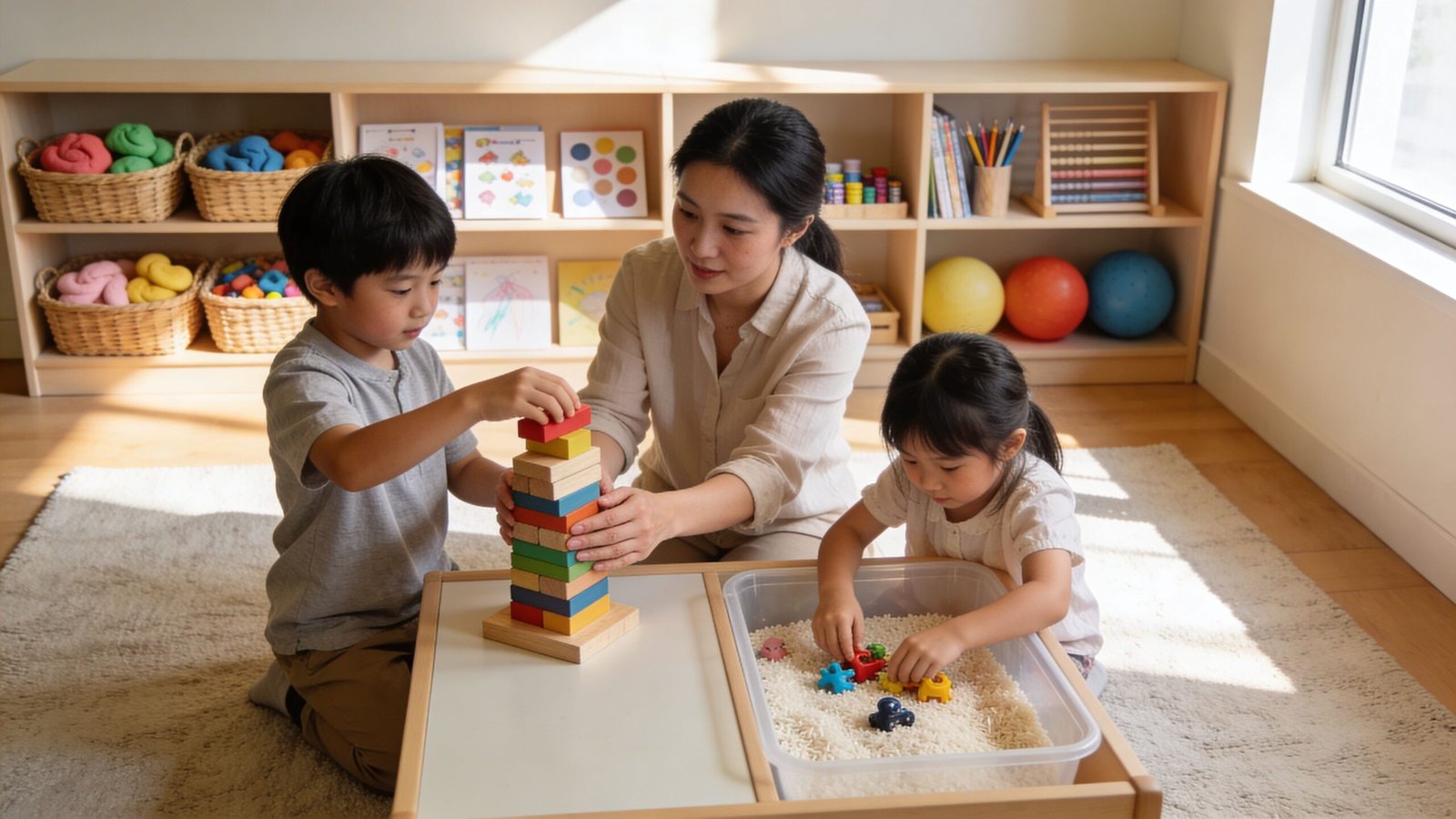

When you first type “ABA therapy near me” into a search bar, you’re often filled with a mix of hope and a whole lot of questions. We created this guide to turn that uncertainty into confidence, giving you a clear path to follow. We’ll break down what Applied Behavior Analysis (ABA) really is—a highly personalized way of teaching that helps children build essential life skills.
Starting Your Search for ABA Therapy Nearby
It’s helpful to think of ABA not as a rigid, one-size-fits-all program, but as a custom-built toolkit designed specifically for learning and growth. Every strategy and every goal is carefully shaped around your child’s unique personality, strengths, and specific needs. Our mission here is to help you find more than just any local provider; we want you to find the right partner for your family’s journey.
Having consistent therapy close to home is a huge piece of the puzzle. A convenient location cuts down on travel stress for everyone, making it much easier to stick to the steady routine that helps kids make real, lasting progress. This is especially true when you consider the time commitment some programs require.
Why Proximity Matters for ABA Therapy
Here in the United Arab Emirates, ABA therapy has become a well-regarded and sought-after intervention for children with Autism Spectrum Disorder (ASD). This reflects a global understanding that effective early intervention can involve 20 to 40 hours of therapy per week. You can learn more about the growing need for ABA services in the UAE.
Finding a high-quality center close to home makes attending these crucial sessions more manageable, turning therapy into a sustainable part of your life rather than a logistical challenge.
This guide will walk you through the key steps for evaluating and choosing a center that feels like the perfect fit. The right local provider can make all the difference, creating a supportive and encouraging environment where your child can truly thrive. For families in the region, understanding the specifics of ABA therapy in Dubai can provide valuable local context.
As we go, we will explore:
- How ABA therapy works in practice
- The benefits of consistent, local therapy
- A checklist for choosing the right center
- What to expect from your initial sessions
Understanding How ABA Therapy Actually Works
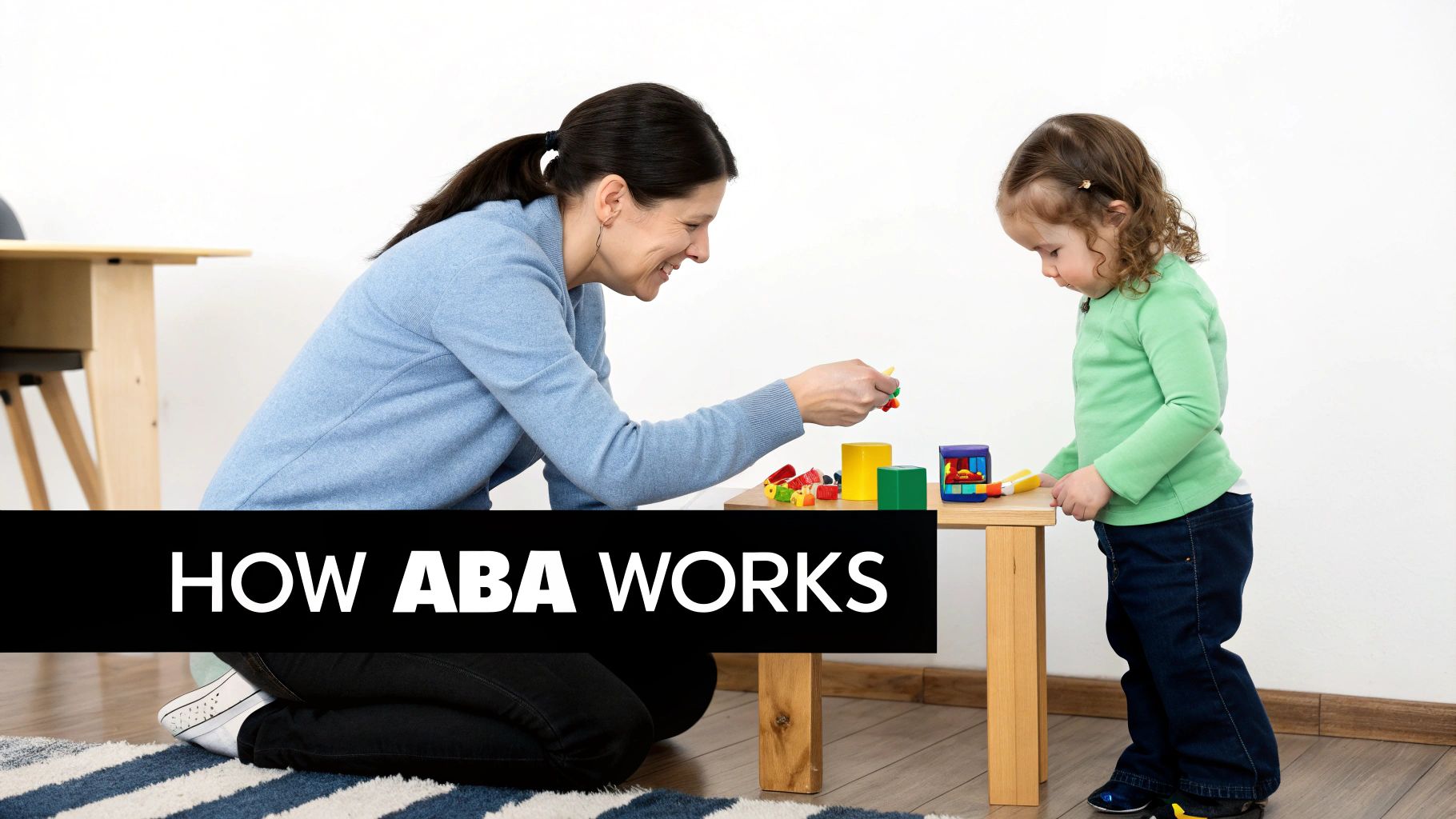
It’s easy to get lost in the clinical jargon, so let’s get straight to what ABA therapy actually looks like day-to-day. Think of it less like a rigid program and more like having a personal coach for behavior and learning.
A great sports coach doesn’t just tell an athlete to “play better.” They break down every single move—the stance, the swing, the follow-through—into tiny, manageable steps. That’s exactly what an ABA therapist does, but for skills like communicating, making friends, or mastering daily routines. The whole idea is to build up skills one small success at a time, keeping the child motivated and feeling good about their progress.
The A-B-C Model: The Core of ABA
So, how do therapists know what to work on? At the heart of ABA is a surprisingly simple yet powerful tool called the A-B-C model. It’s a way of looking at behavior to understand the why behind it.
- A is for Antecedent: This is whatever happens right before a behavior. It’s the trigger. This could be anything from a parent asking a question to a favorite toy being put away.
- B is for Behavior: This is the child’s response—the specific action we’re looking at. It could be answering the question, crying, or asking for the toy.
- C is for Consequence: This is what happens immediately after the behavior. It’s crucial to understand that “consequence” isn’t a bad word here; it’s simply the outcome. It could be praise, getting the toy back, or being ignored.
This A-B-C framework helps therapists connect the dots. By tweaking the antecedent (like rephrasing a question to be clearer) or adjusting the consequence (offering praise for a positive attempt), they can systematically guide a child toward more helpful behaviors. If you want to go a bit deeper, you can read about the key principles of ABA for autism and see how this all fits together.
Putting It All Together: A Real-World Example
Let’s make this tangible. Meet Omar, a little boy who points at the kitchen counter when he wants his favorite crackers. The therapist’s goal is simple: help him learn to ask for a “snack” with his words.
Here’s how the A-B-C model plays out:
- Antecedent: Omar is hungry and spots the crackers. The therapist sees him looking and gently asks, “What do you want?”
- Behavior: Omar does what he usually does—he points. The therapist then models the correct word, “Snack,” and encourages him to try, maybe just by saying the first sound, “Sna…” After a moment, Omar says, “Snack!”
- Consequence: The therapist’s face lights up. “Yes, great job asking for a snack!” she says warmly, and immediately gives him a cracker.
That immediate reward—the praise and the cracker—is powerful. It creates a direct link in Omar’s mind: saying the word “snack” gets him what he wants.
This simple interaction is repeated over time, in different situations, until using his words becomes second nature. It’s not about drills; it’s about creating these positive learning moments throughout the day.
When you start searching for “ABA therapy near me,” you’re looking for professionals who understand how to apply this flexible, supportive, and science-backed approach. It’s a journey built on celebrating those small wins that, over time, add up to incredible growth.
Why a Local ABA Therapy Provider Makes All the Difference
When you type “ABA therapy near me” into a search bar, you’re not just looking for a service. You’re looking for a partner, a consistent and reliable cornerstone for your child’s development. That “near me” part is everything. Choosing a local provider means therapy isn’t a long, stressful trip, but a simple, integrated part of your week. That consistency is where the magic really happens.
Think about it: when sessions are regular and predictable, kids feel more secure. That routine helps lower anxiety, allowing them to truly focus and learn. A shorter commute means less exhaustion and more energy for the important work—and play—that happens during therapy. Every session counts.
Helping Social and Communication Skills Blossom
One of the biggest impacts of consistent therapy is seeing a child’s social skills grow. Good ABA therapy creates a safe, predictable space for kids to learn and practice the tricky, unwritten rules of social life. A therapist might use a simple board game to teach turn-taking, sharing, or even how to be a good sport when you don’t win.
These aren’t just drills; they’re the building blocks for real-world interactions, like joining a game at the park or navigating a playdate. For example, a child can learn to see a friend’s smile as a sign to keep playing, or to recognize that a frustrated tone means it might be time to offer help or take a break.
Communication skills also take a huge leap forward with steady support. It often starts small, like practicing making eye contact or using a simple gesture to ask for a snack. With consistent practice over time, these foundational skills can grow into the ability to express complex thoughts and feelings with words, which can dramatically reduce frustration for everyone.
It’s a bit like learning a new language. You can take a class once a week, but you become fluent through daily immersion. Consistent, local ABA therapy creates that immersive environment where social and communication skills can truly take root and flourish.
Building Independence and Navigating Challenges
Beyond making friends and conversation, local ABA therapy is crucial for building the life skills that lead to independence. This could be as simple as breaking down the morning routine into small, achievable steps:
- Getting Dressed: Learning to button a shirt or tie shoelaces.
- Brushing Teeth: Mastering the sequence of this everyday task.
- Packing a Backpack: Following a visual chart to get ready for school.
Each skill is patiently taught and reinforced until it becomes second nature. This not only builds a child’s confidence and self-esteem but also makes the daily rhythm of family life a little bit smoother.
At the same time, ABA helps families understand and reduce challenging behaviors. By figuring out what triggers these behaviors, a therapist can teach a child new, more effective ways to communicate what they need. A child who used to throw toys out of frustration, for instance, might learn to say, “I need a break, please.”
Finding a provider for ABA therapy near me makes this whole process easier. It allows the therapist to work closely with your family, ensuring the strategies used in the center are also being applied at home. This unified approach is what creates a strong foundation for real, lasting change.
How to Choose the Right ABA Therapy Center

Finding the right ABA therapy provider feels like a huge decision, because it is. You aren’t just picking a service; you’re choosing a partner who will become a core part of your child’s developmental journey. This is your game plan for looking past the polished websites and asking the questions that really count.
The goal is to find a center that not only has the right credentials but also feels right for your family. Think of it as interviewing candidates for the most important job in the world.
Verifying Staff Credentials and Expertise
The heart of any ABA program is its people, so this is where your evaluation should begin. The most important person on the team is the Board Certified Behavior Analyst (BCBA). This isn’t just a fancy title; it means they have a master’s degree, thousands of hours of supervised experience, and have passed a tough national exam.
A BCBA is the architect of your child’s therapy plan—they design it, oversee it, and make adjustments along the way. When you’re talking to a potential provider, don’t be shy about digging into the details of their team. A top-notch center will be happy to share this information.
High staff turnover can be a major red flag, as consistency is key to building trust and making progress. For a deeper look at what sets providers apart, our guide on finding the best ABA therapy center in Dubai offers some great insights.
Evaluating Center Philosophy and Environment
Once you’ve confirmed the team is qualified, it’s time to get a feel for the center’s culture. Does their approach feel warm, respectful, and child-led? A great provider sees your child as a unique individual, not just a list of behaviors to change. Their focus should be on building a fun, trusting relationship, often through play-based and natural learning opportunities.
The therapist-to-child ratio is another important piece of the puzzle. While there’s no single magic number, lower ratios typically mean more one-on-one attention. The Behavior Analyst Certification Board highlights the importance of manageable caseloads, which directly impacts the quality of therapy your child receives. Overburdened therapists simply can’t provide the same level of care.
A critical part of any high-quality ABA program is parent training. Therapy shouldn’t stop when you leave the center. The best providers empower you with the tools and strategies to support your child’s progress at home, creating a consistent environment for growth.
To help you get started, we’ve put together a checklist of questions. Think of this as your toolkit for interviewing potential ABA providers and comparing them in a structured way.
Key Questions to Ask Potential ABA Providers
| Area of Inquiry | What to Ask | Why It Matters |
|---|---|---|
| Team Qualifications | Who is the BCBA supervising the program? What are the credentials of the direct therapists (RBTs)? | You need to ensure a highly qualified expert is designing and overseeing your child’s plan, and that daily therapy is delivered by trained staff. |
| Turnover & Training | What is your staff turnover rate? How do you support ongoing professional development for your team? | Low turnover and a commitment to training indicate a stable, expert team and a positive work environment, which translates to better care. |
| Therapy Approach | Can you describe your therapeutic philosophy? How do you incorporate play and my child’s interests? | The approach should be child-centered, compassionate, and focused on building skills through positive, engaging activities, not just rote drills. |
| Parent Involvement | How do you involve parents? What kind of parent training and support do you offer? | Effective ABA therapy involves the whole family. The center should see you as a key partner and equip you to support progress at home. |
| Caseloads | What is the typical caseload for a BCBA at your center? What is the direct therapist-to-child ratio? | Manageable caseloads ensure that the supervising BCBA can provide meaningful, individualized oversight for your child’s program. |
| Progress & Goals | How do you measure progress? How are goals for my child set and updated? | Progress should be tracked with clear data, and goals should be collaborative, functional, and tailored to your child’s and family’s needs. |
Using these questions will help you gather the information you need to make a confident, well-informed decision.
Finally, trust your gut and be on the lookout for red flags. Be wary of any center that promises a “cure” for autism, isn’t transparent about its methods, or discourages you from being involved. Your search for ABA therapy near me should lead you to a place that feels collaborative, respectful, and genuinely dedicated to helping your child thrive.
What to Expect in Your First ABA Sessions
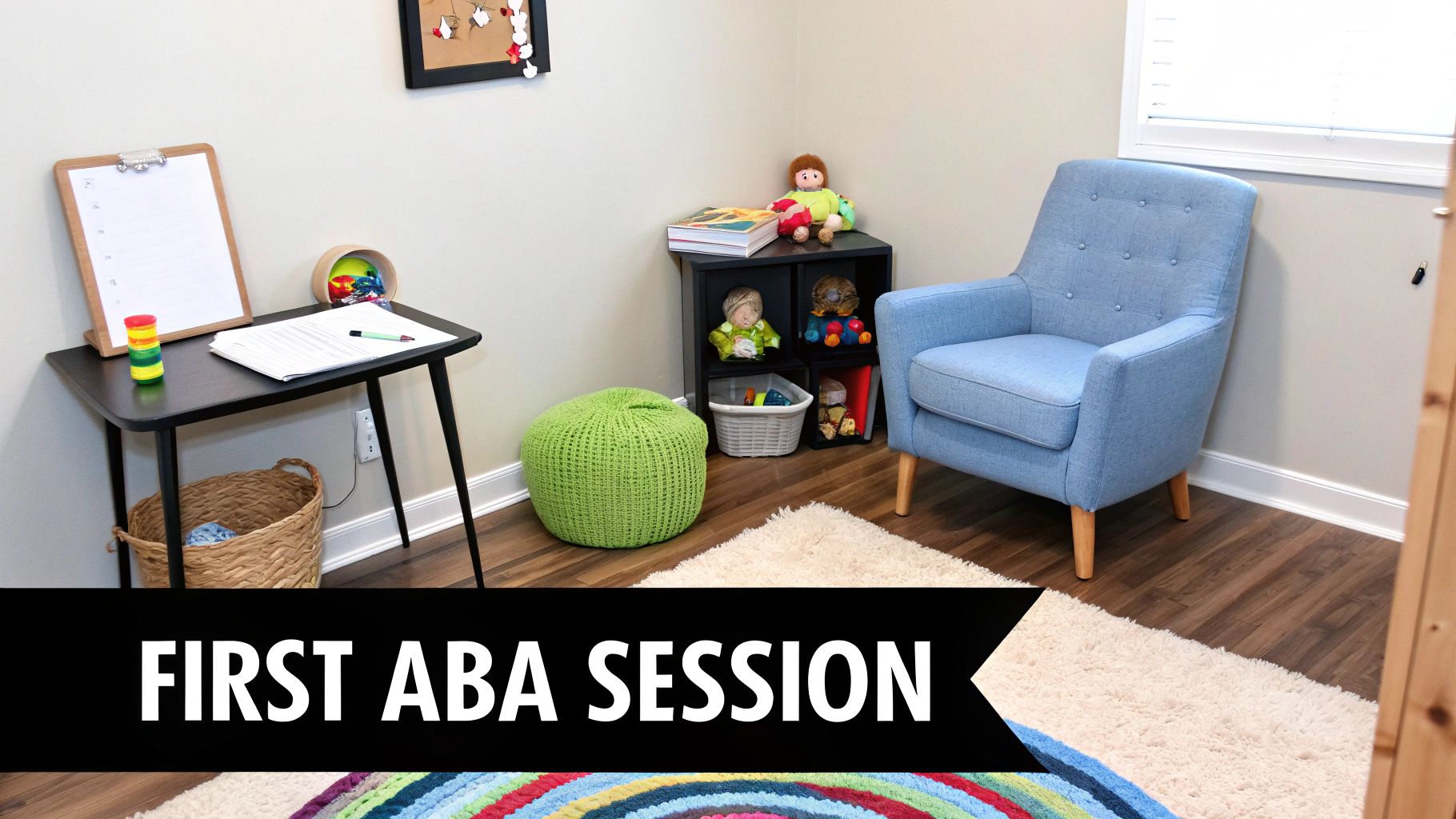
Walking into your first ABA session can feel like a big step, filled with both hope and a bit of uncertainty. The good news is that these initial meetings are all about building a foundation of trust and understanding—not just for your child, but for your entire family. It’s a gentle, get-to-know-you process designed to make everyone feel comfortable and optimistic.
The journey usually kicks off with an initial consultation and a detailed assessment. This isn’t a test. It’s simply a chance for the Board Certified Behavior Analyst (BCBA) to see the world through your child’s eyes. They’ll observe, play, and interact to get a genuine feel for your child’s unique personality, incredible strengths, and the areas where they could use a helping hand.
The Power of Pairing
After the assessment, the first few one-on-one sessions are dedicated to one crucial goal: building a positive relationship. In the world of ABA, this is known as pairing. The therapist’s only job at this stage is to connect themselves with everything your child already loves, whether that’s playing with trains, singing songs, or building a magnificent block tower.
Think of it like this: the therapist wants to become the “bringer of all good things.” By pairing themselves with fun activities and positive reinforcement, they earn your child’s trust. This simple but powerful process helps your child see their therapist and the therapy center as a fun, safe, and exciting place to be.
Pairing is the cornerstone of ethical and effective ABA. Before any structured learning happens, the therapist’s focus is on making sessions joyful and showing your child they are a trusted friend and an ally in play.
From Assessment to a Personalized Plan
Once that strong, positive bond is in place, the BCBA takes everything they’ve learned and crafts a personalized treatment plan. This document is the roadmap for your child’s therapy. It’s not set in stone; it’s a flexible guide that outlines specific, meaningful goals designed around your child’s individual needs.
This plan will likely target goals across several key areas, such as:
- Communication: Learning how to ask for a snack, express an emotion, or join a conversation.
- Social Skills: Practicing how to share, take turns, or read social cues from friends.
- Daily Living Skills: Gaining independence in everyday routines like brushing teeth or getting dressed.
- Behavioral Support: Finding positive ways to cope with big feelings or frustration.
As you look for ABA therapy near me, focus on finding a provider who truly values this careful, relationship-first approach. These early steps are what build the positive momentum for your child to feel happy, engaged, and genuinely excited to learn.
You’re a Key Player in Your Child’s ABA Success
Think of your child’s ABA therapy as a team effort. The therapist is like the head coach, drawing up the plays and designing the overall strategy. But you? You’re the everyday coach, the one on the home field who makes sure the practice happens and the skills stick.
ABA is most powerful when its principles don’t just stay in the therapy room. The real magic happens when those lessons become a natural part of your family’s daily life. This partnership between you and the therapist isn’t just a nice-to-have; it’s one of the biggest factors in a child’s long-term progress.
When your child’s new skills are practiced and celebrated at home, at the park, or on a trip to the grocery store, they become real, useful tools they can rely on.
How to Be a Partner in Your Child’s Progress
When you get involved, therapy stops being just another appointment on the calendar. It becomes a new, supportive way of interacting with your child and helping them grow. The best ABA providers know this, and they’ll offer solid parent training to get you up to speed.
This isn’t about turning you into another therapist. It’s about giving you simple, effective strategies you can weave into your daily routines, turning ordinary moments into powerful learning opportunities.
For instance, you might learn how to:
- Use positive reinforcement during dinner to encourage your child to try a new food.
- Create a simple visual schedule to take the stress and confusion out of the morning rush.
- Practice communication skills during playtime by modeling how to ask for a toy.
The foundation of this whole partnership is open and honest communication with your therapy team. Regular check-ins and sharing what you’re seeing at home ensure everyone is on the same page and pulling in the same direction.
When families are truly involved, kids are much more likely to “generalize” their skills. That just means they can take what they learned in a therapy session and actually use it everywhere else in their life. This teamwork is what makes the progress stick.
Let’s be real, though—staying this involved can be tough. Research shows a significant number of kids who are referred for ABA either don’t start or stop within the first year, which really underscores how crucial family engagement is. You can learn more about bridging gaps in ABA service delivery on linksaba.com.
So, when you search for “ABA therapy near me,” make it a priority to find a provider who doesn’t just treat your child, but sees you as an essential member of the team.
Common Questions About Finding ABA Therapy Locally
As you start your search for an “ABA therapy near me,” a lot of practical questions are bound to pop up. It’s completely normal. Let’s walk through some of the most common things we hear from families who are right where you are now.
How Many Hours of ABA Therapy Does My Child Need?
This is one of the first questions parents ask, and the honest answer is: it truly depends. There’s no magic number because every child’s needs are different. The right amount of therapy comes from a detailed assessment of your child’s specific strengths and goals.
Some children benefit from an intensive, early-start program, which could mean 20 to 40 hours per week to really build those foundational skills. For others, a more targeted plan of 10 to 15 hours a week might be just right for working on specific behaviors or skills. A Board Certified Behavior Analyst (BCBA) will sit down with you to figure out an intensity that drives real progress without ever feeling like too much for your child.
Is ABA Therapy Covered by Insurance in the UAE?
Navigating the world of insurance can feel like a puzzle, but the good news is that coverage for ABA therapy in the UAE is getting better. Many of the more comprehensive insurance policies are starting to include coverage for therapies related to autism. That said, the specifics can vary wildly from one plan to the next.
Your first step should always be to call your insurance provider directly. You need to get crystal clear on a few key things:
- Do you need pre-authorization before starting?
- Which therapy centers are considered “in-network”?
- Are there any caps or limits on the number of sessions or total coverage?
Make sure you get this information confirmed in writing. Having it on paper before you begin can save you a lot of headaches down the road.
Your own eyes are the best measure of success. You’ll know ABA is working when you see your child spontaneously using new skills at home, during playdates, or at the park—not just when they’re in a therapy session.
A great ABA provider lives and breathes data. Your therapy team should be giving you regular progress reports that are easy to understand. These reports use clear data to show you exactly how your child is moving toward their goals, giving you the confidence that all the effort is making a tangible difference.