When you first hear about Pathological Demand Avoidance (PDA), it's easy to misunderstand. It’s a specific profile you see within the autism spectrum, and it's defined by a powerful, anxiety-fueled need to steer clear of everyday demands.
But this isn’t about defiance. It’s a gut-level survival response. For someone with a PDA profile, simple requests can feel like overwhelming threats, triggering an intense need to avoid them at all costs.
Unpacking Pathological Demand Avoidance

To really get what PDA in autism is all about, we have to look past the surface-level behavior. Try to imagine your day where every small request—from "time to put on your shoes" to "let's get started on homework"—feels like a giant wave about to crash down on you. Your first, deepest instinct would be to do anything to escape that wave.
That's the constant reality for a person with a PDA profile. Their avoidance isn’t a conscious choice to be difficult. It’s an automatic, anxiety-based reaction.
The engine driving all of this is a profound need to stay in control as a way to manage crushing internal anxiety. When a demand is made, that feeling of control is threatened, and their nervous system kicks into a fight, flight, or freeze response.
More Than Just Behaviour
This is why it's so important not to mistake PDA for willful opposition. A child with PDA might genuinely want to do what you've asked but find themselves physically and emotionally frozen, unable to comply because their nervous system has slammed on the brakes. This internal tug-of-war is a huge part of the PDA experience.
Understanding this is the first real step toward providing meaningful support. It moves the goalposts from "managing behavior" to "reducing anxiety." The whole game changes when you realize the person is not giving you a hard time; they are having a hard time. That shift in perspective is everything. It's the foundation for building trust and finding strategies that actually help.
"What looks like refusal is often something else entirely: a child navigating an overwhelming world in the only way they know how. It’s not defiance – it’s a survival response."
A Growing Global and Local Understanding
Pathological Demand Avoidance is an autism profile that’s becoming more recognized in the United Arab Emirates and across the Middle East. Specific prevalence data for the AE region is still in the early stages.
Globally, we know autism spectrum disorder (ASD) has a prevalence of about 1%. Some studies in Asia, which includes the UAE's region, point to a prevalence that's a bit lower, around 0.4% to 0.5%. As awareness continues to grow, more clinicians are learning to spot this unique, anxiety-driven profile. For a broader overview of the condition, you can explore our detailed guide on what autism spectrum disorder is.
This growing recognition is a lifeline for families and educators, helping them move from a place of frustration to one of empathy. When we understand the "why" behind the avoidance, we can start creating environments that feel safer and less threatening. That’s how we set the stage for compassionate, effective support that truly honors the individual's needs.
Recognizing the Core Traits of a PDA Profile

To really get what a PDA profile looks like in daily life, you have to look beyond a simple checklist of behaviors. The traits can seem contradictory and confusing, which is why it’s so important to understand the deep-seated anxiety that fuels them when we talk about PDA in autism.
At the end of the day, these behaviors aren't about defiance. They're survival strategies.
One of the most defining features is a constant, almost artful avoidance of everyday demands. This isn't just a simple "no." A child might suddenly come up with a fascinating question, invent an elaborate excuse, or even pretend to be sick to get out of a simple request, like putting on their shoes.
This isn't manipulation in the way we usually think of it. It’s a panicked, reflexive action to regain a sense of control when a demand feels like a threat to their nervous system.
The Social Paradox
On the surface, many individuals with a PDA profile can come across as incredibly charming and social. They might have surprisingly advanced language skills and seem perfectly comfortable chatting with adults.
But this surface-level sociability often hides deeper struggles with understanding social nuances and boundaries. This creates a real paradox. A child might seem socially gifted one moment, then completely unable to navigate peer friendships the next. Their social skills are often a tool for managing situations and avoiding demands, not a sign of genuine social ease.
At its core, PDA is a neurological power struggle between the brain, body and heart. The intense need to avoid demands is a direct result of an overwhelmed nervous system trying to protect itself from perceived threats.
Another key trait is the presence of intense and rapidly shifting moods. Anxiety can escalate in a heartbeat. A child who seems calm one moment can become completely overwhelmed the next, leading to meltdowns that appear to come from nowhere. These are often triggered by a single, seemingly minor demand or just the buildup of small pressures throughout the day.
Obsessive Focus and Control
While obsessive interests are a common feature of autism, in the PDA profile, this focus often centers on people rather than things or topics. An individual might become intensely focused on a specific person—real or fictional—which can sometimes lead to controlling behaviors within that relationship.
All of these traits ultimately circle back to one central theme: anxiety and a desperate need for control. The creative avoidance, the surface sociability, the sudden mood swings—they are all the nervous system's way of trying to manage a world that feels unpredictable and unsafe.
Understanding that these behaviors are driven by anxiety is the first, most critical step. It’s what helps us tell the difference between a PDA profile and something like Oppositional Defiant Disorder (ODD), where the underlying causes—and therefore the right support strategies—are completely different.
To make these distinctions clearer, let's compare the PDA profile with more commonly understood autistic traits. While there's a lot of overlap, the presentation and the reasons behind the behaviors can be quite different.
PDA Profile vs. Typical Autism Traits
| Behavioural Trait | Typical Autism Presentation | PDA Profile Presentation |
|---|---|---|
| Response to Demands | Resists due to sensory overload, routine disruption, or difficulty with transitions. | Extreme and creative avoidance of all demands, driven by an anxiety-based need for control. |
| Social Interaction | Often shows challenges with social initiation and reciprocity; may prefer solitary activities. | Can appear sociable and charming on the surface but lacks a deep understanding of social rules; uses social strategies to control situations. |
| Flexibility & Routine | Thrives on predictability and routine; becomes distressed by unexpected changes. | Can seem comfortable with spontaneity but resists imposed routines and plans made by others. |
| Obsessive Interests | Intense focus on specific topics, objects, or patterns (e.g., trains, dinosaurs). | Obsessive focus is often on people, leading to controlling or demanding social dynamics. |
| Emotional Regulation | Meltdowns are typically triggered by sensory overload or frustration from communication barriers. | Mood swings are rapid and can be triggered by the perception of a loss of control or a simple demand. |
Seeing these traits side-by-side really highlights the unique nature of the PDA profile. The key isn't just what the person is doing, but why they're doing it. For PDAers, it almost always comes back to that intense, internal drive to maintain autonomy and avoid the anxiety that comes with demands.
The Connection Between Anxiety and Demand Avoidance
To really get to the heart of PDA in autism, you have to see anxiety as the engine, not the caboose. It's the core mechanism that drives the demand avoidance we see on the surface.
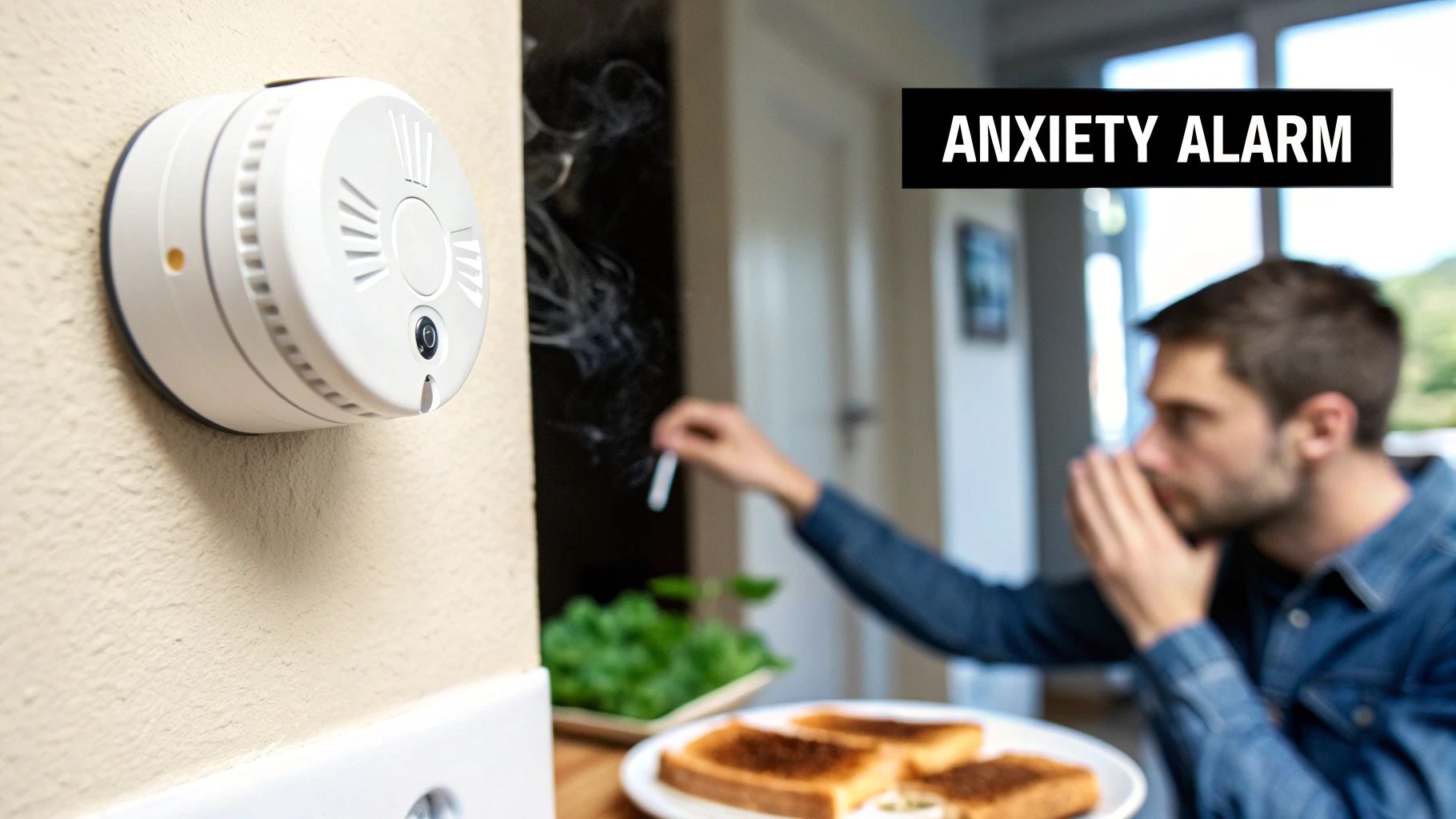
Think of the PDA nervous system as a smoke alarm that’s been dialed up to an impossibly sensitive setting. A standard alarm is designed to detect a real fire. This one, however, goes into a full-blown emergency meltdown over a piece of burnt toast.
That’s precisely what happens when someone with a PDA profile encounters a demand. An everyday request, something most of us wouldn’t think twice about, registers as a genuine threat. This isn’t a conscious choice; it’s an automatic, neurological reaction that flips the switch into a constant state of fight, flight, or freeze.
Control as a Survival Strategy
This internal state of alarm leads to an intense, persistent need for control. From the outside, it’s easy to misread this as a child being bossy, defiant, or manipulative. But within the PDA framework, control is a critical survival strategy.
When a person feels in control of their environment, they can proactively dial down the uncertainty. By managing their surroundings, they are desperately trying to prevent another anxiety-inducing "smoke alarm" from going off, which helps make their world feel a bit safer and more predictable.
"The intense need to avoid demands is a direct result of an overwhelmed nervous system trying to protect itself from perceived threats. It’s not a choice; it’s an instinct."
Living in this constant state of high alert is utterly exhausting. When the avoidance strategies aren't enough and anxiety boils over, the response can look very much like a panic attack—an involuntary reaction to feeling completely overwhelmed.
The Impact in the UAE
Understanding this anxiety-driven behavior is a game-changer, especially within the educational and support systems here in the UAE. With autism prevalence sitting at around 1% in the region, recognizing nuanced profiles like PDA is vital. Health sector data from the UAE suggests that about 30% of children with an ASD diagnosis show significant anxiety and avoidance traits that align with a PDA profile, which can complicate standard intervention methods. You can learn more about autism rates and global data on GoldenStepsABA.com.
Ultimately, grasping this connection shifts everything for parents and professionals. The focus moves from managing "difficult behavior" to co-regulating anxiety. By helping a child feel safe, we lower the need for avoidance. Exploring how clinical psychology helps children can offer more insight into these supportive, anxiety-led approaches.
The goal isn't to win a battle of wills but to create an environment where the smoke alarm isn’t constantly on the brink of sounding. That’s where trust and connection can finally begin to grow.
Effective Strategies for Supporting Someone with PDA

Turning your understanding of PDA in autism into real, practical action means making a pretty big shift in your mindset. If you've been relying on traditional approaches built around discipline, rewards, and consequences, you've probably noticed they tend to backfire. For a PDAer, these methods often crank up the anxiety and make the need to avoid demands even stronger.
The real key is to step away from being an authority figure and move toward becoming a trusted ally. It's all about collaboration and using low-demand techniques that dial down the pressure and build a solid foundation of safety and trust.
When you lead with empathy, you’re creating a space where the person feels heard and supported, not controlled. That change in the dynamic is the single most important first step in helping them navigate a world that often feels incredibly overwhelming.
Rephrasing Demands to Reduce Pressure
One of the most powerful tools in your kit is simply changing the way you talk. The goal is to rephrase requests so they don't sound like direct demands, because that's what triggers the anxiety response. You want to invite cooperation, not command compliance.
Think about these simple but game-changing linguistic shifts:
Instead of: "It’s time to put your shoes on."
Try: "I wonder which shoes will be the best for our adventure today?"
Instead of: "You need to do your homework now."
Try: "I see there's some homework here. How can we tackle this together?"
Using indirect language gives the person a sense of agency and control, which dramatically lowers their internal threat level. It transforms a potential battleground into a shared problem-solving opportunity.
A core principle of supporting someone with PDA is to prioritise the relationship over the demand. A strong, trusting connection is the most effective tool for helping an individual manage their anxiety and, in time, meet necessary expectations.
Prioritising What Truly Matters
Let's be honest, not all demands are created equal. When you're supporting someone with a PDA profile, you have to choose your battles. Constantly trying to enforce minor rules or expectations will just drain everyone's emotional energy and chip away at that trust you're working so hard to build.
Ask yourself: "Is this demand absolutely necessary right now?" By reducing the sheer number of demands, you create more emotional bandwidth for the ones that truly matter, like things related to health and safety.
For kids with PDA who respond well to structured narratives, using a social story creator can be an amazing way to teach social cues and prep for new situations without it feeling like a demand. While traditional behavioral methods can be tricky, it's still helpful to understand different approaches; learning what ABA therapy for autism involves can give you a broader perspective on how various strategies are structured.
Helpful vs Unhelpful Approaches for PDA
Navigating PDA requires a flexible, creative toolkit. Some strategies are brilliant for soothing the nervous system, while others will inadvertently send anxiety levels through the roof. It’s crucial to know the difference.
This table breaks down some of the key distinctions between approaches that help and those that hinder.
| Strategy Type | Helpful Approach (Low-Arousal) | Unhelpful Approach (High-Demand) |
|---|---|---|
| Communication | Using indirect, declarative language (e.g., "I notice the bus is coming soon.") | Issuing direct commands (e.g., "Get your bag now.") |
| Flexibility | Offering genuine choices and negotiating outcomes collaboratively. | Imposing rigid rules and offering ultimatums. |
| Emotional Tone | Maintaining a calm, playful, and humorous demeanor to diffuse tension. | Using a serious, authoritative, or confrontational tone. |
| Planning | Focusing on co-regulation and staying flexible with plans. | Sticking to a strict schedule regardless of emotional state. |
Ultimately, successful support is about being flexible, creative, and deeply attuned to the individual’s anxiety levels. By adopting these low-demand, trust-based strategies, you become a partner in their journey, helping them feel secure enough to face the world.
Navigating the Path to Diagnosis and Support
Getting the right diagnosis for PDA in autism can be a long and winding road. Because the profile isn't officially recognized in every diagnostic manual, many parents and individuals find themselves caught in a loop of confusion, missteps, and a frustrating search for answers that make sense.
The biggest hurdle? PDA's outward behaviors can look a lot like other conditions. It’s often misdiagnosed as Oppositional Defiant Disorder (ODD) or even an attachment issue. But the root cause is completely different. While ODD is typically framed as a behavioral problem, PDA is driven by a deep, neurological need to avoid demands due to overwhelming anxiety.
Advocating for an Accurate Assessment
To advocate effectively for yourself or your child, you have to become a keen observer. Start documenting specific examples. Note how even small or fun demands—like "let's go to the park"—trigger avoidance tactics.
Describe the creative, often social, strategies used to sidestep these requests. Do they use elaborate excuses? Distraction? Humor? This detailed picture helps paint a clear distinction between an anxiety-driven profile and simple behavioral defiance.
When looking for professional help, your goal is to find a clinician who understands anxiety-led approaches, not just behavioral compliance. A PDA-aware professional will immediately recognize that traditional discipline and reward charts are not only ineffective but can actually make things worse. Their focus will be on understanding the "why" behind the behavior, not just stopping it.
Finding a professional who sees the anxiety behind the avoidance is a game-changing moment. It shifts the entire focus from managing a "difficult" child to supporting an overwhelmed one—and that’s where real progress begins.
Finding the Right Professional and Community
The best assessments usually involve a multidisciplinary team. Think educational psychologists, occupational therapists, and speech therapists working together. This collaborative approach gives a much more complete picture of an individual’s unique strengths and challenges.
Here in the UAE, specialist ASD service providers are seeing more and more presentations that fit the PDA profile, marked by that classic combination of extreme resistance to requests and high anxiety. This growing awareness is a positive sign, supported by an increasing number of psychologists and educators sensitive to neurodiversity, even as specific local research catches up. You can learn more about evolving neurodevelopmental services and insights at AdvancedAutism.com.
Finally, don't underestimate the power of community. Connecting with other families on the same path is invaluable. They can offer practical advice, share resources that actually work, and provide the kind of emotional validation that is so desperately needed on this journey. They’re a living reminder that you are not alone.
Your Questions About PDA in Autism, Answered
When you're first diving into the world of Pathological Demand Avoidance, it’s natural to have a lot of questions. Let's walk through some of the most common ones we hear from parents, educators, and individuals trying to make sense of a PDA profile.
How Is PDA Different from Typical Defiance?
This is probably the most critical distinction to grasp, because on the surface, the behavior can look identical. A refusal is a refusal, right? Not exactly. The why behind it is what separates PDA from typical defiance.
Most defiance you see in kids is about testing boundaries or asserting a bit of independence. It's a normal part of development. But with PDA, the avoidance isn't a conscious choice—it's an anxiety-driven, instinctual reaction. It comes from a deep, neurological need to avoid the sheer panic that washes over them when they feel a loss of control. A child with a PDA profile might genuinely want to do what you're asking, but their nervous system slams on the brakes, making it feel impossible.
Can Someone Have Both PDA and ADHD?
Absolutely. It’s actually quite common for PDA and ADHD (Attention-Deficit/Hyperactivity Disorder) to show up together. This overlap can make it tricky to figure out the best way to support the person.
The key is to see how the traits feed into each other:
- Executive Function: Both profiles come with challenges in planning, organizing, and just getting started on tasks.
- Impulsivity: The impulsivity that comes with ADHD can sometimes shorten the fuse on demands, triggering that anxiety response much faster.
- Focus: A PDAer’s intense, often people-focused interests can look a lot like the hyperfocus we see in ADHD.
Knowing that both profiles might be in the mix is essential. It means support strategies have to address both the need for attention regulation and the anxiety-based demand avoidance.
Why Do Traditional Reward Systems Often Fail?
So many conventional parenting and classroom strategies—like sticker charts or consequences—are built on the idea of motivating a child to comply. For someone with PDA in autism, these methods don't just fail; they often pour fuel on the fire.
Think about it: the core issue is an intense need to avoid the anxiety that comes with demands. A reward or a punishment is just another demand in disguise. It adds another layer of pressure and expectation, which cranks up the anxiety and makes the person even less likely to meet the original request.
"A reward for doing something is still a demand. It creates an expectation that can trigger the same anxiety as a direct command, often making the situation worse, not better."
Instead of trying to motivate with external carrots and sticks, the real work is in building internal motivation and collaboration. The goal is always to lower anxiety and build trust, creating a space where the person feels safe enough to engage on their own terms.
What Are the First Steps if I Suspect My Child Has a PDA Profile?
If you’re reading this and seeing your child in the description, the very first thing to do is take a deep breath and shift your perspective. Start seeing the behavior as a product of anxiety, not a deliberate choice to be difficult. This mindset change is the foundation for everything that follows.
Here are a few practical things you can do right away:
- Lower the Demands: Start by prioritizing. Ask yourself, "Does this really need to happen right now?" Let the small stuff go. This immediately reduces the pressure.
- Switch Up Your Language: Move toward more indirect, declarative language. Instead of commanding, "Brush your teeth," try stating, "I'm going to brush my teeth now." It's amazing how much of a difference this can make.
- Observe and Document: Keep a simple log of what triggers avoidance and what seems to help, even a little. This information will be pure gold when you seek professional support.
From there, finding a PDA-aware clinician who truly understands anxiety-led approaches is the next critical move. They can provide an assessment and offer guidance that is genuinely tailored to the unique needs of a PDA profile.